

A DPF does not block up suddenly, overnight. Most often the problem builds up gradually – the car tries to start a regeneration more and more often, fuel consumption rises, a sluggish response to the throttle appears, and after a while the filter warning light or limp mode joins in. And that is exactly when many drivers start looking for an answer to what proper regeneration of a particulate filter looks like and whether it can be done yourself while driving.
The good news is that a lightly loaded DPF can very often still be effectively regenerated without removing it. You do, however, have to know how to burn off a diesel so as not to interrupt the process after a few minutes and make the problem worse. Because simply "revving the car up" outside your house usually has little in common with proper filter regeneration.
What is a DPF – and why does the filter have to burn off regularly?
The DPF, or diesel particulate filter, is responsible for trapping the soot produced while a diesel engine is running. The problem is that the filter has a limited capacity. The soot therefore has to be burnt off regularly in the regeneration process, that is, during DPF burn-off.
The whole process relies on the exhaust gas temperature. When the engine is working under the right conditions, the soot collected in the filter starts to burn off and turns into a smaller amount of ash. The EPA and Springer papers on the DPF indicate that filter regeneration is a natural part of how a modern diesel works, and that without it the filter would very quickly start to restrict exhaust flow.
There are two main types of regeneration:
- passive regeneration – occurring during normal driving at a suitable exhaust gas temperature,
- active regeneration – triggered by the engine control unit by additionally raising the exhaust gas temperature.
The problem begins when the car is driven mainly around town. Short trips, traffic jams, low revs and frequent switching off of the engine mean that the filter does not reach the temperatures needed for effective cleaning. BMW, in its service bulletins, states that during normal regeneration the exhaust gas temperature may be around 280–350°C, whereas active burn-off requires far higher values.
And that is precisely why a diesel used exclusively on short trips has problems with the DPF far more often than a car that regularly covers longer journeys.
Symptoms – how do you know the DPF is blocked and needs regeneration?
Most often the first signal is not the DPF warning light straight away, but a change in the car's behaviour. The car starts raising the revs more often, using more fuel or responding worse to the throttle. In many cases the driver does not even realise that the car is trying to start a particulate filter burn-off.
The most characteristic symptoms look like this:
- the DPF light or the check engine light,
- noticeably higher fuel consumption,
- the radiator fan running more often,
- restricted engine power,
- limp mode,
- jerking or uneven diesel running,
- a more intense smell of exhaust gases,
- frequent attempts at regeneration every few hundred kilometres.
In modern diesels a very common symptom is also the situation in which the car starts burning off the DPF more and more often. Instead of, say, every 600–1000 km, regeneration appears every 200–300 km or even more frequently. Stellantis, in its technical materials on fault code P2459, indicates that overly frequent regenerations are a sign of a diagnostic problem rather than of normal use.
It is also worth paying attention to the oil level. With frequent, incomplete regenerations, some of the fuel can end up in the engine oil and dilute it. This is particularly dangerous for the turbocharger and for the lubrication system itself.
If, along with the warning light, the following appear:
- a heavy loss of power,
- heavy smoking,
- limp mode,
- problems with the turbo or the EGR,
further attempts to "burn off the diesel" yourself may no longer be enough.
Driving – how to burn off the DPF while driving so as not to interrupt the regeneration after 5 minutes?
The most effective method with a lightly blocked filter is calm, longer driving under conditions that allow a suitable exhaust gas temperature to be maintained. And that is precisely why the best results come from a dual carriageway, a motorway or a route outside town – and not from driving from one set of traffic lights to the next.
The most commonly recommended pattern looks like this:
- warm the engine up to operating temperature,
- maintain a constant speed,
- keep the revs roughly in the 2500–3500 rpm range,
- drive for about 15–30 minutes without interrupting the process,
- avoid switching off the engine during an active regeneration.
The most important thing is precisely not interrupting the process. If the ECU has started an active DPF burn-off and after a few minutes you switch the engine off or drive into a traffic jam, the filter may not have time to clean itself. The problem will then keep coming back more and more often.
BM Catalysts states that during an active regeneration the exhaust gas temperature can reach as much as 500–800°C, which is why the ECU needs stable engine operating conditions and an appropriate load.
Many drivers also ask how to burn off a diesel "faster". And here it is worth saying one thing plainly – aggressive driving is not the answer. It is not about thrashing the engine at high revs, but about:
- a stable temperature,
- a constant load,
- continuity of driving,
- suitable conditions for filter regeneration.
If, after a proper run, the warning light still does not go out or the car keeps losing power, the problem usually no longer concerns the soot loading itself. You then need to check:
- the DPF,
- the EGR,
- the injectors,
- the turbocharger,
- the differential pressure sensors,
- the exhaust gas temperatures,
- the amount of ash in the filter.
Revs and time – how long does a DPF burn-off take while driving and when does the regeneration really have a chance of succeeding?
Most often a full DPF burn-off while driving takes from about 15 to 30 minutes, although a lot depends on how full the filter is, the exhaust gas temperature and the driving conditions. With a lightly loaded DPF the process may finish sooner. If the filter is heavily loaded with soot or earlier regenerations were interrupted many times, the whole process can take noticeably longer.
The biggest mistake? Driving for too short a time. Many drivers see the DPF light, drive for a few minutes "faster than usual", then come back into town and switch the engine off. As a result the regeneration is interrupted, and the filter starts blocking up even faster.
For the process to make sense:
- the engine must be well warmed up,
- the exhaust gases must reach a suitable temperature,
- the revs should be stable,
- the drive must not be constantly interrupted by traffic jams and stopping the car.
Practical guides most often mention a range of about 2500–3500 rpm, but it is not about "thrashing" the car. Maintaining a stable engine load is far more important. That is why it is often better to drive calmly in a lower gear than very quickly in a high one.
BM Catalysts and BMW technical materials show that an active DPF regeneration requires very high exhaust gas temperatures – as much as 500–800°C during the active process. This is precisely why driving exclusively around town usually does not give the filter the conditions to clean itself effectively.
So if someone asks how long a DPF burn-off takes while driving, the answer should be: as long as it takes to achieve stable regeneration conditions, and not "exactly 10 minutes". Every diesel works a little differently and the ECU decides for itself how the process runs.
Stationary – when does a stationary DPF burn-off make sense, and when can you only make the problem worse?
Contrary to popular advice on the internet, a stationary DPF burn-off usually does not consist of simply "revving up" the car outside your house. In most modern diesels it is a service procedure launched with a diagnostic tester, which requires specific safety conditions to be met.
Ford and Audi-VW, in their service bulletins, describe static regeneration as a function launched by the car's diagnostic system. The ECU then controls the exhaust gas temperature, the operation of the fans, the fuel dose and the parameters of the DPF itself.
Before starting the procedure you usually have to check:
- the fuel level,
- the oil level,
- the engine temperature,
- that the radiator fan is working,
- that there are no active faults blocking the regeneration.
The process itself generates very high temperatures. That is why the car should be standing:
- in an open space,
- away from flammable materials,
- outside a closed garage,
- in a place with good ventilation.
A static burn-off makes sense mainly when:
- the car does not have the conditions for regeneration on a run,
- the filter is more heavily loaded,
- the ECU requires a service procedure,
- earlier attempts at a regeneration drive brought no effect.
If, however, the DPF is heavily blocked with ash or the car has a problem with:
- the injectors,
- the EGR,
- the turbocharger,
- the temperature sensors,
- the differential pressure sensor,
a stationary regeneration alone often turns out to be only a temporary solution.
Diagnostics – what to do when the DPF will not burn off despite driving and repeated attempts?
If the filter comes back after a few days or the car starts burning off the DPF every 200–300 km, the problem usually no longer lies solely in the driving style. Very often the filter is only the consequence of another fault, which causes excessive soot formation.
The most common causes look like this:
- dirty or leaking injectors,
- a problem with the EGR,
- a leaking intake,
- a faulty turbocharger,
- poor engine compression,
- incorrect readings from the DPF sensors,
- an excessive amount of ash in the filter.
And that is precisely why yet another "burn-off" of the car does not always solve the problem. Sometimes a driver focuses solely on how to clean the DPF while driving, while the real source of the problem is, for example, injectors generating too much soot or an EGR causing incorrect combustion.
Good diagnostics should cover:
- reading OBD fault codes,
- the soot loading level,
- the differential pressure across the DPF,
- the exhaust gas temperatures,
- the frequency of regenerations,
- the condition of the intake system,
- injection quantity trims,
- the engine oil level.
The oil itself is also very important. With frequent, incomplete regenerations, some of the fuel can end up in the engine oil and dilute it. GM, in its materials on DPF diagnostics, emphasises that driving style and frequent idling strongly affect problems with filter regeneration.
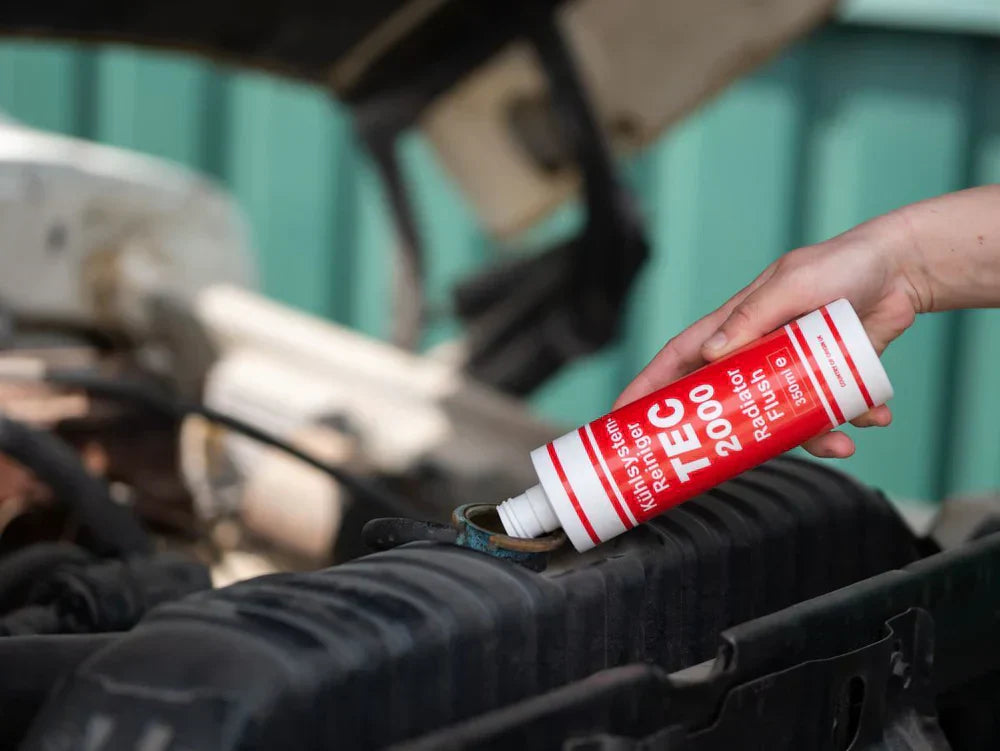
As preventive maintenance, some drivers also use products that support the cleanliness of the fuel system, for example TEC 2000 Diesel System Cleaner. Such products can help limit deposits and improve fuel combustion, which indirectly reduces the amount of soot reaching the DPF. You do, however, have to draw a clear line between prevention and repair – a product will not remove ash from the filter and will not repair a damaged DPF or damaged sensors.
FAQ
How do you burn off the DPF while driving?
The best approach is to take a route outside town, warm the engine up and maintain a constant speed and revs roughly in the 2500–3500 rpm range for about 15–30 minutes.
How long does a DPF burn-off take?
Most often from around fifteen minutes to about 30 minutes. The time depends on how full the filter is, the exhaust gas temperature and the driving conditions.
At what revs does the DPF burn off?
Many guides and practical procedures mention a range of about 2500–3500 rpm, but the ECU decides for itself how the regeneration runs.
Can you burn off the DPF in town?
It is usually difficult. Traffic jams, short stretches and frequently stopping the car often interrupt the regeneration process.
Is a stationary DPF burn-off safe?
Yes, but only if the right conditions are met and preferably in line with the service procedure. The process generates very high temperatures.
Can you burn off the DPF yourself?
Yes, if the filter is not heavily blocked and the car allows a normal regeneration while driving. With more serious problems you need diagnostics.
What should you do when the DPF light will not go out?
First it is worth carrying out a proper regeneration drive. If the light is still on, you have to check the fault codes and the DPF operating parameters.
Why does the DPF burn off every 200–300 km?
Most often this means a problem with excessive soot formation or with incomplete regenerations. The cause may be, for example, the injectors, the EGR, the turbo or driving exclusively around town.
Can you drive with a blocked DPF?
For a short time – yes, but it is not worth putting the problem off. Driving on can lead to limp mode and an expensive repair.
Will a diesel additive replace a DPF burn-off?
No. An additive can support the cleanliness of the fuel system and limit soot formation, but it will not replace the temperature needed to regenerate the filter.
How much does burning off or cleaning a DPF cost?
Burning it off while driving costs practically nothing beyond the fuel. A service burn-off is usually around €47–95, cleaning the DPF most often €95–425, and replacing the filter often €470–1,880 or more.


Leave a comment
This site is protected by hCaptcha and the hCaptcha Privacy Policy and Terms of Service apply.