
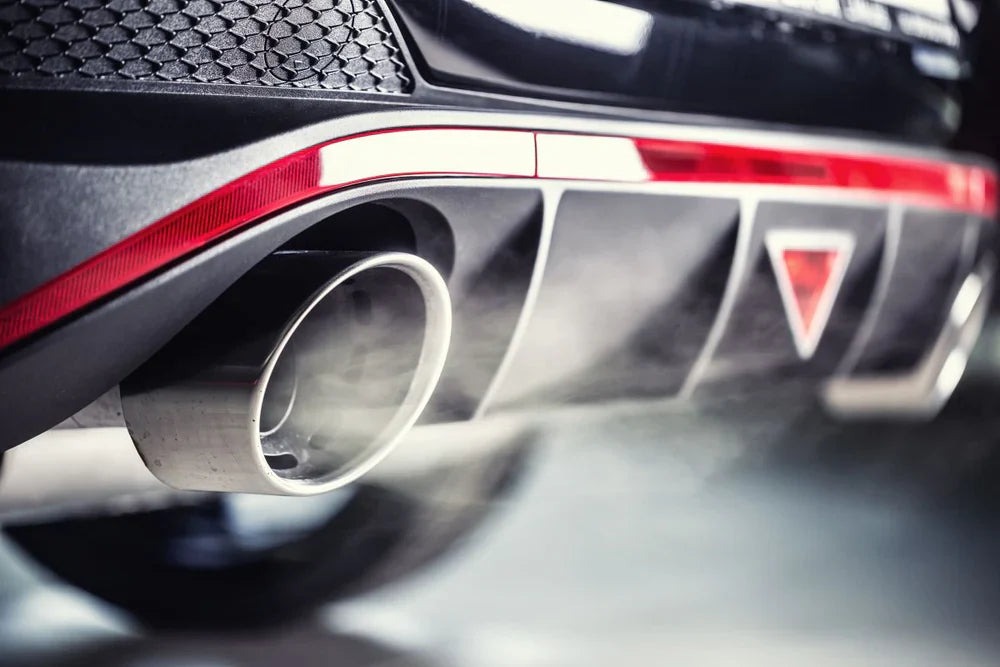
Water drips from the exhaust pipe and the question arises: is that normal, or is some problem with the engine starting? Many drivers notice it especially in winter or in the morning after starting the car. A damp patch appears under the car, and drops can literally fall from the exhaust tip.
In most cases there is nothing dangerous about it. Water in the exhaust system is a natural effect of fuel combustion, which appears in every engine. The problem is that sometimes similar symptoms can also indicate a more serious failure.
That's why one thing is crucial: telling ordinary condensation apart from a situation in which water from the exhaust is a signal of a fault. It's enough to pay attention to a few details – the smell of the exhaust gases, the colour of the smoke or the moment at which the moisture appears.
Below we explain where water in the exhaust pipe comes from, when it is a normal phenomenon, and when it's worth starting to check the engine's condition more closely.
Where does water in the exhaust pipe come from?
Most often, water appearing from the exhaust pipe is simply the effect of the condensation of water vapour arising during the combustion of fuel. This is a completely natural process that takes place in every combustion engine – both petrol and diesel.
During the combustion of the air-fuel mixture several by-products are formed. One of them is precisely water vapour. When the exhaust gases reach a cold exhaust system, the vapour starts condensing on its walls.
This can most often be noticed in situations such as:
- after starting a cold engine,
- when driving over short distances,
- on colder days or in winter,
- after the car has been standing for a longer time.
When the exhaust system heats up, most of this water starts evaporating together with the exhaust gases. That's why, after a dozen or so minutes of driving, the dripping from the exhaust pipe usually disappears completely.
If the car is used mainly on very short routes, the water has no time to evaporate and starts collecting in the silencer or in the further part of the exhaust. For that reason, the next time the engine is started, a small amount of water can literally flow out of the exhaust pipe.
This phenomenon is nothing unusual. Practically every car produces water while burning fuel – the only difference is whether it manages to evaporate.
Water from the exhaust in a diesel and in a petrol engine – where do the differences come from?
Although condensation can appear in any car, diesel and petrol engines behave somewhat differently in this respect. And that's precisely why many drivers more often notice water from the exhaust in cars with a diesel engine.
In diesels, the amount of moisture in the exhaust system is influenced by, among other things:
- a lower temperature of the exhaust gases while the engine is running,
- the presence of an EGR exhaust gas recirculation system,
- a greater amount of water vapour in the exhaust gases,
- frequent city driving with an under-warmed engine.
As a result, after starting a cold diesel, thicker water vapour or fine drops of water may appear from the exhaust, especially on cold days. In many cases this disappears after a few minutes of driving, once the whole exhaust system reaches operating temperature.
In petrol engines the phenomenon of condensation also occurs, but it is usually less visible. If, however, the car is driven mainly over short distances – to work, to the shop or to school – water can also collect in the silencer and appear when the engine is started.
That's why the mere fact that water appears from the exhaust isn't yet a reason for concern. What matters more is whether the phenomenon disappears once the engine has warmed up, or persists throughout the drive.
Can a water leak from the exhaust pipe mean problems?
Sometimes water from the exhaust really can be a signal of a fault, but then other symptoms indicating a problem with the engine or with the combustion process usually appear as well.
It's particularly worth paying attention to situations in which, apart from water, there appears:
- thick white smoke from the exhaust even after the engine has warmed up,
- a sweetish smell of the exhaust gases,
- a drop in the coolant level with no visible leak,
- a mayonnaise-like emulsion under the oil filler cap,
- rough engine running or a drop in power.
Such a set of symptoms may point to a damaged head gasket, through which coolant is getting into the combustion chamber. Then, instead of ordinary water vapour, thick white steam appears, and the exhaust gases have the characteristic smell of glycol.
In such a situation the problem can't be ignored. A damaged head gasket can lead to the engine overheating, a loss of compression and serious damage to the power unit.
Mechanics most often diagnose such a fault by means of:
- a test for the presence of exhaust gases in the cooling system,
- a cylinder compression measurement,
- a chemical test for the presence of glycol in the exhaust gases.
So if water from the exhaust appears only momentarily after starting a cold engine – there is usually no reason to worry. If, however, it is accompanied by thick white smoke, a drop in coolant or clear problems with the way the engine runs, it's worth having the car checked at a workshop as soon as possible.
Water from the exhaust and blue smoke – when does a problem with the oil appear?
If, apart from water, bluish smoke starts appearing from the exhaust pipe, that's a signal that something more than ordinary condensation may be happening in the engine. A blue colour of the exhaust gases usually means that engine oil is getting into the combustion chamber.
The most common culprits are:
- worn piston rings,
- leaking valve stem seals,
- wear of the cylinder bores.
In such a situation oil starts getting into the cylinders and is burned together with the fuel. Drivers usually notice several things at once then – smoke from the exhaust, the characteristic smell of burning and a gradual loss of oil.
Sometimes this isn't an immediate reason for an engine rebuild. In older units it happens that the cause is accumulated carbon build-up, which blocks the piston rings and impairs their operation. In such cases, cleaning the engine with the product TEC 2000 Engine Flush can improve the situation and limit oil consumption.
A clogged EGR, catalytic converter or injectors – less obvious causes
Not every bit of vapour or moisture from the exhaust has to mean a serious engine failure. Sometimes the problem lies in components of the intake or combustion system, which affect how the fuel mixes with air and how the combustion process proceeds.
An example may be the EGR valve, especially in diesels. If it starts clogging up with carbon deposits, the exhaust gases circulate through the system in a slightly different way than they should. The result may be a greater amount of water vapour, rough engine running or a slight drop in power.
It's similar with the injectors. When they don't atomise fuel properly, the air-fuel mixture doesn't burn in an optimal way. Then a greater amount of moisture, a smell of unburnt fuel or darker smoke may appear from the exhaust.
That's why regular cleaning of the fuel system makes sense. Products such as TEC 2000 Diesel System Cleaner or Fuel System Cleaner help keep the injectors in good condition, and TEC 2000 Induction Cleaner makes it possible to clean the intake system.
Can water in the silencer freeze in winter?
It sounds like a scenario from a very frosty winter, but in practice it happens more often than you might think. If a car is driven mainly on short routes, quite a lot of moisture can collect in the silencer.
When the temperature drops well below zero, the condensed water in the exhaust system can simply freeze. In extreme cases an ice blockage even forms in the silencer.
The symptoms are fairly characteristic:
- the car has trouble starting,
- the engine runs very heavily,
- unusually loud operation of the exhaust appears,
- the car has clearly less power.
Fortunately the solution is simple – it's enough to let the engine run a little longer and to drive a dozen or so kilometres, so that the whole exhaust system heats up and evaporates the moisture.
What can you check yourself when water is coming out of the exhaust?
If you notice water from the exhaust pipe, there's no need to panic straight away. It's enough to observe the car for a moment and check a few basic things.
First pay attention to whether the phenomenon disappears once the engine has warmed up. If after 10–15 minutes of driving everything returns to normal, it was most probably ordinary condensation.
It's also worth checking:
- the coolant level,
- the engine oil level,
- whether thick white or blue smoke is coming from the exhaust,
- whether the exhaust gases don't have a sweet smell of glycol.
If everything looks normal and the car runs evenly, in most cases there is no reason for concern. It's worse if water from the exhaust appears all the time and is accompanied by other symptoms – then it's better to show the car to a mechanic.
Why isn't it worth ignoring such symptoms?
In many situations water from the exhaust is a trifle. However, if it is the result of a more serious fault, putting off diagnostics can end in a really costly repair.
For example, a damaged head gasket can lead to the engine overheating. In extreme cases this ends even with a rebuild of the power unit, which can cost from a few to several thousand euros.
Long-lasting moisture in the exhaust system, in turn, accelerates corrosion of the silencers. After a few seasons it may turn out that replacing part of the exhaust system is necessary, which can also cost a couple of thousand euros.
That's why the best rule is a simple one: if something in the car starts to look different than usual, it's worth simply checking it. Sometimes it's a trifle, and sometimes an early signal of a problem that is better solved before it becomes more serious.
FAQ
Is water dripping from the exhaust pipe something normal?
Yes, in many cases it is a completely natural phenomenon. During the combustion of fuel, water vapour is produced, which condenses on a cold exhaust system and can flow out in the form of drops. It is most often visible after starting a cold engine or when driving on short routes.
Does water from the exhaust happen more often in a diesel than in a petrol engine?
Yes, in practice diesel drivers more often notice water or vapour from the exhaust. This results, among other things, from the lower working temperature of the exhaust gases and the presence of an EGR system, because of which moisture can stay in the exhaust system a little longer.
How do you tell normal vapour apart from a problem with the engine?
The simplest rule: if the phenomenon disappears once the engine has warmed up – everything is usually fine. If, however, the vapour or smoke persists throughout the drive, and on top of that a drop in coolant, rough engine running or a sweetish smell of the exhaust gases appears, it's worth having the car checked at a workshop.
Can water from the exhaust mean a head gasket?
It can, but additional symptoms usually appear then. Typical signals are thick white smoke once the engine has warmed up, a drop in the coolant level and an emulsion under the oil filler cap. In such a situation quick diagnostics are necessary.
Can water in the silencer freeze in winter?
Yes, especially when the car is driven mainly on short routes. Moisture can collect in the silencer, which freezes in a hard frost. It then happens that the exhaust is partly blocked and the car has less power.
Do short routes encourage water from the exhaust to appear?
Definitely yes. During a short drive the engine and the exhaust often don't reach full operating temperature, because of which the water vapour doesn't manage to evaporate and stays in the exhaust system.
Can you do anything to limit the water in the silencer?
The simplest solution is to drive a longer stretch from time to time, so that the engine and the exhaust heat up properly. Thanks to this the moisture collected in the exhaust system will simply evaporate.
Can water from the exhaust cause corrosion of the exhaust system?
Yes, if moisture sits in the silencer for a long time, it can accelerate its rusting. That's why cars used mainly over short distances more often have problems with corrosion of the exhaust system.


Leave a comment
This site is protected by hCaptcha and the hCaptcha Privacy Policy and Terms of Service apply.