
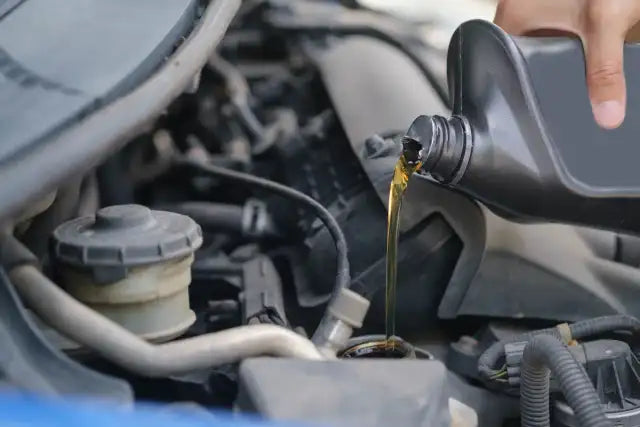
A low oil level is one of those problems drivers often only notice once the engine starts running louder or the oil warning light comes on. And by then it can already be very close to a serious failure.
Meanwhile, topping up the oil is a simple task that can save an engine from overheating, excessive wear of components and a costly repair. All you need to know is when to top up the oil, how much to add and how to do it properly.
One question raises the most doubts: whether to top up the oil on a cold or on a warm engine. A good deal of myth has grown up around this subject, so it's worth explaining it once and for all.
Below we explain when to top up the oil, how to check its level, and which symptoms may indicate too low a level of the lubricant.
Why is topping up the oil in the engine necessary?
Topping up the oil is necessary because an engine always uses a small amount of oil while it is running, even if it is fully serviceable. For many drivers this comes as a surprise, but car manufacturers assume a certain natural loss of lubricant. In many power units the permissible consumption can be as much as around 1 litre for every 1,000 kilometres covered.
Engine oil has several very important tasks in the power unit, and each of them directly affects the engine's durability. The most important functions of the oil include, among others:
- lubricating the engine's moving components, thanks to which friction and wear of the parts are reduced,
- carrying heat away from the most heavily loaded components,
- protection against corrosion and oxidation of metal,
- removing contaminants and fine deposits from inside the engine,
- helping to seal the gap between the piston and the cylinder.
When the oil level starts to drop, all these processes start working worse. The oil film becomes thinner, the engine's components start working at a higher temperature, and friction between the metal parts increases. The engine still runs, but its working conditions are already far from ideal.
The worst part of it all is that for a long time a driver may not notice any clear symptoms. Only after some time do the warning signals appear: louder running of the power unit, slight metallic noises or increased fuel consumption.
That's why regularly checking the oil level is one of the simplest things you can do for your car. A few seconds at the dipstick can save hundreds of euros on engine repairs.
When do you have to top up the oil in the engine?
The simplest answer is: oil should be topped up when its level on the dipstick starts approaching the MIN mark. You don't have to wait until the level falls below the minimum – it's better to react earlier.
There are a few signals that very often indicate too low an oil level in the engine:
- the oil level on the dipstick is close to the lower mark,
- the oil warning light comes on on the dashboard,
- the engine starts running louder than usual,
- metallic noises appear from the vicinity of the engine,
- the car starts using more fuel,
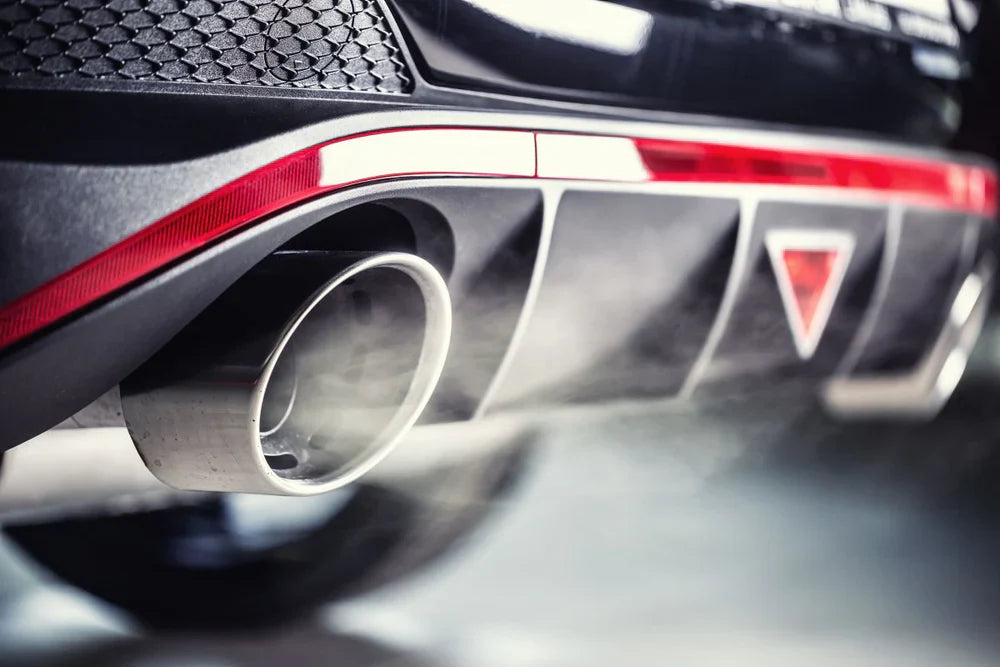
- slightly bluish smoke appears from the exhaust pipe.
Many drivers ignore the first symptoms, because the car still works properly. However, a low oil level very quickly affects the operation of the power unit. The engine starts heating up more, and its components work in considerably more difficult conditions.
That's why a good rule is to check the oil level around every 1,000 kilometres or before every longer journey. This is particularly important in older cars, where you can't always rely on electronic oil level sensors.
Checking the oil regularly is simply part of the basic maintenance of a car – just like checking the tyre pressures or the coolant level.
Should you top up the oil on a cold or on a warm engine?
The best moment to check and top up the oil is shortly after switching the engine off, once the power unit has had a chance to cool down slightly. The engine shouldn't be either completely cold or very hot.
The safest way to do it is as follows:
- switch the engine off and wait about 5–10 minutes, so the oil can run down into the sump,
- pull out the dipstick and wipe it with a clean cloth,
- put the dipstick back in and check the oil level,
- if the level is low – add the oil in small portions,
- after each top-up check the level again.
The reason is simple. Right after the engine is switched off, some of the oil is still in the oil galleries and on the engine's components. If you check the level immediately, the reading may be too low. A few minutes is enough for the oil to run down and for the measurement to be more accurate.
You also have to watch out for the other extreme, i.e. overfilling with oil. Too high an oil level in the engine can be just as problematic as too little of it.
An excess of oil can cause:
- aeration of the oil by the rotating crankshaft,
- increased pressure in the lubrication system,
- leaks through the seals and oil seals,
- contamination of the intake system with oil.
That's why mechanics always recommend adding small amounts of oil – around 100–200 ml at a time – and then checking the level again.
How often should you check the oil level in the engine?
It's best to check the oil level regularly, even if the car isn't showing any warning messages. A good practice is to check the level around every 1,000 kilometres or once a month, especially in cars with a higher mileage.
Natural oil consumption in an engine can be as much as around 0.15 litres per 1,000 kilometres, which is considered normal in many power units.
If, however, the engine starts using more oil, it's worth taking a closer look at the matter. The most common causes of greater losses are:
- seized piston rings,
- worn valve stem seals,
- carbon build-up and deposits in the engine,
- leaks in the lubrication system,
- leaks from the gaskets or the sump.
Sometimes excessive oil burning doesn't yet mean a serious failure. In many cases the culprits are deposits and carbon build-up, which restrict the movement of the piston rings. In such a situation, before an expensive repair, it's worth trying to clean the engine with the product TEC 2000 Engine Flush, which helps dissolve the accumulated contaminants and restore correct operation of the mechanisms.
Thanks to this it is often possible to reduce oil consumption and improve the engine's refinement, without having to take the power unit apart.
How do you top up the oil in the engine step by step?
Topping up the engine oil isn't difficult, but it's worth doing it calmly and carefully in order to avoid mistakes. The most important rule is simple: first you check the level, then you add a small amount and check the result on the dipstick. Thanks to this there's no risk of the oil level exceeding the maximum value.
The safest way to top up looks like this:
- stop the car on a level surface and switch off the engine,
- wait around 5–10 minutes, so the oil can run down into the sump,
- pull out the dipstick, wipe it with a clean cloth and put it back in,
- check the level between the MIN and MAX marks,
- unscrew the oil filler cap in the upper part of the engine,
- add a small amount of oil – ideally around 100–200 ml,
- wait a moment and check the level with the dipstick again.
Many drivers make one simple mistake – they top up the oil “by eye”. That's a very easy route to overfilling the engine. It's far safer to add small portions and check the level after each one.
It's also worth remembering the small things that make a difference. A funnel at the oil filler really does make life easier, because it prevents the lubricant from being spilled over the engine cover. And once you've finished topping up, it's worth checking the dipstick again after a short drive – sometimes the level settles slightly.
The most common mistakes when topping up the oil
Topping up the oil is a simple task, but even so many drivers make a few typical mistakes. Sometimes a small thing is enough for the oil level measurement to be inaccurate, or for the engine to receive the wrong lubricant.
The most common mistakes include, among others:
- checking the oil level on an uneven surface,
- measuring right after switching the engine off, when the oil hasn't had time to run down,
- adding too much oil at once,
- using oil of the wrong specification,
- ignoring oil leaks from under the car.
Overfilling with oil is particularly dangerous. Contrary to appearances, an excess of lubricant can cause problems with the engine's operation, and even damage to the seals.
That's why the best rule is a simple routine: check the level, add small portions and always check the result on the dipstick.
How much oil can you add at one time, and when do you have to watch out for overfilling?
It's safest to add oil in small portions – around 100–250 ml at a time. Thanks to this you can accurately control the level and avoid a situation in which the oil exceeds the MAX mark on the dipstick.
The engine needs only as much oil as the manufacturer provided for. If the level is correct, the oil forms a proper lubricating film and protects the engine's components against wear. The problem begins when there is too little or too much oil.
Too high an oil level can cause:
- aeration of the oil by the rotating crankshaft,
- a rise in pressure in the lubrication system,
- leaks through the seals and oil seals,
- contamination of the intake system with oil,
- problems with the operation of the catalytic converter or the DPF.
That's why it's worth remembering that the dipstick shows not only the minimum, but also the safe operating range of the engine. It's best to keep the oil level roughly halfway between MIN and MAX.
If the level has dropped to the lower limit, it is usually enough to add around 0.3–0.5 litres of oil, but it all depends on the engine's design. So it's always worth checking the level after each top-up.
Can you mix different engine oils?
The best solution is always to top up with exactly the same oil that is already in the engine. Thanks to this the consistency of the lubricating properties and chemical additives is preserved.
An emergency situation does happen, however – for example during a long journey – when exactly the same oil isn't to hand. In such a situation it's better to add oil of a similar specification than to drive with the level below the minimum.
The most important thing then is to pay attention to two things:
- the viscosity of the oil according to the SAE class, e.g. 5W-30 or 5W-40,
- the quality standard according to ACEA or the car manufacturer.
The ACEA classes indicate what the oil is intended for:
- ACEA A/B – petrol engines and diesels without particulate filters,
- ACEA C – engines with a DPF,
- ACEA E – heavy goods vehicles.
If the oil being added has a similar viscosity and meets the car manufacturer's requirements, this usually isn't a problem. However, after such a situation it's best to change all the oil at the earliest opportunity, so that a single, uniform mixture is working in the engine.
Why does an engine start using oil?
Every engine uses small amounts of oil, but if the losses become large, it's worth checking the cause. In many cases the problem appears gradually and remains unnoticed for a long time.
The most common reasons for excessive oil consumption are:
- seized piston rings,
- worn valve stem seals,
- carbon build-up and deposits in the engine,
- leaks in the lubrication system,
- leaks from the gaskets or the sump.
Very often the culprits are precisely the deposits forming in the engine over years of use. Accumulated carbon build-up can restrict the movement of the piston rings, as a result of which oil starts getting into the combustion chamber and is burned together with the fuel.
In such a situation, before a decision about a costly engine rebuild is taken, it's worth trying a thorough cleaning of the power unit. The product TEC 2000 Engine Flush helps dissolve deposits in the engine and restore correct operation of the piston rings.
Thanks to this it is often possible to reduce oil consumption and improve the engine's refinement, especially in cars with a higher mileage.
FAQ
Is it better to check the oil on a cold or a warm engine?
It's best to check the oil level a few minutes after switching the engine off. Thanks to this the oil has time to run down into the sump and the measurement is more accurate.
How much oil can you add at one time?
It's safest to add oil in small portions – around 100–250 ml at a time – and to check the level with the dipstick after each top-up.
What happens when the oil level falls below the minimum?
Too low an oil level results in worse lubrication of the engine's components, a rise in operating temperature and accelerated wear of the parts.
Can you mix different engine oils?
In an emergency you can add oil of a similar viscosity and the same quality standard, but it's best to change all the oil for a uniform one afterwards.
How often should you check the oil level in the engine?
It's safest to check the oil level around every 1,000 kilometres or before a longer journey. Regular checking allows you to notice any losses quickly.


Leave a comment
This site is protected by hCaptcha and the hCaptcha Privacy Policy and Terms of Service apply.