
Article Structure Guide
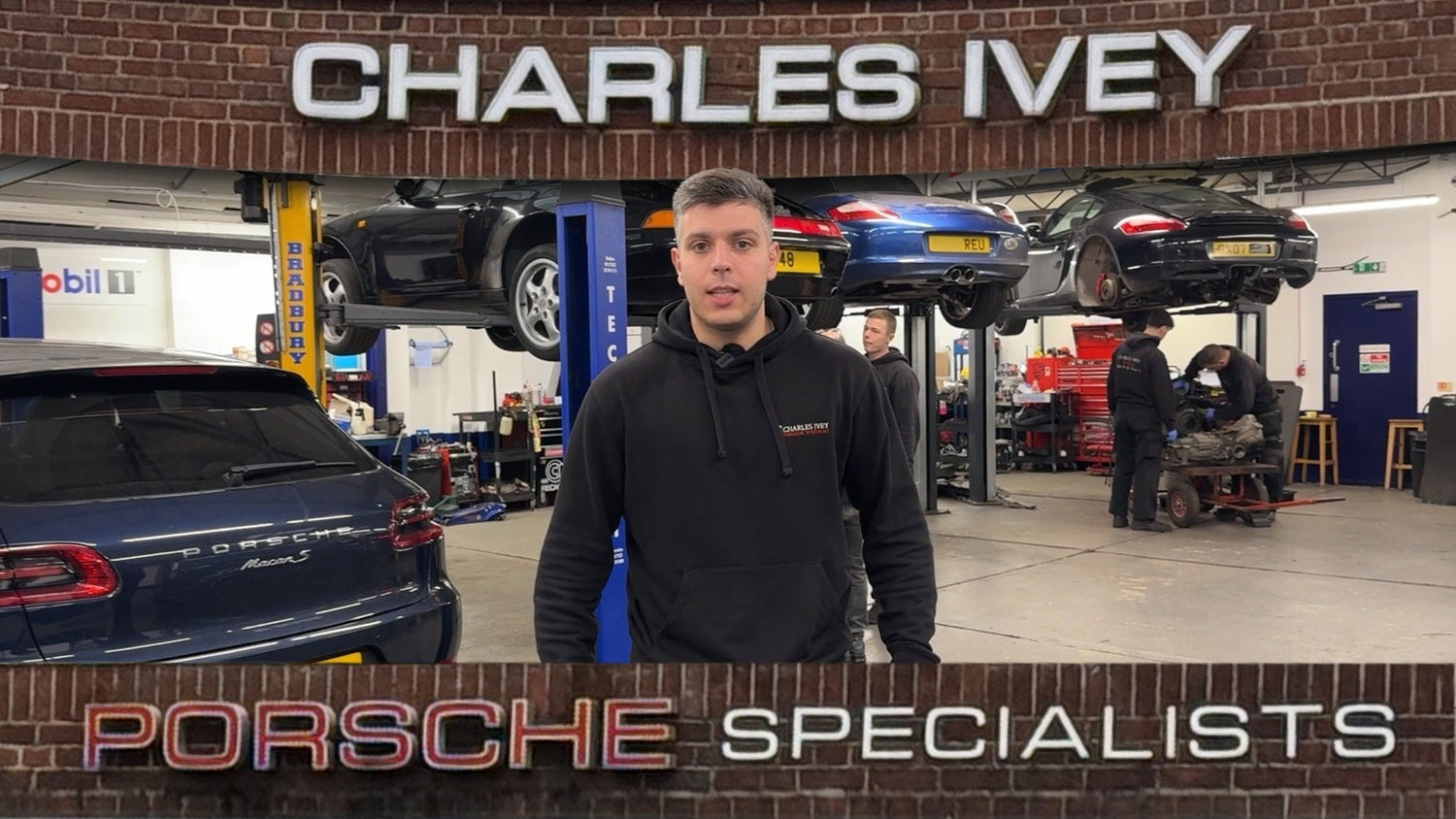
⬇️ Part 1 : A brief overview of the video content featuring Daniel from Charles Ivey Specialist Cars.
⬇️ Part 2 : An extended "Deep Dive" into the history of the Surbiton facility, the John Cooper Works legacy, and the detailed technical partnership with TEC 2000.
Part 1: Video Overview
A brief summary of the video featuring Daniel from Charles Ivey Specialist Cars.
Story of Daniel from Charles Ivey Specialist Cars, a premier Porsche specialist based in Surbiton, who has integrated TEC 2000 products into their service routine for over 10 years. Operating from a historically significant workshop, the team handles everything from classic 1960s restorations to modern 2020s maintenance. By utilizing TEC 2000 fuel additives and cleaners, they successfully manage emissions, prevent DPF issues in city-driven diesel Porsches, and ensure peak performance in their race cars—proving that a premium product is essential for maintaining the high standards expected by Porsche owners.
Key Elements:
- Historic Location: Operating from the historic ex-John Cooper Works building, with a focus on Porsche excellence.
- Decade of Trust: Over 10 years of consistent use of TEC 2000 products across classic and modern vehicles.
- DPF Protection: Proven solution for preventing DPF and EGR clogging in diesel Macans and Cayennes used for city driving.
- MOT & Emissions: Essential for emissions reduction to help vehicles pass MOTs and run cleaner.
- Race Proven: Standard procedure for race car engine rebuilds and pre-season preparation.
- Customer Confidence: High customer trust, with 90% of clients opting for the additive during yearly servicing.
A Historic Legacy of Automotive Excellence
Charles Ivey Specialist Cars is not just any garage; it is housed in the legendary ex-John Cooper Works building in Surbiton, the birthplace of the Mini Cooper and the 1959/1960 Formula 1 winning cars. Working in a facility designed with a concave front—an homage to the aerodynamic chassis of F1 cars—Daniel and his team carry on a tradition of mechanical precision. Specializing in Porsche, they cover the full spectrum of automotive care, including engine rebuilds, gearbox repairs, bodywork, and restorations for vehicles ranging from the early 60s classics to the latest modern-day models.
Over a Decade of Results with TEC 2000
For more than 10 years, the workshop has relied on TEC 2000 fuel additives to maintain the high performance of the vehicles they service. The results speak for themselves, leading to a seamless integration of the product into their workflow. Whether it is bringing down emissions for MOT compliance or fine-tuning classic cars that require a delicate touch, the team has found the products to be indispensable. This long-term trust in the brand highlights the effectiveness of the additives in delivering consistent, measurable improvements in engine health year after year.
Solving DPF Issues in Modern Diesels
One of the most practical applications Daniel highlights is the use of TEC 2000 in diesel Porsches, specifically the Macan and Cayenne models. Many of these vehicles are used for short journeys around London, a driving style that often leads to clogged Diesel Particulate Filters (DPF) and EGR valves. The workshop has found that using TEC 2000 Fuel Cleaner significantly helps prevent these components from clogging as often. This preventative maintenance allows customers to get better mileage and usage out of their cars before needing a regeneration, saving them from costly repairs and inconvenience.
From the Racetrack to the Road
The garage’s commitment to quality extends to their motorsport activities. TEC 2000 is a standard part of their protocol for race cars, specifically during engine rebuilds at the beginning of every season. By putting the cleaner in the system, they ensure the engines are running nicely and are fully prepared for the stresses of the track. This "race-proven" reliability gives everyday customers confidence; knowing that the same product protecting a high-performance race engine is being used in their daily driver to ensure longevity and good emissions.
Customer Satisfaction and Premium Care
Ultimately, the feedback from the Porsche owners is overwhelmingly positive. Daniel notes that they recommend TEC 2000 as part of the yearly service, and 90% of customers agree to it without hesitation. These clients appreciate that a premium product is being used in their premium vehicle. The result is a customer base that experiences fewer problems with fuel systems and emissions, leaving the workshop happy with the service and the tangible benefits provided by the treatment.
TEC 2000 Product Highlights in this Workshop
- DPF & EGR Protection: Vital for diesel vehicles doing short, city journeys, preventing costly clogs.
- Emissions Control: Drastically lowers emissions, aiding in MOT compliance for both modern and classic cars.
- Engine Longevity: Promotes longer engine life by keeping internal components clean and efficient.
- Motorsport Ready: Used in race car engine rebuilds to ensure reliability and performance.
- Classic Car Tuning: Assists in the fine-tuning of older engines for smoother operation.
Summary: In summary, Daniel and the team at Charles Ivey Specialist Cars demonstrate how TEC 2000 serves as a bridge between historic automotive craftsmanship and modern mechanical requirements. By using these products to tackle modern problems like DPF clogging in city traffic while also protecting race engines and classics, they ensure their customers' Porsches deliver the best possible driving experience. It is a partnership built on over a decade of trust and proven results.
Part 2: The Deep Dive
An extended, comprehensive look into the history of the Surbiton facility, the "Garagiste" spirit of Charles Ivey, the triumph at Le Mans, and the detailed technical partnership with TEC 2000.
Automotive Legends: From Victorian Omnibus Depots to Le Mans Glory
Table of Contents
1. Introduction: The Automotive Heart of Surbiton
- 1.1. A Unique Place on the UK Map.
- 1.2. The Building on Hollyfield Road – A Witness to Engineering History.
- 1.3. The Spirit of the Privateer: Connecting Victorian Industry to Porsche Excellence.
2. The Heritage of John Cooper Works (1940s–1960s)
2.1. Architecture as a Tribute to Engineering
- The History of the Concave Front.
- The Head Designer's Father and his Role in Creating the HQ.
2.2. The Formula 1 Revolution
- A Pioneering Solution: The Rear Engine Revolution.
- Team Successes: Championship Cars of 1959 and 1960.
2.3. The Birthplace of a Legend & The Police Irony
- Designing and Assembling the First Mini Cooper Models.
- The Blue Plaque (2018): Official recognition by English Heritage.
- The Police Era: How the Met Police used the factory to service their own Mini Coopers.
3. Charles Ivey: The Privateer Legend & Fulham Roots
3.1. The "Garagiste" Phenomenon
- Challenging the Factory Giants: Engineering ingenuity vs. Corporate budgets.
3.2. The Fulham Prelude: 160 Hurlingham Road
- Industrial Roots: The Victorian Omnibus Depot history.
3.3. The Le Mans Pinnacle (1981)
- Historical Context: The clash between Group 5 "Silhouette" cars and the incoming Group C revolution.
- The Result: 4th Overall, 1st in Group 5 – A historic victory for a private team.
3.4. The Later Years: 1982 Campaign & Group C2 Era
- 1982: The decline of Group 5.
- 1987-1988: Adaptation to Group C2 realities.
4. Charles Ivey Specialist Cars – The Modern Face of the Service
- Air-cooled vs. Modern Water-cooled Constructions.
- Comprehensive Services: Servicing, Restorations, Bodywork.
5. Partnership with TEC 2000 – Workshop Practice
- 5.1. Origins of the Partnership: Why a Service with Such History Chose TEC 2000.
- 5.2. Application in Diesel Engines (Macan, Cayenne, Panamera)
- 5.3. Motorsport and Classics
- 5.4. Customer Trust: Service Statistics (90% Acceptance).
6. Chemistry in Detail: Safety, Composition and OEM Comparison
- 6.1. OEM vs. Service Chemistry: "Keep Clean" vs. "Clean Up".
- 6.2. The Bio-Fuel Trap: Fighting E10 and B10 Degradation.
- 6.3. TEC 2000 Diesel System Cleaner: Lubricity and DPF Protection.
- 6.4. TEC 2000 Fuel System Cleaner: Filter Safety Tests.
7. Trivia (The "Did You Know?" Section)
8. Summary
9. Sources and Bibliography
1. Introduction: The Automotive Heart of Surbiton

1.1. A Unique Place on the UK Map
Surbiton, a quiet suburb in southwest London, might not immediately evoke images of roaring Formula 1 engines or technological revolutions. However, for automotive enthusiasts, this location is hallowed ground—a true sanctuary of engineering. It is here, far from the flashbulbs of grand racing circuits, that decisions were made in unassuming workshops that would forever change the face of global motorsport.
1.2. The Building on Hollyfield Road – A Witness to Engineering History
The center of this story lies on Hollyfield Road. The building, which today serves as the headquarters of Charles Ivey Specialist Cars, is far more than just walls and a roof. It is an architectural monument to motoring. The façade of the building alone reveals its extraordinary origins. Its distinctive concave front is not merely an architect's whim but a tribute to aerodynamics and engineering, designed in strict correlation with the construction plans of the racing cars that were built here.
1.3. The Spirit of the Privateer: Connecting Eras
The narrative of Charles Ivey is not merely a chronicle of a single car dealership or racing team; it serves as a microcosm of the British "privateer" spirit that defined European endurance racing in the late 20th century. Furthermore, the physical footprint of this entity—stretching from the industrial waterfront of Fulham to the hallowed grounds of Surbiton—serves as a tangible link connecting the Victorian industrial era, the golden age of Formula 1, and the modern custodianship of Porsche engineering excellence.
Understanding the "Charles Ivey Story" requires exploring a dual legacy: one written in tyre marks on the Mulsanne Straight at Le Mans, and the other preserved in the bricks and mortar of London’s most significant automotive landmarks.
2. The Heritage of John Cooper Works (1940s–1960s)
2.1. Architecture as a Tribute to Engineering
The building on Hollyfield Road is a rare example of architecture imitating engineering. As confirmed by historical records, the unique Concave Front of the building tells a fascinating family story. The father of the head designer at Cooper Car Company was an architect who utilized his son's blueprints for the Formula 1 car chassis to design the factory. Just as the race car utilized a revolutionary curved chassis design for rigidity and aerodynamics, the building's front was curved inwards.
2.2. The Formula 1 Revolution
It was within these walls that the modern Formula 1 car was effectively invented. The Cooper Car Company introduced the Rear Engine Revolution. Prior to this, racing cars had engines at the front. Cooper moved it to the rear, improving traction and weight distribution. These innovations led to back-to-back Formula 1 World Championships in 1959 and 1960, with legendary drivers like John Surtees and Jack Brabham at the wheel.
2.3. The Birthplace of a Legend & The Police Irony

This building is the original "Ex-John Cooper Works" facility where the high-performance Mini Cooper was conceived. The site served as the engineering heart, while the adjacent property (now a hairdresser’s) was the original showroom.
The Blue Plaque: On August 16, 2018, the historical significance of this site was formalized when English Heritage unveiled a Blue Plaque on the building, cementing its status in British culture.
The Police Irony: After the Cooper F1 team moved out in 1965, the building gained a second life as a Metropolitan Police motor depot. Ironically, the police used this facility to maintain their fleet of... Mini Coopers. The very building that gave birth to these cars was used by the law to keep them running—a poetic twist of history.
3. Charles Ivey: The Privateer Legend & Fulham Roots
3.1. The "Garagiste" Phenomenon
Charles Ivey’s transformation from a specialist dealer into a formidable participant on the world endurance racing stage represents a key chapter in the history of "Garagiste" teams. Unlike factory efforts backed by massive corporate budgets, private teams like Charles Ivey Racing relied on engineering ingenuity, the durability of customer chassis (mainly Porsche), and the determination of gentleman drivers.
This dynamic created a unique ecosystem where tactics and reliability often triumphed over raw speed and unlimited budgets. This ethos—doing more with skill rather than just money—is the foundation of the workshop’s philosophy today.
3.2. The Fulham Prelude: 160 Hurlingham Road
Before establishing the current "Cathedral of Porsche" in Surbiton, Charles Ivey Specialist Cars spent 44 years in Fulham, specifically at 160 Hurlingham Road. This location was no ordinary garage; it was deeply rooted in London’s industrial past. Originally built in the 1880s as a Victorian Omnibus Depot for the London General Omnibus Company, its vast open spaces—designed for horse-drawn carriages—proved perfect for a modern Porsche workshop. Recognized as a "Building of Merit," it was here that Ivey built his reputation before moving to the spiritual home of motorsport in Surbiton.
3.3. The Le Mans Pinnacle (1981)

The 1981 24 Hours of Le Mans (49th Grand Prix of Endurance) stands as the apogee of Charles Ivey's racing endeavours. The context of this race was significant; it marked the final season of Group 6 racing and the dominance of Group 5 "Silhouette" cars before the Group C era fully took over FIA regulations. It was a transitional moment in motorsport history, where the old guard of turbocharged mechanics clashed with the incoming ground-effect revolution.
Despite these shifting tides, Ivey's team, driving a Porsche 935 K3/79 (Car Number 55), achieved the unthinkable. Driving alongside Claude Bourgoignie and John Cooper, they battled through the night to finish:
- 4th Overall (Beating factory prototypes and Ferrari 512BBs)
- 1st Place in Group 5
| Category | Details |
|---|---|
| Car | Porsche 935 K3/79 |
| Team | Charles Ivey Racing |
| Drivers | Charles Ivey (GB), Claude Bourgoignie (BE), John Cooper (GB) |
| Result (Overall) | 4th Place |
| Class Result | 1st Place (Group 5) |

3.4. The Later Years: 1982 Campaign & Group C2 Era
The 1982 Campaign: Following the triumph of 1981, the 1982 season marked the twilight of the Group 5 era. While the team continued to show competitive pace, the regulatory landscape was shifting rapidly towards purpose-built prototypes.
Group C2 Era (1987-1988): Adaptation to New Realities. In the late 80s, Charles Ivey Racing adapted to the new regulations by entering the Group C2 category. This era required a different engineering approach, focusing on efficiency and aerodynamics in lighter prototype chassis. This willingness to evolve—from heavy GTs to lightweight prototypes—demonstrates the same adaptability that the workshop uses today when switching from air-cooled engines to modern hybrid systems.
4. Charles Ivey Specialist Cars – The Modern Face of the Service
4.1. Scope of Specialisation: Porsche (1960s–2020s)
Under the current leadership of Daniel and his team, the workshop’s expertise covers the entire lineage of the Stuttgart brand. Technicians here are "bilingual" in Porsche engineering—capable of tuning delicate carburettors of a 1960s classic while employing advanced diagnostics for a modern Panamera or Taycan.
4.2. Technical Facilities
The workshop is equipped for heavy mechanical intervention. One of the core competencies is the engine building room, where the team performs full rebuilds of flat-six engines and gearbox overhauls. Staying true to Ivey’s Le Mans history, they continue to prepare track cars, rigorous pre-season maintenance where the choice of chemical partners becomes critical.
5. Partnership with TEC 2000 – Workshop Practice
5.1. Origins of the Partnership
For over 10 years, Charles Ivey Specialist Cars has collaborated with TEC 2000. This long-standing relationship is born from tangible mechanical results. In a service centre handling everything from vintage classics to modern diesels, the "chemical tools" must be as reliable as the spanners.
5.2. Application in Diesel Engines (Macan, Cayenne, Panamera)
Modern Porsche diesel engines face a significant adversary: the "London Driving" style. Short urban journeys prevent proper operating temperatures, leading to clogged DPFs and EGR valves. The workshop utilizes TEC 2000 Diesel System Cleaner as a standard preventative measure. This regimen significantly extends intervals between DPF regenerations, saving customers from costly repairs.
5.3. Motorsport and Classics
For race cars, TEC 2000 is part of the pre-season engine rebuild protocol to ensure pristine fuel systems. For air-cooled classics (911, 356), the Fuel System Cleaner is essential for fine-tuning emissions to pass strict MOT tests while maintaining smooth operation.
5.4. Customer Trust
Daniel notes that 90% of customers accept the recommendation to use TEC 2000 during annual service. This high uptake reflects trust—clients notice the smoother idle and better throttle response, appreciating premium care for their premium vehicles.
6. Chemistry in Detail: Safety, Composition and OEM Comparison
6.1. OEM Chemistry vs. Service Chemistry – Differences in Approach
Porsche offers its own range of fuel additives (such as the Porsche Classic Fuel Additive). These are excellent prophylactic products, primarily designed for fuel stabilisation during long periods of storage (e.g., "wintering" a vehicle). However, for the Charles Ivey team, the daily reality is maintaining cars in harsh urban conditions using modern bio-fuels. This is why they turn to TEC 2000.
Crucially, this is not a product reserved solely for vintage restorations. It is the primary weapon in fighting the issues faced by modern, high-tech engines—particularly the Macan and Cayenne models in city traffic. While OEM additives focus on "Keeping Clean" during storage, TEC 2000 is "Clean Up" chemistry designed for active duty.
This conscious selection by industry experts is the reason behind the brand's slogan: "The PROFESSIONALS CHOICE".
6.2. The Bio-Fuel Trap: Fighting E10 and B10 Degradation
The biggest enemy of a modern engine is no longer just dirt, but the fuel itself. Mandatory bio-components undergo chemical degradation that standard additives cannot handle. TEC 2000 acts as a chemical stabiliser against these processes:
- Petrol E5 / E10 (The Phase Separation Issue): Ethanol is highly hygroscopic (absorbs water from the air). Over time, this leads to phase separation—water bonds with ethanol and sinks to the bottom of the tank as a corrosive, non-combustible layer. TEC 2000 uses specific chemical bridging agents to bind this moisture into a combustible emulsion, preventing tank corrosion and engine misfires.
- Diesel B7 / B10 / B20 (The FAME Oxidation Issue): Bio-additives in diesel (Fatty Acid Methyl Esters) are unstable. They rapidly undergo hydrolysis and oxidation*, separating from the diesel to form sticky gums and sludge at the bottom of the tank and inside filters. TEC 2000 utilises powerful solvents to chemically disperse these oxidised fractions, allowing them to be burned off safely without clogging the DPF.
6.3. TEC 2000 Diesel System Cleaner – Power Combined with Lubrication
The DPF issues in models like the Macan are often a symptom of poor combustion caused by fouled injectors. Unlike "dry" competitor products (solvents that increase friction), TEC 2000 takes a dual-action approach:
- Safe Removal of Contaminants: Utilises professional petroleum-based additives to safely remove carbon deposits from injector tips, restoring precise fuel mist and reducing soot.
- Mechanical Protection (Lubricity): This is the critical advantage. The formula includes specialised lubricity agents that protect high-pressure fuel pumps and injectors during cleaning. This makes the product safer than standard cleaners.
6.4. TEC 2000 Fuel System Cleaner – Filter Safety Tests
For petrol engines, priority is cleaning without collateral damage. Internal testing has demonstrated that even after months of immersion in concentrated TEC 2000, the microscopic filter baskets inside injectors remain in pristine condition with no signs of material degradation. This proves the formulation is safe for advanced adhesives and materials used in Porsche fuel systems.
7. Trivia: The Hidden Details of Surbiton
Did You Know?
- The Building is a Blueprint: The father of the original head designer at Cooper Car Company was an architect. He literally used his son's blueprints for a Formula 1 car chassis to design the factory. The "concave front" of the workshop is an architectural scale model of the "concave chassis" that revolutionised racing safety.
- The Omnibus Connection: Before Surbiton, the Charles Ivey team operated out of a Victorian Omnibus Depot in Fulham. The high ceilings designed for horse-drawn double-decker buses in the 1880s proved perfect for hoisting modern Porsches in the 2000s.
- The F1 Legacy Lives On: Every single car on a modern Formula 1 grid shares a common ancestor born in this building—the rear-engine layout pioneered by Cooper.
- From Mini Coopers to Haircuts: The building immediately next door (now a hairdresser’s) was originally the Mini Cooper Showroom where the public could first buy the car that defined the Swinging Sixties.
8. Summary
Where History Meets Modern Technology
Surbiton might seem like an unassuming backdrop, but the building at Hollyfield Road is proof that history is often hidden in plain sight. From the revolutionary "concave chassis" of the John Cooper Works era to the 4th Overall Le Mans finish by Charles Ivey, the spirit of this place remains unchanged: performance.
By partnering with TEC 2000, the team has bridged the gap between the mechanical purity of the past and the chemical engineering required for the future. For the owner of a modern Porsche, this is a service centre where the "Race to Road" philosophy is not just a slogan; it is a standard operating procedure, supported by "The PROFESSIONALS CHOICE" in service chemistry.
9. Sources and Bibliography
To ensure the highest level of accuracy, the information presented is based on historical records, official manufacturer data, technical safety documentation, and extensive research into automotive history.
9.1. Source Material: Official Position of Porsche AG
Porsche officially confirms the necessity of chemical maintenance in modern and classic vehicles to prevent corrosion and maintain fuel system cleanliness.
-
Porsche Classic Fuel Additive Highlights: Official manufacturer information regarding fuel stabilisation and tank protection for classic vehicles.
Link: Porsche Classic Additive Highlights -
Technical Service Bulletins (USA): Official service documents recommending the use of cleaning agents for injector maintenance.
Link (PDF): NHTSA Technical Bulletin MC-11016732-0001
9.2. Source Material: Insights from Porsche Specialists
-
Video Interview: “Porsche Charles Ivey and TEC 2000” – An in-depth conversation with Daniel, the workshop specialist at Charles Ivey Specialist Cars, discussing real-world applications and results.
Link: Watch on YouTube
9.3. Source Material: Le Mans & Racing Legacy
-
Motorsport Magazine: "Ivey's League - 935 Privateer" (Nov 2004) - Detailed history of the privateer team.
Link: Read Article -
24h Le Mans Official Track Record: Charles Ivey Team History.
Link: 24h Le Mans Database -
Racing Car Draws: Porsche 935 K3/79 n.55 - The car that took 4th place in 1981.
Link: Car Profile -
Experience Le Mans: 1981 24 Hours of Le Mans Results and Competitors.
Link: 1981 Results -
Asmonza Racing: Porsche 935 K3 1979-1981 Walkaround and History.
Link: Photo Gallery & Info -
Porsche Newsroom: The Australian links to Porsche's incredible Le Mans heritage.
Link: Porsche Newsroom Article - Wikipedia Archives: 1981 24 Hours of Le Mans & 1982 24 Hours of Le Mans.
9.4. Source Material: The Fulham Era (Hurlingham Road)
-
Fulham Society: History of 160-4 Hurlingham Road (The Omnibus Depot).
Link: Fulham Society News -
Marek Wojciechowski Architects: Hurlingham Road Project History.
Link: Architectural Project -
Consultation Presentation: 160-164 Hurlingham Road History (PDF).
Link: View Presentation
9.5. Source Material: Surbiton & Cooper Heritage
-
English Heritage: Cooper Car Company Blue Plaque.
Link: Blue Plaque Record -
Historic England: Former Cooper Cars Company workshop and showroom listing.
Link: List Entry 1429242 -
The Community Brain: The Mini Cooper and Surbiton.
Link: Local History Project -
Classics World: Cooper Car Company Commemorated.
Link: News Article -
Gov.uk Companies House: Charles Ivey (Specialist Cars) Limited filing history.
Link: Companies House
9.6. Source Material: Technical Safety Documentation
The claims regarding safety, lubricity, and bio-fuel stabilisation are based on the chemical composition analysis from the official Safety Data Sheets (SDS/MSDS).
-
TEC 2000 Fuel System Cleaner (Tank Additive):
- Amphiphilic Moisture Binders: A chemical answer to the E10 problem. These agents act as a bridge between water and petrol. They bind condensation moisture (the cause of phase separation) into a uniform emulsion that is safely burned in the combustion chamber, eliminating the risk of tank corrosion and freezing lines.
- Intelligent Aromatic Solvents: A specialised fraction targeting the specific gum deposits formed by ageing ethanol-blended petrol. It ensures the micro-filters in injectors remain permeable, preventing them from being blocked by polymerised fuel particles.
- Advanced Detergents (Surfactants): These components lower surface tension, preventing the agglomeration of contaminants precipitated from bio-fuels, allowing them to be effectively flushed out of the injection system instead of depositing on the walls.
-
TEC 2000 Diesel System Cleaner (Tank Additive):
- Polar Solvents for FAME Degradation: Crucial for breaking down oxidised fractions of fatty acid esters (biodiesel B10/B20) which form sticky resins gluing injectors. They dissolve deposits that fuel alone cannot remove.
- Microbial Barrier Components: Biodiesel (especially B10+) is a breeding ground for microbes creating a "bio-film" or sludge at the bottom of the tank. These components help sterilise the fuel system environment, preventing sludge formation that blocks filters.
- Hydrotreated Carriers & Lubricity Agents: The foundation of mechanical safety. In modern low-sulphur fuels, they act as a carrier and lubricant, protecting high-pressure pumps (HPP) from seizure that could occur with cheap, "dry" solvents.
- High-Energy Solvents: Specialists in "hard carbon". They chemically degrade charred fuel residues in the combustion chamber, helping to burn off heavier ester fractions and restoring factory compression.


Leave a comment
This site is protected by hCaptcha and the hCaptcha Privacy Policy and Terms of Service apply.