

TEC 2000 Field Report FR-2026-02 · September 2026
This report documents how The Test Station, an MOT, servicing and repair garage in Wallington and Carshalton, uses TEC 2000 products. It is based on a recorded interview with Ricky, who runs the garage, filmed on 6 November 2025. By his account, the garage has used TEC 2000 for over ten years and, especially in the last five, in every service job: Engine Flush as a minimum at every service, a fuel treatment added at every full service, and Oil Booster often used when customers complain of oil consumption. Four cases are set out in his words: a wet-belt Peugeot Citroen with a recurring oil problem after work at other garages, a fleet Peugeot with a sticky valve, cars with MOT emissions problems and no fault codes, and diesels with EGR, injector and DPF concerns. Each case is followed by a TEC 2000 explanation of how the product works, based on its technical data sheets. Outcomes are reported as the mechanic described them; no measurements are reported.
Download the report (PDF, 13 pages)| Garage | The Test Station, Station Depot, London Road, Wallington, and 99 Stanley Park Road, Carshalton Beeches, United Kingdom (two branches) |
|---|---|
| Interviewee | Ricky, Runs The Test Station |
| Interview recorded | 6 November 2025, The Test Station workshop, Wallington and Carshalton area, United Kingdom |
| Interviewer | David, TEC 2000 UK; additional questions from Slawek, TEC 2000 |
| Products discussed | TEC 2000 Engine Flush, TEC 2000 Oil Booster, TEC 2000 Diesel System Cleaner, TEC 2000 Fuel System Cleaner |
| Source recording | https://youtu.be/zeDHB75LKIM |
1 Background
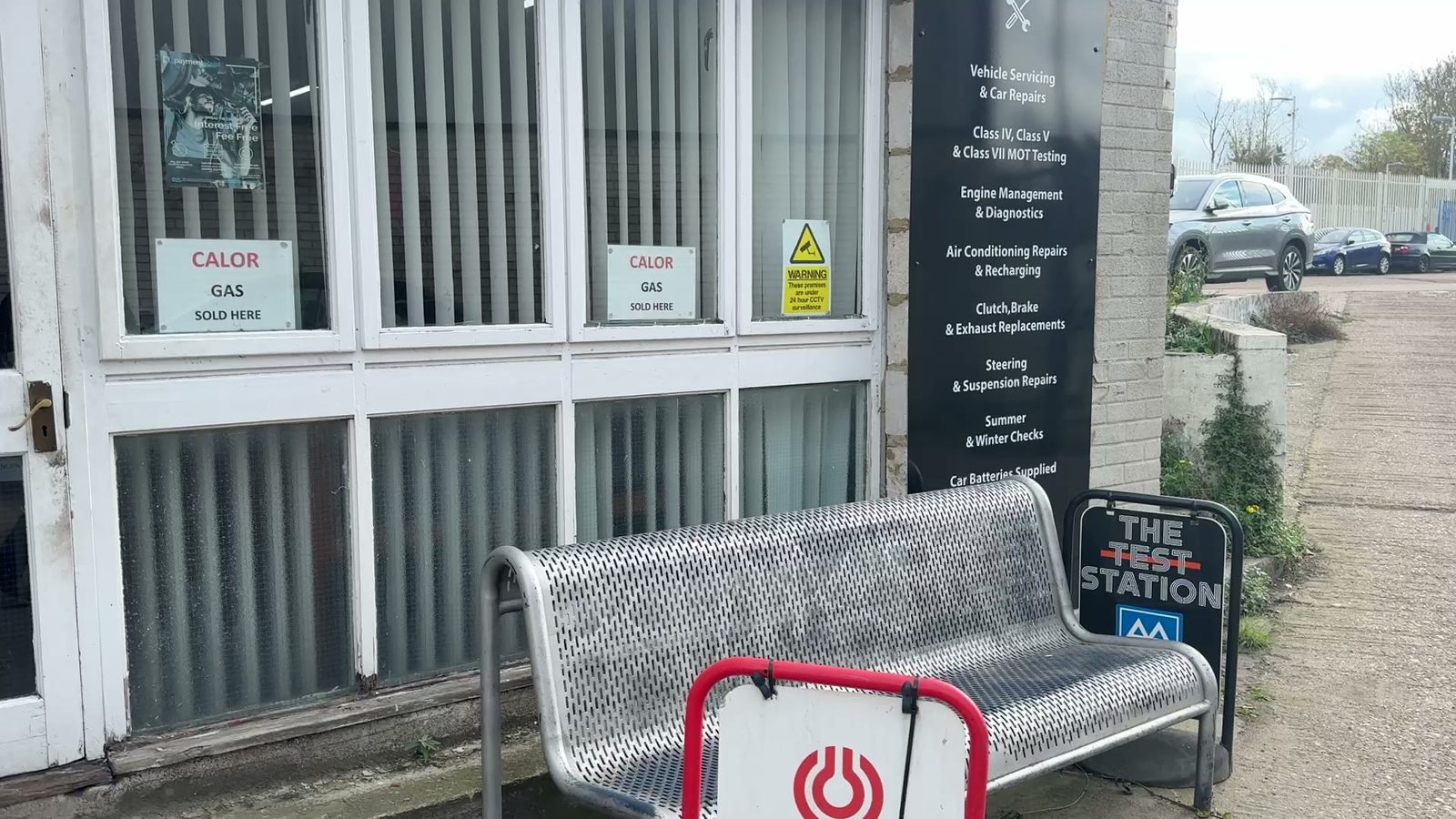
The Test Station has two branches close to each other: Station Depot, London Road, Wallington, and 99 Stanley Park Road, Carshalton Beeches. It does MOT testing, servicing and repairs, with the occasional engine rebuild, and has been established about 20 years.
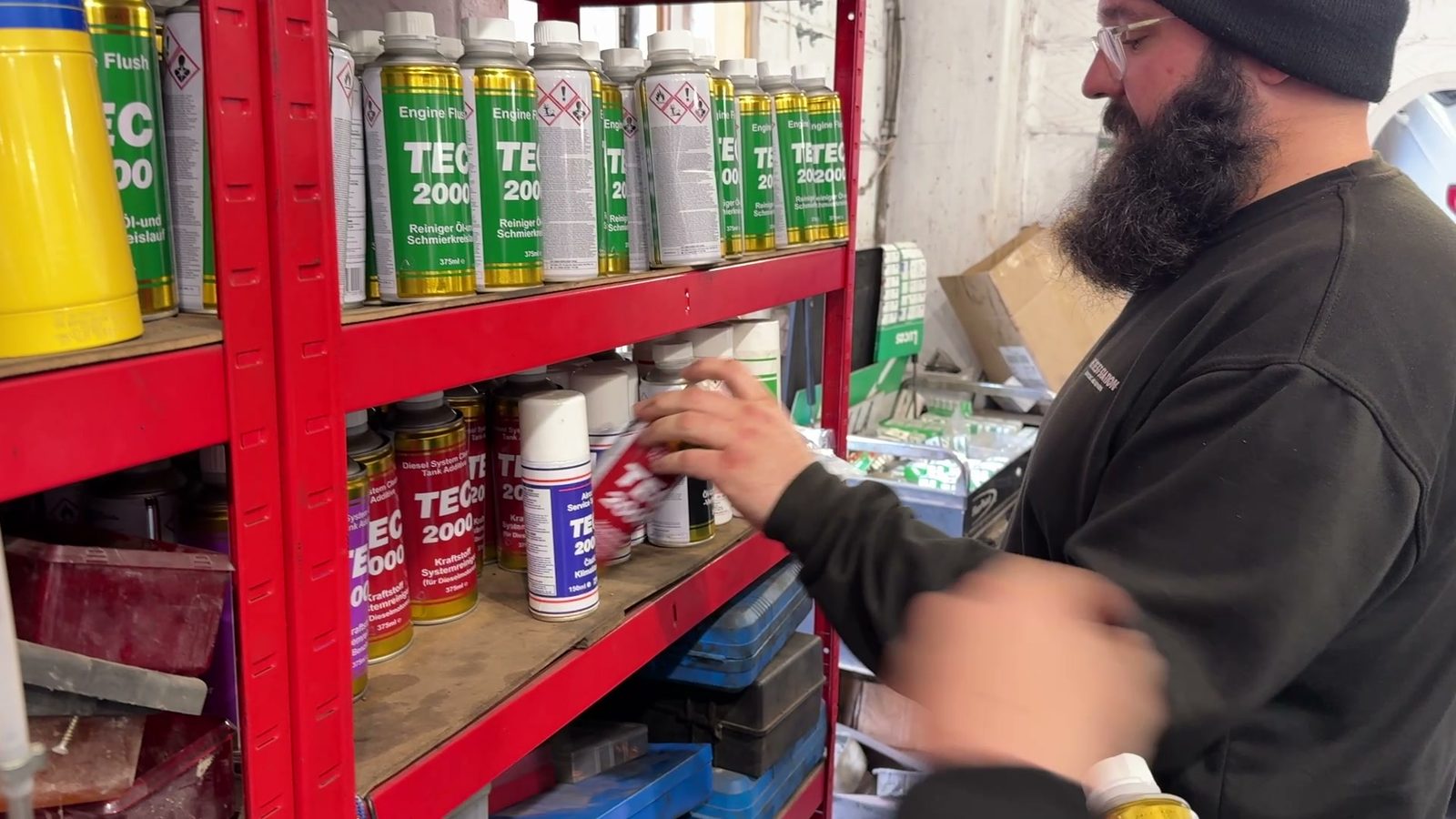
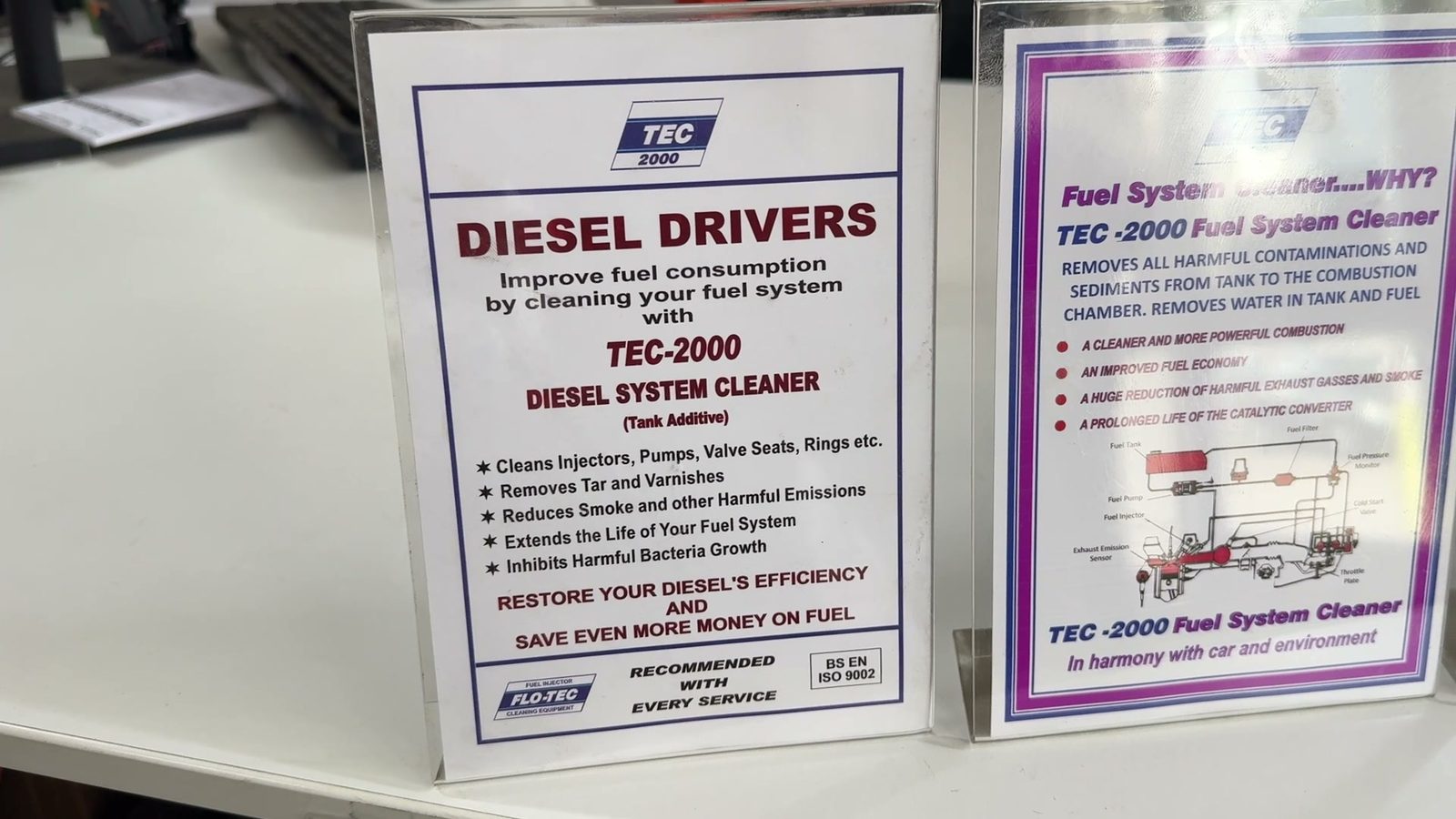
TEC 2000 products have been part of the garage's routine for more than ten years, and standard in every service job for about the last five. They are kept on a workshop shelf, and TEC 2000 information boards stand in the office, where Ricky shows them to customers who ask what the product is. Some customers now ask to buy a fuel treatment from the garage.
2 Method
Source: an on-camera interview recorded at The Test Station on 6 November 2025, conducted by David of TEC 2000 UK with additional questions from Slawek of TEC 2000. The main recording (IMG_4917.MOV) runs 10 minutes 11 seconds.
Quotations: the recording was transcribed with speaker labels and word-level timestamps, and every quotation was checked word by word against it. Hesitations and immediate repetitions are removed; other omissions are marked with an ellipsis. The brand name, transcribed phonetically, is spelt TEC 2000. Where Ricky answers a question that proposed the point, the question is quoted with the answer.
Times: each quotation gives its position in the raw recording and, where the passage is included, its time in the edited 3 minute 30 second film published at https://youtu.be/zeDHB75LKIM.
Products: Ricky uses generic terms (engine flush, fuel treatment, oil booster), matched here to the TEC 2000 products stocked and displayed at the garage. Sections headed 'TEC 2000 explanation' are written by TEC 2000 from its technical data sheets (revision 09.2026).
3 Findings
3.1 Case 1. Wet-belt Peugeot Citroen with a recurring oil problem
Vehicle. Peugeot Citroen with a wet timing belt; model not recalled by the interviewee
Problem. The car had been to various other garages, had had its wet belt done and "various bits and bobs done", but every now and then it was still having an oil problem. The warning light involved was named in the conversation by David as the oil light, and Ricky confirmed: "that was the Peugeot with the oil light, yeah."
Action. Engine Flush into the old oil, engine run up to temperature, oil drained, new filter and fresh oil, Oil Booster added to the new oil.
Outcome reported. In Ricky's words, this "resolved her light", meaning the warning light on that car. Asked by David whether the car had been back, he said he had not seen it since, then added that it probably had been in for other things, and that "this product resolved their issue." The flush, fresh oil, new filter and Oil Booster were all applied in the same job.
Products. TEC 2000 Engine Flush, TEC 2000 Oil Booster
“We once had a Peugeot Citroen in, I can't remember what model it was, not that long ago, that had been to various other garages. It's a wet belt vehicle. So as most people know in this industry, they are problematic. It had had the wet belt done, it had various bits and bobs done, and every now and then it was still having an oil problem. So we had it in, recommended a flush and an oil booster. So we put a flush in it, run it up to temperature, drained it all out, new oil and filter and an oil booster, and that resolved her light. And yeah, it worked amazing.”
Ricky, The Test Station, film 01:48
“David (TEC 2000 UK): "Haven't seen the car back?" Ricky: "Not seen the car back since."”
Ricky, The Test Station, film 02:19
“Obviously we probably have for other things, but this had been to another garage for the same concern, and this product resolved their issue.”
Ricky, The Test Station
TEC 2000 technical note. TEC 2000 explanation. Engine Flush is added to the used oil and takes carbonised oil, sludge and varnish into solution rather than breaking them off in flakes, so the dissolved material leaves with the drained oil instead of collecting on the oil pick-up strainer. Part of the blend becomes active only at operating temperature, which is why the directions call for a warm engine; an anti-wear film former protects loaded parts while the engine runs on the deliberately thinned oil.
Oil Booster, added to the fresh oil, stabilises viscosity and restores a reserve of anti-wear and acid-neutralising protection. Its directions recommend cleaning the engine with Engine Flush first where drain intervals have been long or the drained oil is visibly dirty, which is the order used on this car.
3.2 Case 2. Fleet Peugeot with a sticky valve and running issues
Vehicle. Peugeot fleet vehicle; model not stated
Problem. A sticky valve and running issues. According to Ricky, the operator suspected the engine might need a rebuild.
Action. Engine Flush, an oil and filter change, and Oil Booster.
Outcome reported. Ricky reports that the vehicle was driving perfectly afterwards and has done since, and describes it as "now good as gold". This account is from the full recording and is not in the published film.
Products. TEC 2000 Engine Flush, TEC 2000 Oil Booster
“So we had a Peugeot not that long ago that had a sticky valve, and had running issues. And we ran a engine flush, a oil and filter change, and an oil booster, and the vehicle was driving perfectly now and has been ever since we did it, and that was a fleet vehicle that was suspecting he was gonna have to have potentially an engine rebuild. And that's now good as gold.”
Ricky, The Test Station
TEC 2000 technical note. TEC 2000 explanation. Engine Flush works throughout the lubrication circuit, including hydraulic lifter bores and the oil return channels in the cylinder head. Alongside the main deposit-dissolving medium it carries a residue lifter aimed at the gummy film that builds on cooler surfaces such as the underside of the rocker cover, and a booster for baked-on varnish. Everything it does happens inside the oil, and all of it is drained with the old oil; nothing from it reaches the exhaust.
Oil Booster in the fresh oil strengthens the film on loaded valvetrain parts and slows the oxidation that turns hot oil to varnish over the next interval. The data sheet describes it as a preventive product: it does not reverse wear that has already happened.
3.3 Case 3. MOT emissions problems with no fault codes
Vehicle. Cars presented for MOT with emissions problems (routine practice, no single vehicle named)
Problem. Cars come in for an MOT with an emissions problem. If there are no fault codes, the garage does not go straight to in-depth diagnosis.
Action. A fuel treatment is added and the car is kept at the workshop and driven for a few days.
Outcome reported. In Ricky's words, "more often than not, that product's worked fantastically." Some customers now ask to buy the treatment; Ricky relays their report of four miles per gallon, which is the customers' account, not a garage measurement.
Products. TEC 2000 Diesel System Cleaner, TEC 2000 Fuel System Cleaner
“Other ones we've had is emissions problems with cars that may come in for an MOT. And first port of call now, just before looking into too much in depth, if there's no fault codes, we'll try a fuel treatment, send it out for a couple of days. We'll keep it in the workshop for a few days and give it a run, and more often than not, that product's worked fantastically.”
Ricky, The Test Station, film 01:20
“And you know, we actually have people come in now and say, "Do you mind if I buy one of them fuel treatments off you?" Just because they've noticed a difference in the product, you know, four miles per gallon.”
Ricky, The Test Station, film 01:39
TEC 2000 technical note. TEC 2000 explanation. Diesel System Cleaner (diesel) and Fuel System Cleaner (petrol) are poured into the tank and travel with the fuel through the whole fuel path to the injectors. A high-temperature cleaning component stays liquid long enough to reach the hottest, baked-on deposits at the injector tip; as these are dissolved, the spray pattern is restored and the fuel burns more completely. The Fuel System Cleaner data sheet lists use ahead of an emissions test on an older car.
TEC 2000 directions: the dose is a concentration in the fuel, one can to a full tank for maintenance or one can to about 25 litres for a stronger treatment. Cleaning takes place while the treated fuel is being burned, from the first miles onwards.
3.4 Case 4. Diesel full services: EGR, injectors and DPF
Vehicle. Diesel cars and vans in for a full service
Problem. Ricky names three concerns on modern diesels: EGR valve build-up, injectors costing 200 to 300 pounds each, and DPF problems on vans that no longer do motorway runs.
Action. At every diesel full service the fuel treatment goes into the tank or, where possible, the fuel filter. The fuel filter route is the garage's own practice; the TEC 2000 directions specify the tank.
Outcome reported. After Slawek raised fuel consumption, Ricky said the treatment "definitely improves fuel economy" and "definitely helps" with EGR build-up. On DPFs he speaks of maintaining cleanliness.
Products. TEC 2000 Diesel System Cleaner
“Slawek (TEC 2000): "So let's go to the diesel system here. ... The fuel consumption." Ricky: "So if we have a diesel vehicle in for a full service, we will apply this to either the tank or the fuel filter if we can. And yeah, definitely improves fuel economy, especially on new modern-day diesels. When you get the build up of certain EGR valves, et cetera, this definitely helps."”
Ricky, The Test Station, film 01:03
“And not only the injectors, the EGR valves, you know, any harmful smoke that the diesel's producing, especially if it's got a DPF, maintain the cleanliness of the DPF by just adding this product, you know. 'Cause a lot of these vans, they don't go down the motorway like they used to. So we often get DPF problems.”
Ricky, The Test Station
TEC 2000 technical note. TEC 2000 explanation. Diesel System Cleaner includes a deposit-lifting component that keeps released material suspended in the fuel, so that it leaves through the injectors instead of settling further down the system. Cleaner injector tips give finer atomisation and more complete combustion.
Where smoke was deposit-related, the data sheet links cleaner combustion to lower soot output, fewer DPF regenerations and less soot in the recirculated exhaust gas, which keeps the EGR side cleaner for longer. It describes reduced soot loading, not the clearing of a filter that is already blocked.
4 Daily practice at The Test Station
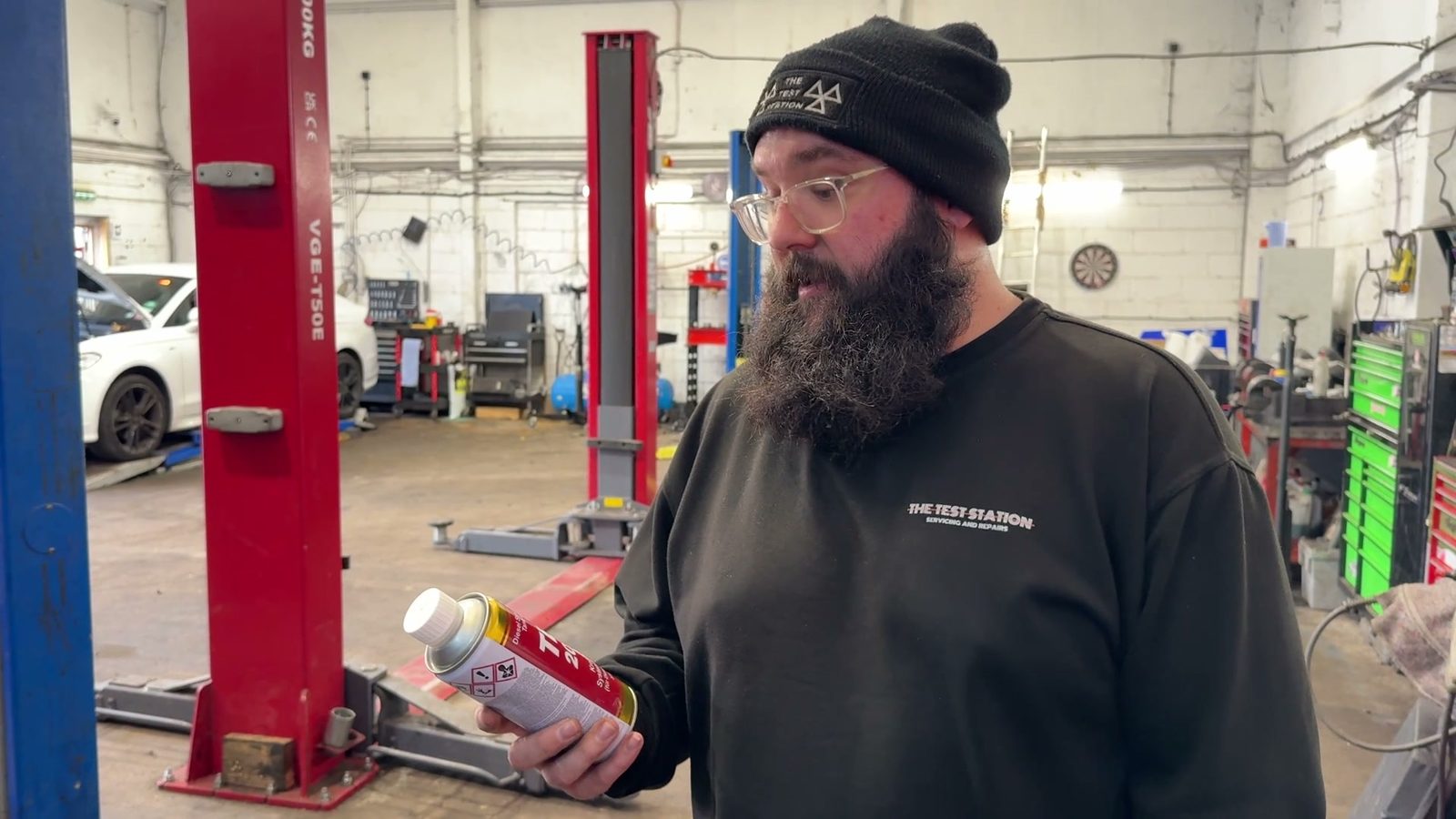
Engine Flush goes into every service, minor, annual or full. A full service adds a fuel treatment; on a diesel in for a full service it goes into the tank or, where possible, the fuel filter. Oil Booster is often added when customers complain of oil consumption.
Rocker covers serve as a check on service history: on cars claimed to have a good history, taking the rocker cover off may show carbon build-up and soot, while a car serviced here every year was clean inside. Ricky says he believes this is from the products; David attributed it to Engine Flush, Ricky agreed, and then put it as a question.
TEC 2000 information boards stand in the office, and Ricky shows them to customers who ask what the product is. He also offers his own customers a money-back arrangement on the product he fits; the arrangement is Ricky's own and is not offered by TEC 2000.
“So every service that comes in, whether it be a minor, annual, or full, we do a minimum of an engine flush. A full service will include a fuel treatment as well. And there'll be often times if people are complaining of oil consumption issues, we'll often use an oil booster as well.”
Ricky, The Test Station, film 00:45
“Ricky: "And you know, I believe it's from the products we put in." David (TEC 2000 UK): "All thanks to, yeah, to TEC 2000 engine flush." Ricky: "Yeah. In the engine flushes. I think we'd serviced it every year for the last three or four years. Took the rocker box off to do some routine stuff and it was clean as a whistle. And you know, I think if we wasn't using the product, would it have been as clean?"”
Ricky, The Test Station
“I've even said to people that, you know, a money back guarantee, that if I fit that product and you're not happy with it, or you didn't want that product, I will cover the cost of that product.”
Ricky, The Test Station, film 02:52
5 Technical background: how the products work
5.1 TEC 2000 Engine Flush
In-oil cleaner added to the used oil at the end of the service interval, one 375 ml can per 4-5 litres of oil. The engine idles on it for about fifteen minutes at operating temperature, and it is then drained with the old oil and filter. Cleaning components work alongside anti-wear protection. For four-stroke petrol, diesel and gas engines of any mileage.
Product page: TEC 2000 Engine Flush
5.2 TEC 2000 Oil Booster
Concentrated treatment poured into fresh oil at the oil change, one 375 ml can per 4-5 litres of oil. It stabilises viscosity and adds a reserve of anti-wear, acid-neutralising and anti-oxidation protection. It supplements the oil change and does not replace it.
Product page: TEC 2000 Oil Booster
5.3 TEC 2000 Diesel System Cleaner
Tank additive treating the diesel fuel path from tank to injector tip: dissolves deposits, binds free water and controls microbial growth. Compatible with common rail, DPF, EGR and SCR/AdBlue systems at the recommended dose. Not for petrol engines.
Product page: TEC 2000 Diesel System Cleaner
5.4 TEC 2000 Fuel System Cleaner
Single-dose tank additive for petrol engines. It cleans along the fuel path to the injectors, the back of the intake valves and the lambda sensor, reduces the deposits reaching the catalytic converter, and binds water into the fuel so that it does not separate out. Not for diesel engines.
Product page: TEC 2000 Fuel System Cleaner
6 Key statements by Ricky
- “I would say for over 10 years I think we've been using it, and especially the last five years more predominantly in, you know, every service job we do.” (film 00:36)
- “So every service that comes in, whether it be a minor, annual, or full, we do a minimum of an engine flush.” (film 00:45)
- “If there's no fault codes, we'll try a fuel treatment, send it out for a couple of days.” (film 01:29)
- “So we put a flush in it, run it up to temperature, drained it all out, new oil and filter and an oil booster, and that resolved her light.” (film 02:09)
- “Took the rocker box off to do some work, and it was so clean in there.” (film 02:38)
- “Injectors on average are 2 to £300 each for a diesel injector ...” (film 02:42)
- “We're probably prolonging so many engines on the road by using your products.”
7 References
- Film: Ricky, The Test Station, recorded 6 November 2025 (TEC 2000 Official, YouTube). https://youtu.be/zeDHB75LKIM
- TEC 2000 testimonial article: The Test Station, wet-belt Peugeot oil problem. https://tec2000.com/blogs/testimonials/the-test-station-wet-belt-peugeot-oil-problem
- TEC 2000 Engine Flush, product page. https://tec2000.com/products/tec-2000-engine-flush
- TEC 2000 Oil Booster, product page. https://tec2000.com/products/tec-2000-oil-booster-oil-additive
- TEC 2000 Diesel System Cleaner, product page. https://tec2000.com/products/tec-2000-diesel-system-cleaner
- TEC 2000 Fuel System Cleaner, product page. https://tec2000.com/products/tec-2000-fuel-system-cleaner
8 Source and verification
Statements by. Ricky, Runs The Test Station, The Test Station, Station Depot, London Road, Wallington, and 99 Stanley Park Road, Carshalton Beeches, United Kingdom (two branches)
Recorded. 6 November 2025, The Test Station workshop, Wallington and Carshalton area, United Kingdom. On-camera interview conducted by David, TEC 2000 UK; additional questions from Slawek, TEC 2000
Video. https://youtu.be/zeDHB75LKIM. Key statements appear at 00:36, 00:45, 01:29, 02:09, 02:38, 02:42 in the published film.
Verification. The statements attributed to Ricky in this report are verbatim quotations from the recorded interview of 6 November 2025 at The Test Station. Passages marked with a film time can be checked in the published film at https://youtu.be/zeDHB75LKIM; the others are from the full recording of the same interview.
Technical notes. Prepared by TEC 2000 from the technical data sheets of the products concerned.
Related. The full story: Ricky, The Test Station · Download this report (PDF)


Leave a comment
This site is protected by hCaptcha and the hCaptcha Privacy Policy and Terms of Service apply.