
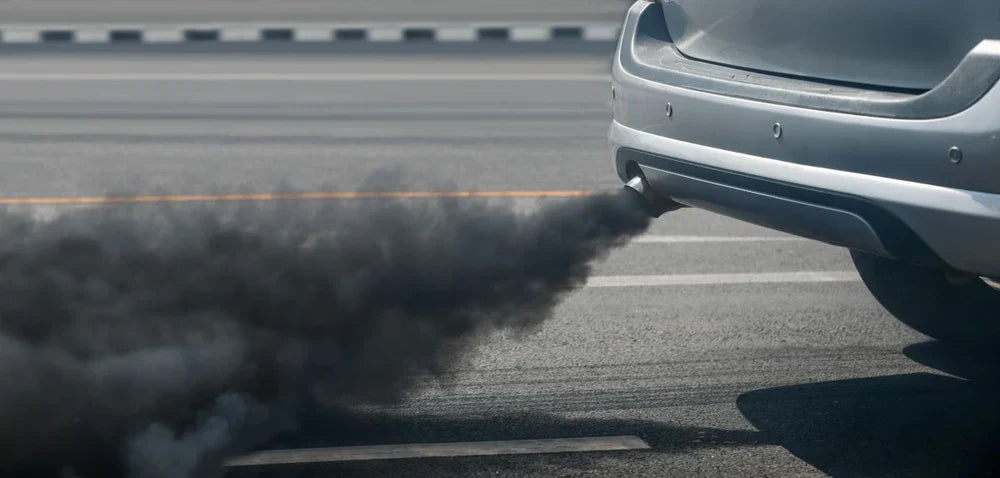
An injection system failure is the moment when the engine stops getting fuel the way it should – in the right quantity, at the right pressure and in exactly that fraction of a second in which it should find itself in the cylinder. Sounds technical? In practice it means one thing: the car starts running differently. It loses its urge, fuel consumption rises, smoking appears or the message “injection system failure”. And here the most important question arises – is this already a death sentence and an expensive reconditioning, or still a stage at which you can react sensibly and without panic? That's exactly what this post is about.
An injection system failure – is it always a serious fault and does it risk seizing the engine?
Briefly? Yes, it's a serious problem – but not every injection system failure means a catastrophe straight away. Fuel injection is the heart of a modern engine. If it stops working precisely, the whole combustion process is disturbed. And when combustion is uncontrolled, the consequences begin: rough engine running, jerking, higher temperatures, excess fuel in the oil. In an extreme scenario – the engine may even seize.
But there's also the other side of the coin. In many cases a fuel injection system failure begins with minor disturbances – dirty injectors, poor-quality fuel, driving on the reserve tank, moisture accumulated in the tank. That's when negative injection quantity trims appear, along with slight vibrations and occasional drops in power. This is the moment when you still have room to act.
One thing is crucial: don't ignore the first symptoms. Because a mild problem with fuel atomisation can turn into a damaged high-pressure pump, and that's a completely different cost bracket.
A fuel injection system failure – what exactly stops working in the car?
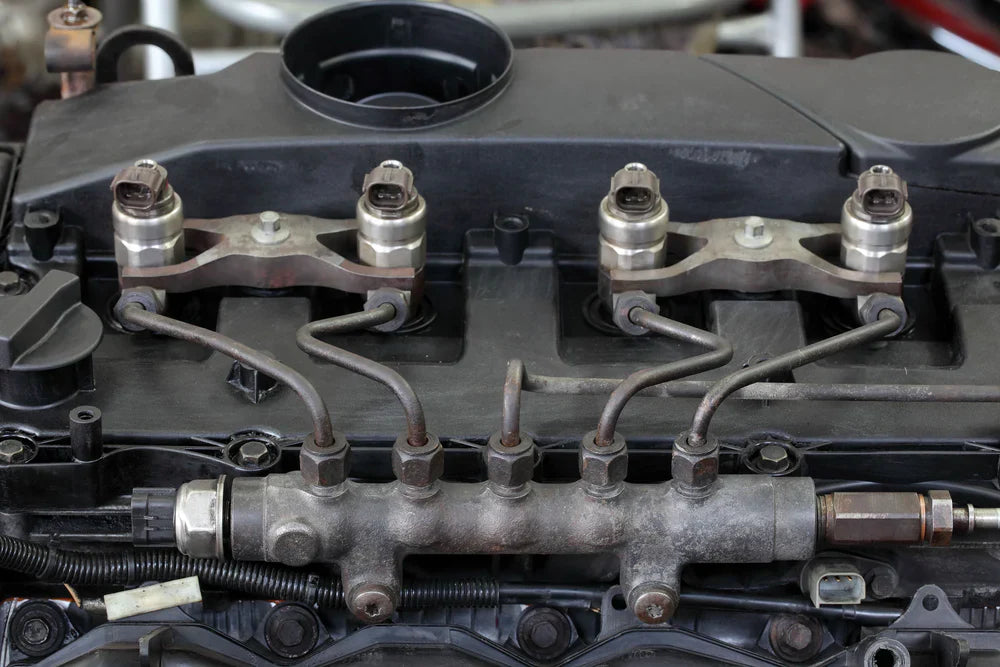
The injection system isn't just the injectors. It's a whole set of connected vessels. The fuel tank, the low-pressure pump, the high-pressure pump, the common rail, the sensors, the engine control unit – everything has to work in perfect synchronisation. If one component starts giving false readings or loses efficiency, the whole system stops holding its parameters.
Imagine a situation in which the rail pressure sensor reports incorrect values. The ECU responds by increasing the fuel dose. The injectors deliver more than they should. Smoking appears, fuel consumption rises, and you wonder whether “the injection is dead”. Meanwhile, mechanically it may still be perfectly serviceable.
On the other hand we have the heavier scenario – a worn high-pressure pump starts producing metal filings. These end up in the rail and in the injectors. And here we're no longer talking about a slight loss of adjustment, but about real damage to precision components. That's why it's so important not to reduce the phrase “injection system failure” to the injectors alone. Often the problem lies deeper.
The most common causes that lead to the problem
Most often not everything breaks at once. A fuel injection failure develops gradually. First deposits appear on the injector tips. Then the trims start going beyond the norm. Finally combustion stops being stable. And only then does the error message appear.
The most common causes include:
- dirty injectors and carbon build-up in the fuel system,
- driving on the reserve tank and drawing contaminants up from the bottom of the tank,
- moisture and water in the fuel,
- wear of the high-pressure pump,
- leaks in the fuel system,
- errors of the sensors and control electronics.
Sometimes the cause is driving style – short trips, an under-warmed engine, no regular fuel filter changes. Sometimes fuel of uncertain origin is to blame. In every case the common denominator is a loss of precision in fuel metering.
And that is the heart of the matter. An injection system failure isn't just “something has broken”. It's a signal that the engine has stopped working within its factory parameters. And the longer that lasts, the greater the risk that a minor fault will turn into an expensive repair.
An injection system failure – symptoms drivers ignore until the first limp mode
It starts innocently. The car seems a bit weaker, maybe it jerks slightly when pulling away. Then the Check Engine light comes on. Sometimes the message says it outright: “injection system failure”. And what then? Many drivers clear the fault and drive on. Until the first limp mode.
Typical symptoms of an injection system failure rarely appear suddenly at full scale. First come the warning signals.
- Rough running at idle.
- Vibrations that weren't there before.
- Surging revs.
- A clear drop in power when overtaking.
- Sometimes excessive smoking – either smoking on its own, or black or white smoke
- On top of that comes increased fuel consumption.
Very characteristic is a negative injection quantity trim, which in computer diagnostics shows that the ECU is trying to compensate for disturbances in metering. That isn't a death sentence yet, but it's a signal that something is no longer holding its parameters. If on top of that you can smell fuel and the oil level starts rising, the situation becomes more serious – fuel may be getting into the oil, thinning it and worsening the engine's lubrication.
Ignoring these symptoms is the worst thing you can do. The engine won't “fix itself”. Every kilometre driven with a maladjusted injection system means a greater load on the pistons, the valves, the DPF and the whole fuel system.
Does a negative injection trim always mean reconditioning?
No. And it's worth saying that outright. A negative injection trim very often results from a dirty injector, and not from mechanical damage to it. The ECU sees that the fuel dose isn't perfect, so it tries to correct it. This is still a stage at which you can act without dismantling anything.
The problem is that many people treat every deviation as a signal to recondition. Meanwhile, trims beyond the norm can have several causes: carbon build-up on the injector tips, poor fuel quality, driving on the reserve tank, a dirty fuel filter. In such situations it's worth first restoring cleanliness to the system and checking the parameters again.
Of course, if the trims are extreme, excess return flow appears and the engine runs very unevenly – that's another story. A mechanically worn or leaking injector won't regain its condition through cleaning alone. But before you decide on an expensive reconditioning, it's good to tell contamination apart from a real failure.
This is exactly where you see the difference between a “problem” and “damage”. The first can often be brought under control early. The second requires a workshop.
A damaged injection system – what will happen if you keep driving?
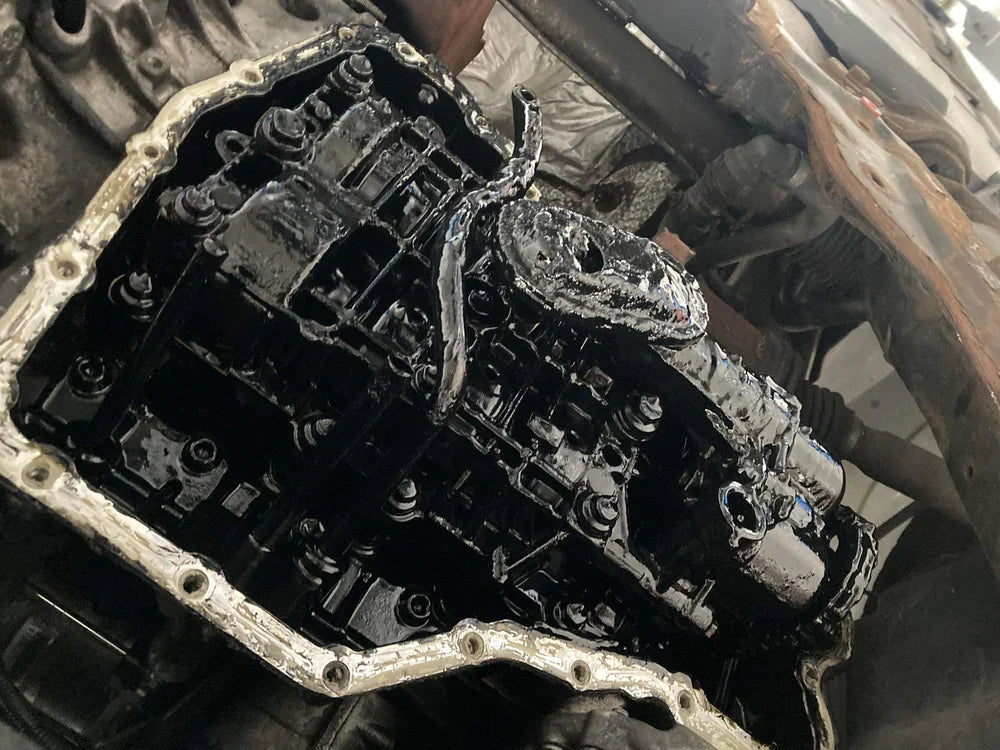
If the injection system doesn't hold its parameters, the consequences don't end with higher fuel consumption. The greatest threat is the oil being thinned with fuel and the loss of proper lubrication. And that's a straight road to accelerated wear of the bearing shells and the crankshaft, and in an extreme case – to the engine seizing.
On top of that comes the question of combustion. An incorrect fuel dose can lead to local overheating, burnt pistons or valve seats. Excess soot quickly clogs the DPF and destroys the catalytic converter. At that point the problem stops being an “injection failure” and becomes a rebuild of half the car.
The most expensive scenario is a damaged high-pressure pump producing metal filings. The filings circulate through the whole fuel system, destroying one component after another. In such a case replacing the injectors alone isn't enough. It may be necessary to flush the entire system, replace the pump, the rail, the lines, and even clean the tank.
In short – driving with a damaged injection system is playing for time. And it usually ends with a high bill.
What does step-by-step injection system diagnostics look like at a workshop?
Professional diagnostics start with the computer. Reading the fault codes and analysing the injection trims is the first step, which shows whether the problem is electronic or mechanical. The mechanic checks the pressure parameters on the common rail, compares the target values with the actual ones and observes the engine's response.
The next stage is the injector return-flow test. It lets you assess whether any of them is returning an excessive amount of fuel. If the results are uneven, the injectors require further verification. The condition of the high-pressure pump and the possible presence of filings in the system are also checked.
You can't forget about the electronics either. The rail pressure sensor, the mass air flow meter, the crankshaft position sensor or the pump control unit can generate symptoms similar to damaged injectors. That's why good diagnostics don't rely on guessing, but on analysing data.
Only after a full check is the decision taken – cleaning, reconditioning or replacement. And it is precisely this stage that often decides whether you close the subject at a reasonable cost, or prepare yourself for a more serious repair.
An injection system failure – the mild scenario: dirty injectors, poor fuel, trims beyond the norm
This is the moment at which you can still influence how the situation develops. The engine starts surging slightly, a negative injection trim appears, fuel consumption rises by half a litre or a litre. The car drives, doesn't go into limp mode, but you feel something isn't right. Very often this isn't yet a mechanical failure, but the effect of contamination in the fuel system.
Deposits on the injector tips, moisture in the fuel, driving on the reserve tank, filling up in random places – all of this gradually reduces the precision of fuel metering. The injector doesn't atomise a perfect mist, combustion stops being even, and the ECU starts correcting the dose. That's exactly when trims beyond the norm appear.
In such a scenario the first step doesn't have to be dismantling anything. It's worth starting with a thorough cleaning of the whole fuel system. TEC 2000 Diesel System Cleaner works directly in the tank – it dissolves accumulated deposits, binds water and restores the correct fuel spray. If the problem is more severe, in workshop conditions TEC 2000 Diesel Injector Cleaner is used, fed directly into the fuel rail.
This is real support for a system that isn't yet mechanically damaged. With mild symptoms it often allows correct combustion parameters to be restored and an expensive reconditioning to be avoided.
An injection system failure – the heavy scenario: leaking injectors, a damaged pump, the control unit
Here the situation looks different. The car clearly loses power, smokes, stalls at idle or goes into limp mode. The trims are extreme, excess return flow appears, and the engine runs louder than usual. This is no longer a stage of contamination, but of real damage to precision components.
Leaking injectors cause an excess of fuel in the cylinder. Part of it ends up in the oil, part doesn't burn completely. The high-pressure pump may lose efficiency or – worse – produce metal filings. And filings in the fuel system mean a serious rebuild.
If the pump or engine control unit is damaged, the symptoms can be misleading – the car behaves as though there were a mechanical failure, even though physically the injectors are still serviceable. That's why in the heavy scenario diagnostics have to be comprehensive, and the repair often involves reconditioning or replacing components.
In this case fuel additives won't repair a damaged injector or pump. They can, however, help after the repair – keeping the system clean and limiting the risk of the problem coming back.
An injection pump failure – when does the problem not end with the injectors alone?
Many drivers focus on the injectors, because those are what most often appear in the diagnosis. Meanwhile, an injection pump failure can be the beginning of a much more serious scenario. The high-pressure pump works under enormous load. If it starts to wear, it can lose pressure or generate microscopic metal filings.
And that's where the avalanche begins. The filings get into the common rail and on into the injectors. Over time they destroy their precision components. As a result, replacing one injector doesn't solve the problem, because the contaminants are still circulating in the system.
In such cases the repair often covers:
- reconditioning or replacing the pump,
- cleaning the rail and the lines,
- inspecting the fuel tank,
- checking all the injectors.
That is precisely why reacting quickly at the first symptoms is so important. The sooner you detect a drop in pressure or incorrect parameters, the smaller the risk of the damage spreading.
How do you prevent it and avoid coming back to square one in a few months?
Prevention doesn't sound spectacular, but with the injection system it makes an enormous difference. What matters most is keeping things clean and maintaining stable working conditions. Fill up with good-quality fuel. Don't drive permanently on the reserve tank. Change the fuel filter according to the schedule.
Regular cleaning of the fuel system helps limit the build-up of deposits in the injectors and the pump. Diesel System Cleaner used preventively helps maintain correct fuel atomisation and binds the moisture that can be a real problem in diesels. At the first symptoms, such as dose trims or engine vibrations, it's worth reaching first for a stronger cleaning product used in the tank. Only when that brings no result does professional injector cleaning at a workshop using Diesel Injector Cleaner remain the solution – as the final stage before reconditioning.
If you want to look after your diesel engine more broadly, it's worth taking a look at the “TEC 2000 diesel fuel additives – diesel products and preparations” category, where you'll find solutions that support the entire fuel system. It's a smaller outlay than reconditioning a full set of injectors or a pump.
FAQ
An injection system failure – how do you know it's the injection and not the turbo?
If negative trims, rough running at idle, hard starting and a smell of fuel appear, the problem most often concerns the injection system. A turbo more rarely causes injection trims.
An injection system failure – can you keep driving if the car still starts?
You can get home or to a service centre with mild symptoms. With heavy smoking, a drop in power and fuel in the oil, driving on risks serious damage.
An injection system failure – do fuel additives really help?
With contamination and mild disturbances – yes. They won't repair a mechanically damaged injector, but they can restore cleanliness and improve combustion parameters.
An injection system failure – when is cleaning enough, and when is reconditioning needed?
If the problem stems from carbon build-up and deposits, cleaning is often enough. With excess return flow, filings and mechanical damage, reconditioning or replacement is necessary.
An injection system failure – how much can putting off the repair cost?
A problem that is dismissed can end not only with reconditioning the injectors, but also with damage to the pump, the DPF and even the engine. And then we're talking about sums counted in thousands, not hundreds of euros.


Leave a comment
This site is protected by hCaptcha and the hCaptcha Privacy Policy and Terms of Service apply.