
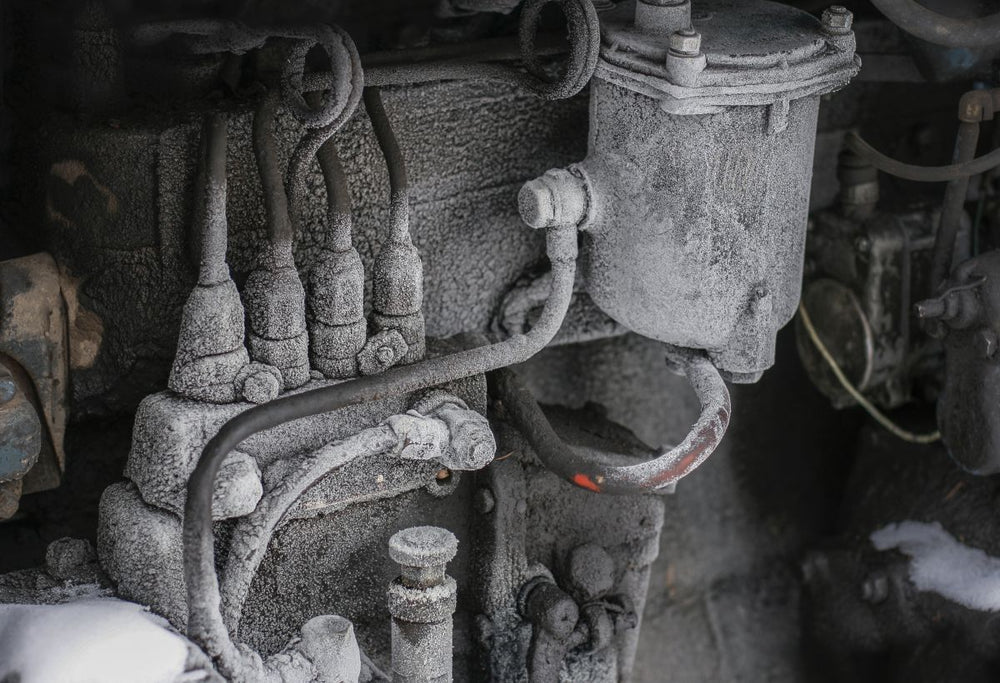
Morning, frost and silence after you turn the key – if the car suddenly stops starting, the culprit most often isn't “frozen fuel” in the literal sense. In practice it's a matter of wax in the diesel or water in the fuel system, which block the flow of fuel and cut the engine off from its supply. The good news? In most cases it can be sorted out without a costly repair – provided you don't make the situation worse with bad decisions. In this guide you'll learn what to do straight away, what not to do and how to avoid a repeat in the next cold snap.
What should you do when the fuel freezes and the car won't start? A quick step-by-step guide (with no risk to the engine)
If the car won't start after a frosty night, stop cranking the starter and first warm up the fuel system – that's the most effective action.
The most important steps:
- stop “wearing out” the starter – you can flatten the battery and make the situation worse,
- move the car to a warm place – a garage, a hall, a workshop; even a dozen or so hours makes a difference,
- don't add petrol, methylated spirits or paraffin – these are popular mistakes that can damage the injectors,
- after thawing, replace the fuel filter – it is usually clogged with wax or ice,
- use a water-binding product – e.g. TEC 2000 Diesel System Cleaner removes moisture from the whole fuel system,
- fill up with winter fuel – old summer fuel is the most common cause of the problem.
In practice it looks like this: in the morning you try to start the car, everything works – the warning lights, the starter turns – but the engine doesn't “catch”. This is the moment when many drivers start to panic and go on cranking. And that is exactly what makes things worse. The fuel isn't reaching the engine, so no number of attempts will change anything. Only raising the temperature of the system restores the flow.
After thawing it often turns out that the car starts “first time” – and then the conclusion appears: that wasn't a failure, but a typical winter problem, which will come back if you do nothing about it.
Frozen fuel in a diesel – symptoms that are easy to confuse with a failure (check before you start repairing anything)
The most common symptom is a situation in which the car cranks normally, but the engine doesn't start or stalls after a few seconds.
What to pay attention to:
- the starter works properly, but the engine doesn't “catch”,
- the car worked the day before with no problem, and in the morning it refuses to cooperate,
- no smoke from the exhaust – the fuel isn't reaching the combustion chamber,
- the engine fires for a moment and stalls,
- cloudy diesel can be seen in the filter or the lines – the effect of precipitated wax.
In winter such symptoms very often don't mean a mechanical failure, but a problem with the flow of fuel.
Diesel is sensitive to temperature – when it drops below around −10 to −20°C, wax crystals start forming in the fuel. These crystals block the fuel filter and the lines, so the engine doesn't get fuel despite fully working electronics.
As a result you have the impression of a serious fault, when in reality it's a typical winter scenario, which appears especially when there is old fuel in the tank or the car stands for a long time.
Why does a diesel “freeze”? Wax, water and the freezing point of diesel fuel, without the myths
Diesel doesn't freeze the way water does – the problem is the wax and the moisture, which block the fuel system.
What exactly happens:
- at low temperature wax crystals precipitate out,
- the fuel thickens and loses its fluidity,
- the fuel filter becomes blocked,
- water in the system can freeze and additionally block the flow,
- summer diesel fuel loses its properties as soon as the first bigger frosts arrive.
In practice it looks more or less like this: you fill up with fuel in the autumn, you drive without trouble, until the first harder frost comes. And suddenly the car won't start. Not because something has broken – but because the fuel isn't suited to the temperature.
Winter fuel meeting the EN 590 standard has resistance down to around −20°C, and arctic versions even lower. The problem appears when summer diesel fuel or poor-quality fuel is left in the tank.
On top of that comes moisture. Every tank “gathers” water from the air, and in winter condensation is greater. And then you have a double problem: wax blocks the flow, and ice adds another barrier.
Can petrol freeze in Poland? Facts about the freezing point and the real causes of problems
Petrol practically doesn't freeze in Polish conditions – the problems result from water in the fuel system.
The most important facts:
- the freezing point of petrol is as low as −40 to −60°C,
- in Poland such conditions occur extremely rarely,
- the problem is ice in the filter or the lines,
- moisture in the tank blocks the flow of fuel,
- a weak battery additionally makes the situation worse.
In practice the driver sees exactly the same thing as in a diesel: the car won't start, the starter works, but the engine is silent. And the conclusion appears: “the fuel has frozen”.
Except that with petrol it is almost never the fuel. It's the water, which has gathered in the tank and frozen at a critical point.
That's why the solution is similar: heat + removing the moisture from the system. And this is precisely where fuel additives come in, which bind the water and allow it to be burned safely together with the fuel. Products of the TEC 2000 Fuel System Cleaner type dry out the tank, the filter and the lines, which really does limit the risk of a repeat during the next drops in temperature.
What should you do if the fuel freezes in the car park outside your block?
If you don't have access to a garage, the only effective solution is to raise the temperature of the fuel system or to transport the car to a warmer place.
In such a situation you have a few realistic options:
- call assistance or a flatbed – many policies cover a car being immobilised in winter,
- try to warm the car locally – e.g. by putting it in a friend's heated garage or in an underground car park,
- use fuel additives only after thawing – before that they have no way of working,
- don't try to “rescue” the car with jump leads or a booster – the problem doesn't lie in the electrics,
- avoid attempts to start it every few minutes – you're only making the battery's condition worse.
This is the moment when many people try to act “quickly”. Connecting jump leads, further attempts to start, fiddling with additives in the tank. The problem is that if the fuel isn't flowing, the engine won't get what it needs for ignition anyway.
Workshops' experience shows that in such situations it most often ends with towing the car and a dozen or so hours in the warmth. Only then does everything return to normal. And here an important thing appears – if it has happened once, the risk of a repeat is very high, because moisture and the remains of fuel with the wrong parameters still stay in the system.
Frozen fuel in the car – consequences that can hurt your wallet more than the frost itself
Ignoring the problem and trying to force the car to drive can lead to real damage to the fuel system.
The most common consequences are:
- a blocked fuel filter, which stops letting fuel through,
- damage to the fuel pump through running “dry”,
- accelerated wear of the injectors, especially in a diesel,
- corrosion of the system's components caused by water,
- starting problems recurring with every bigger frost.
Many drivers dismiss the subject, because after one warmer day the car works again. And then the thought appears: “so nothing happened”.
And yet something did happen. The fuel filter may already have become partly clogged, and the moisture in the system is still there. It's a bit like driving with a minor fault, which over time becomes more and more serious.
In diesel engines the injectors are particularly sensitive. A shortage of fuel means worse lubrication and higher working temperatures, and that's a straight road to costly repairs. That's why, after such an episode, don't close the subject once the car has started – look after the fuel system before the problem comes back.
How do you prevent fuel from freezing in winter, in petrol and diesel?
The best way to avoid the problem is to check the fuel and the moisture in the system before the frosts arrive.
The most important actions:
- fill up with fuel suited to the season – winter diesel fuel has different properties from summer fuel,
- keep the tank as full as possible – less air means less moisture,
- replace the fuel filter regularly,
- use water-binding additives – e.g. TEC 2000 Diesel System Cleaner or TEC 2000 Fuel System Cleaner, which dry out the tank, the lines and the filter,
- react to the first starting problems – it's often a signal that something is starting to happen in the system.
These aren't things you do once and forget. Rather a simple habit that saves a lot of nerves in winter.
Moisture in fuel is a natural phenomenon – the tank “breathes”, the temperature changes, water vapour condenses. The problem starts when there is too much of that water. Modern fuels, especially those with added bioethanol, bind moisture even more easily, which only speeds the whole process up.
That's why fuel additives aren't a “whim”, but practical protection. They remove water, improve combustion and stabilise the engine's operation, especially in difficult conditions.
When should you prepare the car for frost, before the fuel freezes – specific dates and actions for Polish conditions
It's worth starting the preparations for winter as early as the turn of September and October, before the first ground frosts appear.
In Polish reality it looks like this:
- transitional fuel appears from the beginning of October,
- winter fuel comes in around the middle of November,
- the first problems with fuel often appear as early as −5 to −10°C,
- the greatest risk occurs with sudden drops in temperature,
- a diesel is the most sensitive to fuel quality and moisture.
That is precisely why the worst scenario is driving on the “dregs” of old fuel when the frost suddenly arrives. The car worked normally, until it stopped – without warning.
Drivers who prepare in advance, on the other hand, usually don't notice the problem at all. Replacing the filter, switching to winter fuel, a drying additive – that's enough to get through the whole season without stress and without morning surprises.
And that's a difference you really can feel – not in theory, but on the first frosty morning.
FAQ
Is frozen fuel in a diesel a common problem?
Yes, especially at low temperatures and when driving on summer fuel or poor-quality fuel.
Can petrol freeze in a car?
In Polish conditions practically not – the problem is freezing water in the fuel system.
What should you do when the fuel freezes and the car won't start?
First warm the car and the fuel system, and only then act further – without forcing the starter.
Does adding petrol to a diesel help in winter?
No, it's a risky myth that can lead to damage to the injection system.
How do you avoid the problem of frozen fuel?
Fill up with winter fuel, keep the tank full and remove moisture from the fuel system.



Leave a comment
This site is protected by hCaptcha and the hCaptcha Privacy Policy and Terms of Service apply.