
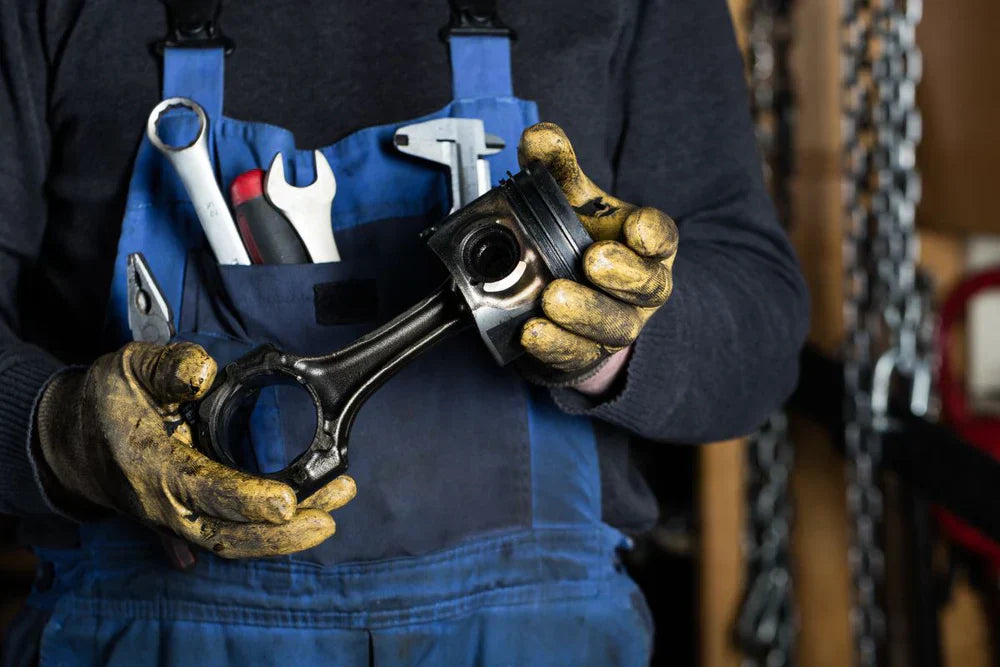
An engine does not lose compression overnight. Very often it all starts innocently – with a slight loss of oil, slightly weaker acceleration or a strange noise after a cold start. Later on, smoking joins in, more frequent oil top-ups and the feeling that the car "is driving more and more heavily", even though formally nothing much has happened yet. And that is exactly when many drivers start hearing the phrase: piston rings.
The problem is that completely different scenarios can hide behind that term. Sometimes it is about rings seized by carbon build-up and deposits, sometimes about ordinary wear after a high mileage, and sometimes about a more serious mechanical failure. The symptoms can be similar, which is why it is very easy to confuse a problem with the rings with, for example, the turbocharger, the valve stem seals or even a badly working breather.
The most important thing? Do not ignore the first signals. Because the engine usually gives warnings long before it ends in a rebuild.
Why does the engine start using oil and losing power – can the piston rings really be to blame?
Yes – damaged or seized piston rings very often cause oil burning, a loss of power and worse acceleration all at the same time. This is precisely why drivers often notice several symptoms at once, even though at first they seem completely unrelated.
The piston rings are responsible for:
- maintaining the seal between the piston and the cylinder,
- controlling the oil film,
- maintaining compression,
- carrying heat away from the piston.
When they start working less well, the engine loses its seal. Oil can get into the combustion chamber, compression starts to drop and the engine gradually loses efficiency. The effects are usually felt during everyday driving:
- the car accelerates more weakly,
- it responds worse to the throttle,
- it needs more time to get up to speed,
- it starts using more fuel,
- smoke from the exhaust appears.
A combination of several symptoms at once is also very characteristic. If the car:
- is using oil,
- is smoking bluish,
- is losing power,
- and starts running less smoothly,
the problem may concern precisely the piston rings or the components working with the cylinders.
Many people focus solely on topping up the oil. That is a mistake. The loss of oil itself is only a consequence. It is far more important to establish why the oil is starting to end up where it should not.
How do you really recognise cracked piston rings – before the engine starts asking for a rebuild?
Cracked piston rings usually give stronger symptoms than seizing alone or natural wear. The engine runs noticeably worse, loses compression faster and starts to give away more and more that the problem is no longer just a matter of "normal wear and tear".
The most common signals look like this:
- very rapid oil consumption,
- a clear loss of power,
- a problem reaching higher speeds,
- difficult cold starting,
- bluish smoke from the exhaust,
- uneven engine running,
- rattling or piston slap at low revs.
The car's behaviour after standing overnight also tells you a lot. If the engine:
- cranks for a long time,
- fires unevenly,
- smokes more heavily for a moment,
- runs "harder" than usual,
it is worth checking the compression and the general condition of the cylinders.
In more serious cases the situation can even reach the point where fuel starts getting into the engine oil. That is a very dangerous scenario, because diluted oil loses its lubricating properties, and the risk of further engine wear then rises sharply.
The worst thing is that many drivers try to "drive a bit longer". The problem is that with cracked rings the damage often starts to take in not only the rings themselves, but also:
- the pistons,
- the cylinders,
- the cylinder bore surfaces,
- and sometimes even the cylinder head.
And that is exactly why a combination of several strong symptoms at once should be a signal for quick diagnostics, rather than for another oil top-up.
Seized, worn or cracked – how do you know what stage of the problem the engine is at?
This is a very important distinction, because each of these problems means something completely different for the engine – and for the cost of the repair.
Seized piston rings are often an earlier stage of the problem. The rings lose their freedom of movement because of:
- carbon build-up,
- soot,
- oil deposits,
- stretched oil changes,
- inadequate lubrication.
The engine may then:
- start using oil,
- smoke slightly,
- accelerate more weakly,
- have reduced compression.
At this stage a thorough cleaning of the inside of the engine and an improvement in lubrication conditions can sometimes still help. That is why some drivers use TEC 2000 Engine Flush when changing the oil – especially when the problem looks more like deposits and seizing than a typical mechanical failure. The product is intended to help remove carbon build-up and contaminants from the piston ring grooves and the inside of the engine.
Worn piston rings already mean a physical deterioration of the seal. Here the symptoms usually become more pronounced:
- higher oil consumption,
- a stronger loss of power,
- worse acceleration,
- increasingly poor compression.
The most serious scenario is cracked piston rings. The problem then stops being a matter of normal use and becomes a typical mechanical fault. A cleaning product alone will not undo damage to metal, a cracked ring or a worn cylinder.
And that is exactly why reacting quickly to the first symptoms matters so much. Between light seizing and a full engine rebuild there are often a great many intermediate stages.
Why do piston rings get damaged – and why does the air filter matter more here than many people think?
Piston rings do not wear out solely "from old age". Very often the problem starts much earlier – with the oil, carbon build-up or contaminants which gradually worsen the operating conditions of the whole engine. And that is exactly why two cars with a similar mileage can be in a completely different condition.
The most common causes of problems with piston rings are:
- oil changed too rarely,
- driving on worn or contaminated oil,
- carbon build-up and deposits in the ring grooves,
- inadequate lubrication,
- engine overheating,
- a neglected air filter,
- dust and sand getting in through the intake,
- ignoring the first symptoms of oil burning.
Many drivers do not realise how enormously important the intake system itself is. If the air filter is badly neglected or the intake lets contaminants through, particles of dust and sand can reach the engine and act practically like an abrasive. The result? Accelerated wear of the cylinders, the pistons and precisely the piston rings.
Carbon build-up also has a big influence. In modern engines, particularly those used mainly on short journeys, deposits can build up very quickly. The rings then lose their freedom of movement, start to stick in the piston grooves and seal the combustion chamber worse and worse.
The worst scenario usually looks similar:
- first light oil burning appears,
- then the amount of deposits grows,
- compression drops,
- the engine starts smoking more heavily,
- and for a long time the driver limits themselves solely to topping up the oil.
And that is exactly when a small problem can turn into a very expensive repair.
Do blue smoke and frequent oil top-ups always mean a problem with the rings?
Not always – but very often that is precisely where the diagnosis starts. Especially when, along with the smoking, the following appear:
- a clear loss of oil,
- a loss of power,
- weaker acceleration,
- uneven engine running.
The most characteristic sign of oil burning is smoke with a bluish tint. Such a colour usually means that oil is getting into the combustion chamber and is being burnt along with the air-fuel mixture.
The moment at which the smoke appears also says a lot:
- smoke after starting may point, among other things, to the valve stem seals,
- smoke under acceleration more often directs attention to the piston rings or to compression problems,
- smoking under load often suggests that the engine has an increasingly serious problem with sealing.
It is worth remembering, however, that the smoke alone does not yet give a one hundred per cent diagnosis. Similar symptoms can also be caused by:
- the turbocharger,
- the valve stem seals,
- the breather,
- problems with the cylinders,
- the head gasket.
It becomes an alarm signal when the car starts burning really large amounts of oil. If top-ups appear every few hundred kilometres and the engine also:
- loses power,
- starts harder,
- runs worse at idle,
- starts rattling,
it is worth checking the compression and the condition of the engine as soon as possible.
How does a mechanic check whether the problem is the piston rings and not the turbo or the valves?
Good diagnostics is crucial here, because the symptoms of damaged rings are very easy to confuse with other engine problems. And that is exactly why blue smoke or oil burning alone is not enough to make a diagnosis.
Most often the diagnosis starts with the basics:
- checking the oil level and consumption,
- observing the exhaust gases,
- assessing how the engine runs,
- checking the intake and the air filter.
Then more specific tests usually follow:
- a compression test,
- a wet compression test,
- checking the spark plugs,
- analysing the condition of the oil,
- cylinder diagnostics and an endoscope inspection.
A compression test very often makes it possible to notice that one or several cylinders clearly stand out from the rest. A wet compression test, in turn, helps to distinguish a problem with the rings from problems related, for example, to the valves or the head gasket.
A mechanic usually also pays attention to:
- the rate of oil consumption,
- the colour of the exhaust gases,
- how smoothly the engine runs,
- noises at low revs,
- the condition of the intake and the breather.
In more advanced cases an endoscope inspection of the cylinders is carried out. This makes it possible to check:
- the condition of the cylinder bore surfaces,
- signs of seizing,
- the amount of carbon build-up,
- damage to the pistons.
And that is exactly why replacing parts "blind" very rarely makes sense. Symptoms similar to those of damaged rings can also be given by:
- the turbocharger,
- the valve stem seals,
- a damaged breather,
- compression problems not directly related to the rings.
Can an engine flush help with seized rings – and where does prevention end?
If the problem stems mainly from carbon build-up, deposits and seizing of the rings, an engine flush can be a sensible preventive support. Especially when the symptoms are still relatively mild:
- moderate oil burning,
- slight smoking,
- an initial drop in compression,
- deposits after long oil intervals.
TEC 2000 Engine Flush is used in precisely such situations – where carbon build-up and contaminants settling around the piston rings and inside the engine are suspected. The product is intended to help dissolve deposits and improve lubrication conditions before an oil change.
You do, however, have to separate two scenarios very clearly.
If the rings are:
- seized,
- dirty with carbon build-up,
- partly immobilised by deposits,
their operation can sometimes still be improved and the symptoms limited.
If, however, the following have occurred:
- a cracked ring,
- damage to the piston,
- wear of the cylinder,
- a very large loss of compression,
no product will undo mechanical damage.
And that is exactly why an engine flush should be treated as:
- support for preventive maintenance,
- part of the oil service,
- help with deposits and carbon build-up,
and not a "miracle cure instead of an engine rebuild".
Damaged piston rings very rarely give only one symptom. If the engine simultaneously starts burning oil, smoking, losing power and accelerating worse, it is not worth limiting yourself solely to topping up the oil – quick diagnostics often makes it possible to stop the problem before it ends in an expensive engine rebuild.
FAQ
What are the symptoms of damaged piston rings?
Most often these are oil burning, bluish smoke from the exhaust, a loss of power, poor acceleration and uneven engine running.
How do you recognise cracked piston rings?
Typical symptoms are difficult cold starting, high oil consumption, piston slap, a drop in compression and heavier smoking.
Do damaged rings cause oil burning?
Yes. When the rings lose their seal, oil can get into the combustion chamber and be burnt along with the fuel.
Do damaged piston rings cause a loss of power?
Yes, because compression drops and the engine makes worse use of the energy from burning the mixture.
Does blue smoke always mean a problem with the rings?
No. Similar symptoms can also be caused by the turbo, the valve stem seals or problems with the breather.
Can you drive with damaged piston rings?
For a short time – yes, but driving on usually deepens the engine damage and increases the cost of the repair.
Will an engine flush repair cracked rings?
No. An engine flush can help with carbon build-up and seizing, but it will not repair mechanical damage.
What destroys piston rings?
Most often worn oil, carbon build-up, contaminants in the intake, inadequate lubrication and stretched oil changes.
How much does it cost to repair piston rings?
Depending on the engine and the scope of the work, often from around €590–940, but with greater damage the costs can be considerably higher.
Can seized rings still be saved?
Sometimes yes – particularly if the problem stems mainly from carbon build-up and has been detected relatively early.


Leave a comment
This site is protected by hCaptcha and the hCaptcha Privacy Policy and Terms of Service apply.