
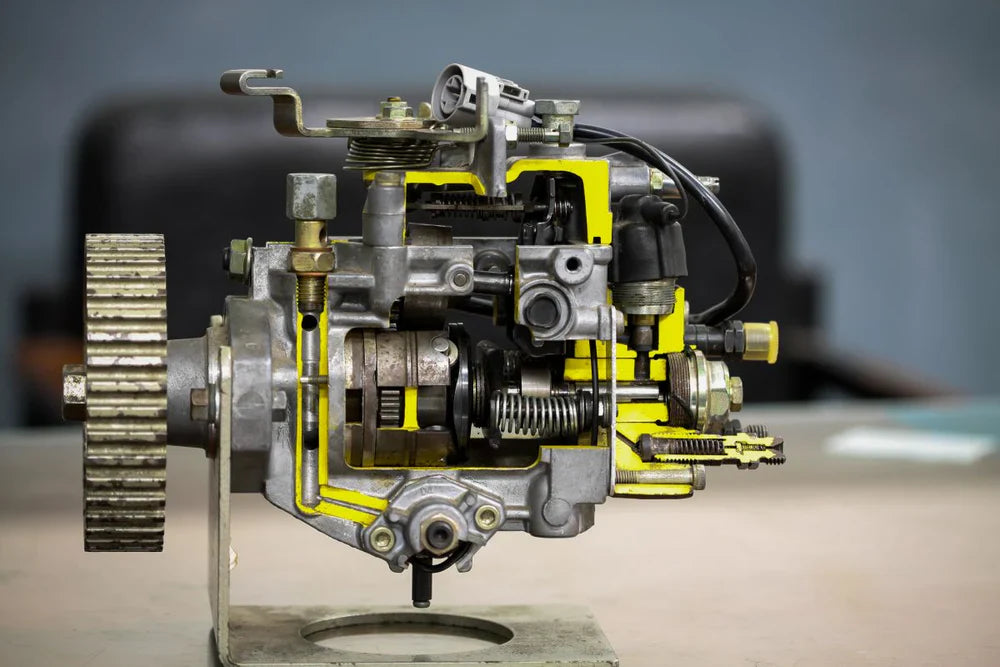
A diesel engine can run without trouble for hundreds of thousands of kilometres. But there is one component of the fuel system that has to work with absolute precision – the injection pump.
When it starts to wear, or dirty fuel gets into it, the first symptoms appear. Sometimes they are subtle. Other times very clear – the engine stalls, jerks, or won't start at all.
Many drivers ignore these signals. And that's a mistake, because problems with the injection pump can quickly lead to damaged injectors or to damage to the whole fuel system.
Find out which symptoms most often point to a problem with the injection pump, and when it's worth reacting.
What is an injection pump and why does it matter so much?
The injection pump delivers fuel to the cylinders under very high pressure and in precisely measured doses.
It is thanks to the pump that fuel reaches the combustion chamber at the right moment and in the right quantity. In a diesel this is hugely important, because combustion takes place solely thanks to the compression of the air-fuel mixture.
The pump has to work with enormous accuracy. It synchronises with the operation of:
- the crankshaft,
- the injectors,
- the engine control unit,
- the fuel pressure sensors.
If the fuel pressure drops by even a dozen or so per cent, the engine starts running unevenly. Starting problems appear, power drops and fuel consumption rises.
In practice it looks like this: the engine still works, but the whole fuel system starts working outside its optimal range.
Why does an injection pump in a diesel fail?
Most often the problem starts with contaminated fuel.
Particles can get into the fuel system:
- dust,
- rust from the tank,
- sand,
- deposits from the fuel.
These microscopic particles act like sandpaper. Over time they cause wear of the high-pressure pump's components.
The second reason is mechanical wear. Very precise components work inside the pump – pistons, valves and sealing rings. After high mileages their sealing deteriorates, and that means:
- lower fuel pressure in the system,
- worse fuel atomisation,
- problems with the way the engine runs.
On top of that come electrical faults – damage to sensors, wiring or the pump control unit.
Starting problems – one of the first symptoms
One of the most common signals of an injection pump failure is trouble starting the engine.
The engine turns over on the starter, but:
- it only fires after several attempts,
- it fires and immediately stalls,
- it doesn't start at all.
This happens because the pump isn't generating the right fuel pressure needed to start the engine.
In a diesel, the moment of starting requires a very precise dose of fuel. If the pump delivers it irregularly – the engine has no conditions in which to ignite the mixture.
A faulty injection pump also makes itself known through the engine stalling while driving
If the injection pump starts to malfunction more seriously, a more worrying symptom appears – the engine stalls while driving.
This may happen:
- when accelerating,
- while driving at a constant speed,
- on a warm engine.
The reason is simple – the pump stops maintaining a stable fuel pressure.
In such a situation the fuel dose reaching the cylinders is too small. The engine starts to choke, and after a moment it stalls.
This is one of the symptoms that must not be ignored, because it can lead to the car stopping at the least appropriate moment.
Engine jerking and rough running at idle
When the pump starts to wear, fuel reaches the cylinders in irregular doses.
Then the characteristic symptoms appear:
- jerking during acceleration,
- surging revs at idle,
- rough engine running,
- metallic sounds from the engine bay.
In such a situation the engine runs unevenly, because each cylinder receives a different amount of fuel.
In the longer term this leads to:
- overheating pistons,
- increased wear of the injectors,
- a drop in power.
Increased exhaust smoke and fuel leaks
A faulty injection pump often also causes changes in the appearance of the exhaust gases.
Most often what appears is:
- black smoke from the exhaust,
- the acrid smell of unburnt fuel,
- increased fuel consumption.
This is a sign that the fuel isn't burning properly.
In some cases you can also notice fuel leaks in the vicinity of the pump. This usually means worn seals or microcracks in the system.
How do you look after the injection pump to avoid an expensive repair?
The injection pump works in very demanding conditions. That's why its service life depends mainly on the cleanliness of the fuel and the condition of the whole fuel system.
The experience of many drivers shows that three things matter most:
- regular fuel filter replacement,
- filling up with good-quality fuel,
- cleaning the fuel system of deposits.
If you notice symptoms such as hard starting, engine jerking or a drop in power, don't ignore them. In many cases a quick reaction lets you avoid a repair that can cost a couple of thousand euros.
And sometimes it's enough simply to restore cleanliness to the whole fuel system for the engine to start running the way it should again.
How long does an injection pump last in a diesel engine?
In most cars an injection pump lasts around 200,000–300,000 km, although a lot depends on operating conditions.
In theory it's a component designed to work for a very long time. In practice its service life is shortened by things that many drivers dismiss. Most often it's a matter of fuel quality and the cleanliness of the fuel system.
The greatest influence on pump wear comes from:
- contaminants in the fuel,
- driving on the reserve tank,
- infrequent fuel filter changes,
- deposits and carbon build-up in the fuel system.
In a diesel, fuel performs one more important function – it lubricates the components of the high-pressure pump. If water, dirt or carbon deposits appear in the fuel, the pump's components start working in worse conditions.
Over time what appears is:
- a drop in fuel pressure,
- worse fuel atomisation by the injectors,
- irregular engine running.
That's why in our practice we always repeat one thing – a clean fuel system is the cheapest insurance policy for the injection pump.
Regular use of cleaning products, such as TEC 2000 Diesel System Cleaner, helps remove deposits from the injectors and from the components of the fuel system. Thanks to this, fuel reaches the pump in a cleaner state and the whole system works more stably.
Can you drive with a faulty injection pump?
Technically the car will often still drive. The problem is that every kilometre can then increase the scale of the failure.
A faulty injection pump usually doesn't break down suddenly. First minor symptoms appear – harder starting, slight engine jerking or a drop in power. Many drivers ignore them and carry on driving.
That's risky, because a worn pump can start producing metal filings, which end up throughout the fuel system.
Then the problem stops being confined to the pump. Damage may also affect:
- the injectors,
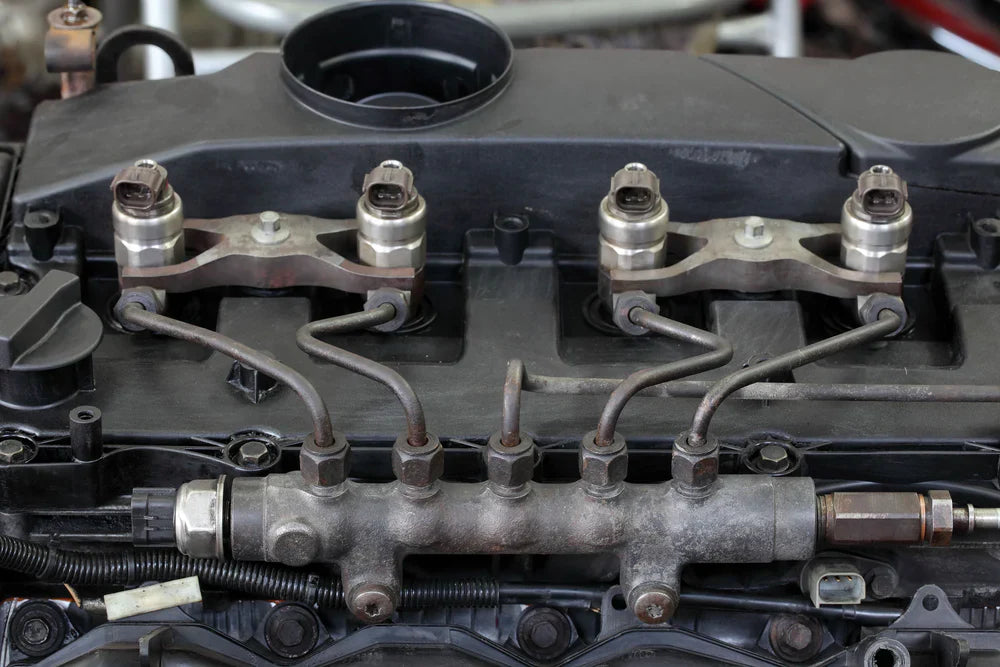
- the common rail,
- the fuel lines,
- the fuel pressure regulator.
And that means a repair that can cost a few, or even several thousand euros.
That's why, when the first symptoms of fuel system problems appear, it's worth starting with a thorough cleaning of the system. Cleaning products help remove carbon deposits and residue from the fuel system and improve fuel atomisation.
In many cases it is precisely contaminants that cause the drop in pressure and the unstable operation of the system, and not a serious mechanical failure.
FAQ
What are the first symptoms of a faulty injection pump
Most often starting problems, a drop in power and rough engine running appear. Drivers also notice jerking while driving and increased exhaust smoke.
Does a faulty injection pump increase fuel consumption
Yes. When the pump delivers fuel at the wrong pressure, combustion becomes less efficient, which leads to greater fuel consumption and a drop in engine power.
Can an injection pump get air in it
Yes, especially with frequent driving on the reserve tank. Air in the fuel system causes starting problems and unstable engine running.
Do fuel additives help protect the injection pump
Yes, if the problem results from deposits in the fuel system. Products such as TEC 2000 Diesel System Cleaner help clean the fuel system and improve fuel combustion.
Can a faulty pump destroy the injectors
Yes. A worn pump can produce metal filings, which end up in the injectors and cause damage to them.



Leave a comment
This site is protected by hCaptcha and the hCaptcha Privacy Policy and Terms of Service apply.