
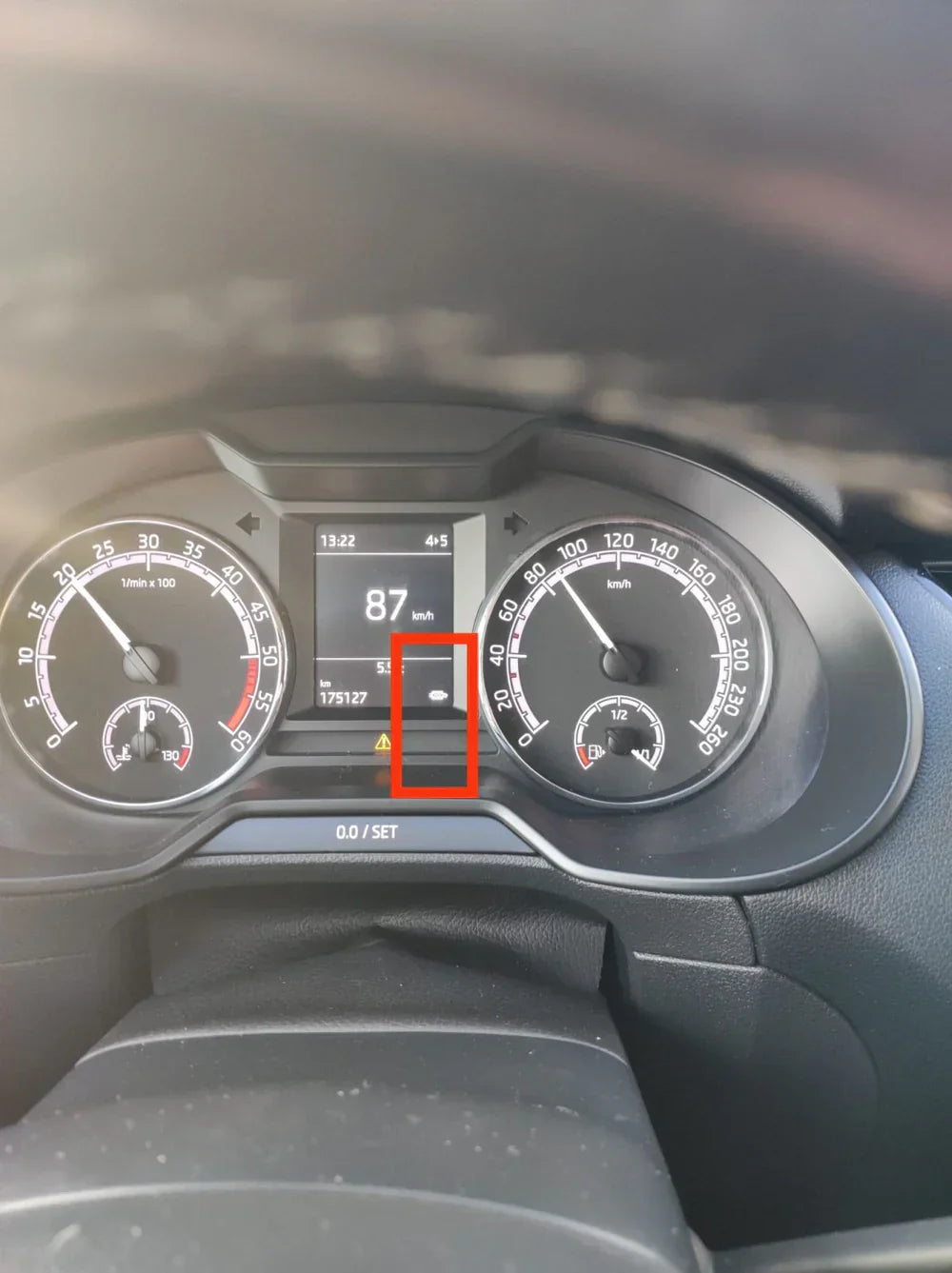
A DPF warning light does not always mean a breakdown requiring a flatbed and an immediate rebuild. In many cases it is simply a signal that the particulate filter has collected too much soot and needs to finish its regeneration while driving. The problem starts when the driver ignores the warning, keeps interrupting the burn-off or tries to "wait the subject out" in town. That is precisely when an ordinary regeneration can turn into limp mode, a loss of power, diluted engine oil or expensive cleaning of the filter.
The most important thing? The colour and the behaviour of the warning light matter. A steady yellow or amber light often still allows you to carry out a regeneration drive. A flashing DPF light, a check engine light, a message about restricted power or a rising oil level are already situations that are not worth ignoring.
What to do when the DPF light comes on – carry on driving or stop the car straight away?
The most important answer is this: if the DPF light is on steadily, the car has not lost power and no check engine light has appeared, you can usually still try a regeneration drive. In practice this means creating conditions in which the engine allows the filter to burn off the accumulated soot.
Car manufacturers give very similar recommendations. Kia, for example, describes driving for around 30 minutes, at a speed above 60 km/h and at about 2000 rpm, until the light goes out. General Motors, in its service bulletins, emphasises in turn that the DPF does not regenerate effectively while stationary or during long periods of idling – normal exhaust flow while driving is needed.
And this is exactly where many drivers make the biggest mistake. The car starts raising the revs, the radiator fan runs louder, fuel consumption briefly rises, so the driver switches the engine off "to give it a break". Meanwhile, very often this means interrupting the regeneration halfway through.
The situation looks completely different when:
- the DPF light starts flashing,
- a check engine light appears,
- the car goes into limp mode,
- the engine clearly loses power,
- the oil level goes above maximum.
Further attempts to force a burn-off can then deepen the problem, and it is better to start with diagnostics.
Why does the DPF light come on precisely in town – and why do short trips cause a diesel the biggest problem?
A diesel really does not like constantly driving just a few kilometres at a time. Especially a modern diesel with a DPF. And that is exactly why the particulate filter light most often appears in drivers who:
- drive mainly around town,
- sit in traffic jams,
- switch the engine off after 10–15 minutes of driving,
- rarely take a longer run.
For the filter to burn off soot effectively, the exhaust gases have to reach a suitable temperature. BMW technical bulletins suggest that continuous DPF regeneration takes place at temperatures of around 280–350°C. The problem is that during calm town driving the engine often does not maintain such conditions for long enough.
The result? Every so often the ECU tries to start a regeneration, but the process gets interrupted by:
- a traffic jam,
- stopping the car,
- switching the engine off,
- a very short journey.
The soot keeps building up, the filter gradually blocks and the light starts coming back more and more often.
It is also worth remembering that the DPF is very often only a "victim" of other engine problems. If a diesel produces too much soot because of:
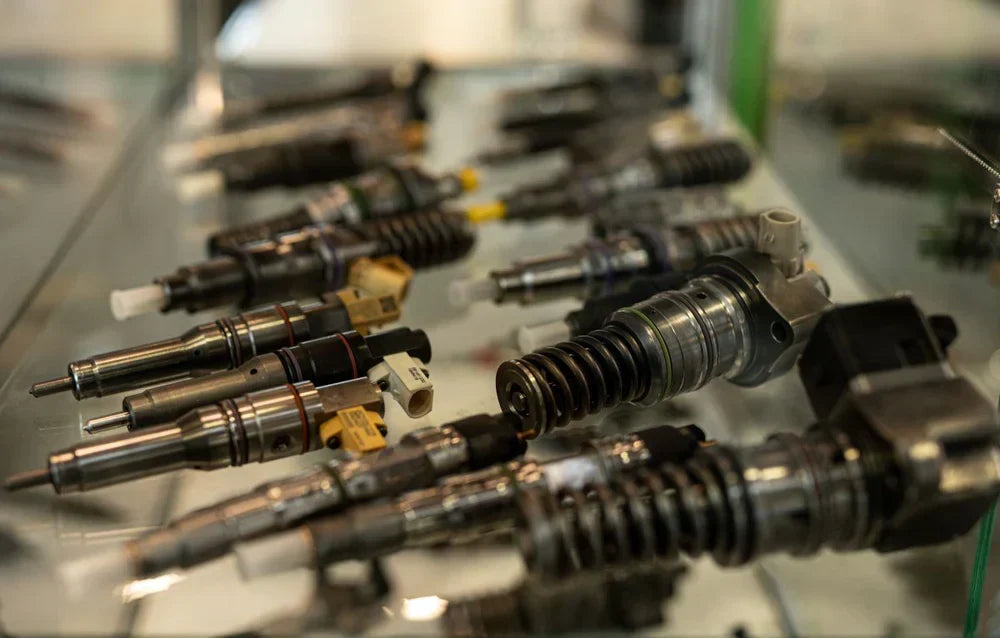
- dirty injectors,
- a faulty EGR,
- problems with the turbocharger,
- a bad thermostat,
- increased oil burning,
the filter will fill up considerably faster than it should.
The DPF light is on, flashing or disappears after a moment – what exactly do these signals mean?
This is one of the most confusing topics for drivers, because the DPF light does not always mean exactly the same thing. In practice, its meaning depends on the car manufacturer, the type of message and whether additional warnings appear.
The safest approach is a simple division:
- a steady yellow or amber light most often means a need for regeneration,
- a flashing DPF light usually signals a more serious problem,
- DPF + check engine + restricted power often mean the car has gone into limp mode.
Mazda, in its owner's manuals, warns that a flashing light may be associated with a restriction of engine performance in order to protect the filter and the exhaust system. Toyota, in turn, distinguishes an ordinary signal indicating a need for regeneration from a situation requiring servicing.
Messages of the following type are also very characteristic:
- "The soot filter is full, continue driving",
- "Drive to clean exhaust filter",
- "DPF regeneration required".
In many models this still means a stage at which the driver can finish the regeneration themselves while driving. The problem starts when the message:
- does not disappear despite driving correctly,
- comes back every few dozen kilometres,
- appears together with a loss of power,
- is accompanied by a rising oil level.
A regeneration drive alone then often stops being enough and diagnostics of the DPF parameters are needed, along with the sensors and the whole system responsible for exhaust emissions.
How to burn off the DPF correctly while driving – and why 5 minutes of "faster driving" is usually not enough?
The most common myth looks like this: all you have to do is "give the car a good run" for a few minutes and the filter will clean itself. The problem is that DPF regeneration needs not a momentary overload of the engine, but stable operating conditions for a sufficiently long time.
In most manufacturers' manuals very similar ranges appear:
- around 20–30 minutes of driving,
- a speed usually above 50–60 km/h,
- around 2000–2500 rpm.
So it is not about aggressive driving or high speeds. Far more important is maintaining:
- a steady exhaust gas temperature,
- stable revs,
- continuous engine running without interrupting the process.
And that is exactly why a dual carriageway or a calm route outside town works far better than short bursts of "burning off" between traffic lights.
Very characteristic symptoms of an active DPF regeneration are:
- temporarily higher fuel consumption,
- slightly raised idle revs,
- louder running of the fans,
- a higher exhaust temperature,
- a distinctive smell of the heated exhaust system.
At that moment the worst thing you can do is switch the engine off after a few minutes of driving. Regularly interrupting the regeneration means the soot keeps building up, and the ECU tries to start the burn-off again more and more often.
Ford, in its manuals, emphasises that the DPF light may stay on until the automatic regeneration of the filter has finished. That is why sometimes the light does not go out straight away after a few minutes of driving – and that does not yet have to mean a fault.
When should you not try another DPF burn-off and go straight to a workshop?
There are situations in which further "burning off" the filter can do more harm than good. And this is exactly where many drivers lose time, trying yet more regeneration drives despite clear signals that the problem is already bigger than the soot itself.
The biggest red flags look like this:
- a flashing DPF light,
- a check engine light along with the DPF light,
- a clear loss of power,
- engine limp mode,
- frequent regenerations every few dozen kilometres,
- an oil level above maximum,
- oil smelling of fuel,
- heavy smoking or jerking of the car.
Mazda and GM, in their technical materials, indicate that at very high soot levels the ECU may restrict engine power or block the automatic regeneration completely.
This is very important, because many drivers assume that since the DPF is blocked, all they have to do is "drive for longer". Meanwhile the filter may already be:
- overloaded with ash,
- damaged,
- melted,
- or the problem lies somewhere else entirely.
Very often the cause of frequent DPF blockage turns out to be:
- dirty injectors,
- a faulty EGR,
- problems with the turbocharger,
- temperature sensor faults,
- the differential pressure sensor,
- increased oil burning.
And that is exactly why the DPF light alone does not always mean a problem with the filter itself.
Soot, ash and frequent regenerations – why does burning off the DPF not always solve the problem?
This is one of the most important things worth understanding about the DPF. A great many drivers treat every burn-off of the filter as a "full clean", and it does not work like that.
During regeneration, mainly soot is burnt off, that is, the product of burning diesel fuel. If the exhaust gas temperature is sufficiently high, the soot can be burnt and removed from the filter.
The problem, however, is ash.
Ash:
- does not burn off during normal driving,
- builds up gradually over the years,
- comes, among other things, from oil additives and natural engine wear,
- reduces the real capacity of the DPF.
And that is exactly why a car with a mileage of:
- 180,000–250,000 km,
- often driven around town,
- with a large number of regenerations,
may have a filter that still tries to burn off, but physically has less and less room for further deposits.
It looks like this:
- the light comes back faster and faster,
- the regenerations are more frequent,
- fuel consumption briefly rises,
- the ECU initiates a burn-off more and more often.
And then a regeneration drive alone stops being enough.
Depending on the condition of the filter, what may be needed is:
- hydrodynamic cleaning,
- thermal-pneumatic cleaning,
- a service regeneration,
- or replacing the DPF.
The costs can vary a great deal:
- cleaning a DPF usually around €95–350,
- a new filter often from €590 up to as much as €2,350, depending on the car model.
That is why ignoring the first symptoms very quickly stops being "saving money".
As preventive maintenance it is also worth looking after the engine itself. If a diesel produces an excessive amount of soot because of dirty injectors or poor combustion, the filter will block up considerably faster. In such situations some drivers use products that support the cleanliness of the fuel system, for example TEC 2000 Diesel System Cleaner. Products of this kind can support preventive maintenance of the fuel system, but they will not replace repairing a damaged DPF or one overloaded with ash.
To sum up, the DPF light is very often still a warning, not a death sentence for the filter. If you react quickly and the regeneration is carried out under the right conditions, the problem often ends without an expensive repair. Ignoring frequent regenerations, driving exclusively around town and interrupting the burn-off usually lead, however, to ever greater problems with the filter and with the entire emissions system.
FAQ
What does the DPF light mean?
Most often it means the particulate filter has collected too much soot and needs regeneration.
Can you drive with the DPF light on?
Yes, if the light is on steadily, the car has not lost power and there are no other faults. You can then usually carry out a regeneration drive.
Does the DPF light go out on its own?
Yes. After a correctly completed regeneration the light often goes out by itself.
How long do you have to drive to burn off the DPF?
Most often around 20–30 minutes, usually above 50–60 km/h and at around 2000–2500 rpm.
Can you burn off the DPF while stationary?
In some cars there are service procedures, but you should not do this yourself without knowing the manual for the specific model.
Why does the DPF light come back every few days?
Most often the filter is not finishing its regeneration, or the engine is producing too much soot because of other technical problems.
What does a flashing DPF light mean?
This is usually a more serious signal than an ordinary need for regeneration. It may mean the filter is overloaded or there is a risk of going into limp mode.
Will a fuel additive repair a blocked DPF?
No. An additive can support the cleanliness of the fuel system and limit the amount of soot, but it will not repair a damaged filter or remove ash.
Why does the oil level rise when there are problems with the DPF?
With frequent, incomplete regenerations, some of the fuel can end up in the engine oil and dilute it.
How much does it cost to clean or replace a DPF?
Cleaning a DPF is usually around €95–350, whereas a new filter can cost from €590 up to as much as €2,350, depending on the car.


Leave a comment
This site is protected by hCaptcha and the hCaptcha Privacy Policy and Terms of Service apply.