
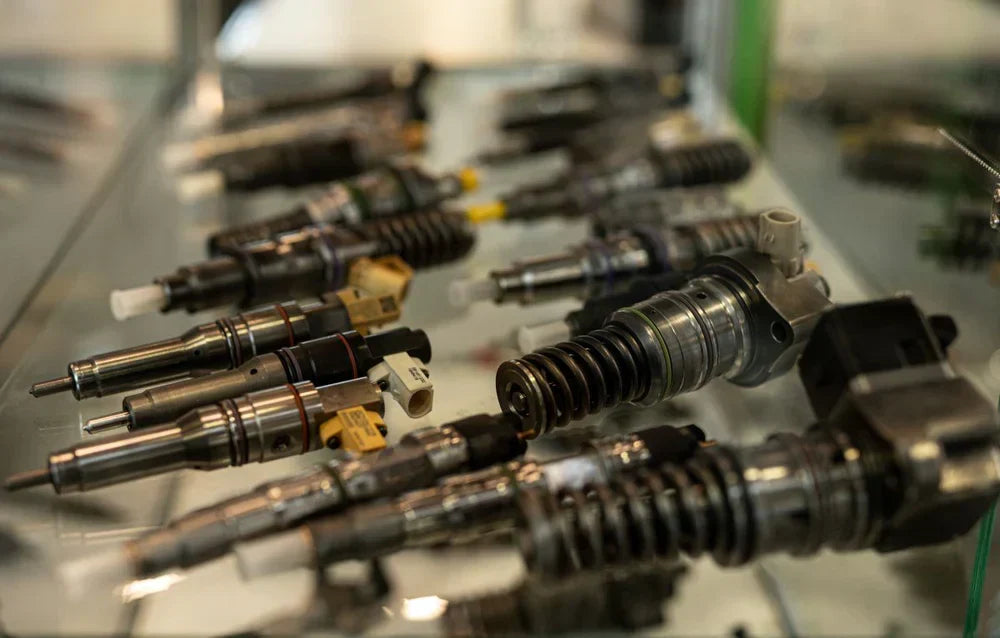
Injector regeneration is not a matter of quickly “flushing through” the fuel system and clearing the fault codes. It is a full diagnostic and service procedure whose purpose is to restore correct fuel metering, sealing and injector operating parameters. A properly performed regeneration can noticeably improve how smoothly the engine runs, and cost far less than buying new injectors. The problem is that not every injector is suitable for repair, and a badly performed regeneration very often ends with the same problems coming back within a few weeks.
What does injector regeneration involve, and why is it more than just “cleaning out” an injector?
Injector regeneration involves restoring the correct operating parameters of the injector, meaning the right fuel dose, sealing, return flow and spray quality. If an injector starts dumping fuel or works unevenly, the engine feels it very quickly. The engine runs less smoothly, fuel consumption goes up, or you get that characteristic smoking.
Regeneration itself usually covers:
- diagnostics and a check of the operating parameters,
- removal of the injector and bench testing,
- removal of carbon build-up, deposits and metal filings,
- replacement of worn components,
- calibration and a final operating check.
That is exactly why regeneration can cost anywhere from around €70 to as much as €190 per injector. Even so, it is still far less than buying a full set of new injectors, where the bill can very quickly exceed €950–1,650.
It is also worth separating three things that often get lumped together. A fuel additive, a workshop cleaning service and a full regeneration are not the same thing. If the problem comes mainly from dirt or carbon build-up, professional cleaning of the fuel system will often still help.
That is why many drivers start with products such as TEC 2000 Diesel System Cleaner or TEC 2000 Fuel System Cleaner, which help clean the fuel system and improve injector operation.
If, however, the injector already has mechanical damage – a cracked needle, a destroyed valve seat or a deformed nozzle – cleaning alone usually stops being enough.
How to look after your injectors while the engine still starts and “drives more or less fine”? Symptoms you should not ignore
Yes – and that is usually the moment when much bigger costs can still be avoided. Injector problems very rarely begin with the car suddenly refusing to start. First come the small things that are easy to ignore. The engine runs slightly unevenly, the car starts using more fuel, sometimes there is a gentle jerk under acceleration. Nothing serious, apparently. Except that this is very often exactly how injection system problems begin.
Most often it looks like this:
- harder starting in the morning,
- uneven idle,
- higher fuel consumption,
- loss of power,
- black or white smoke from the exhaust,
- a noisier-sounding diesel,
- jerking while driving.
And a lot depends here on how quickly you react. If the problem is still mainly down to deposits or dirt, professional fuel system cleaning or a regeneration carried out early enough will often help. It is worse when the driver keeps going like this for months. A leaking injector can then lead to fuel diluting the oil, faster clogging of the DPF or turbocharger problems.
That is why, at the first symptoms, many mechanics start with cleaning the fuel system. In diesels, TEC 2000 Diesel Injector Cleaner is often used, as it helps remove deposits from injector tips and improves engine running. In petrol engines, TEC 2000 Fuel Injector Cleaner plays a similar role and is often used before any decision is made about regenerating or replacing the injectors.
Injector regeneration or a new injector? See when repair stops paying off
If the injector body is intact and the problem lies with worn components or dirt, regeneration very often makes sense. Especially in cars where a full set of new injectors costs a couple of thousand euros. That is why many drivers try regeneration first – particularly when the car has higher mileage but is still in good condition.
It is not always possible to save an injector, though. There are situations where replacement is simply the more sensible option.
Most often it comes down to cases such as:
- a cracked or corroded body,
- damage to the piezoelectric element,
- no parts available for regeneration,
- heavy damage caused by metal filings from the pump,
- a badly performed earlier regeneration,
- no way of setting the correct parameters.
And that is precisely why good regeneration starts with diagnostics, not with taking the injector apart. Sometimes the problem lies somewhere else – for example in the high-pressure pump or a heavily contaminated fuel system. Regenerating the injectors alone then only helps for a moment, because the problem comes back very quickly.
How long does injector regeneration take, and why does the repair sometimes stretch to several days?
Regenerating an injector itself does not take long, but the point is that a good workshop does not finish the job at simply stripping the component and replacing the seals. For an injector to actually work correctly after repair, it still has to be checked under load, calibrated and tested across different operating ranges. That is exactly why some workshops hand the car back the same day, while others need 2–4 days.
A lot depends on the type of fuel system. Older designs can be simpler, whereas modern Common Rail systems may require:
- return-flow tests,
- checking the fuel doses at several pressures,
- coding the trims,
- recalibration after components have been replaced,
- thorough cleaning of metal filings and carbon build-up.
There is also one more thing that few people think about: the injector itself is often not the only problem. During diagnostics, the mechanic may spot water in the fuel, metal filings from the high-pressure pump or a heavily contaminated fuel filter. The regeneration then takes longer not because “the workshop cannot keep up”, but because the source of the problem has to be found. Without that, a freshly regenerated injector can start misbehaving again after a few thousand kilometres.
This is exactly why fuel system prevention matters so much. Used regularly, TEC 2000 Diesel System Cleaner helps remove moisture, limit deposits and improve the operating conditions of the injectors, which reduces the risk of needing a regeneration later on. In petrol engines, TEC 2000 Fuel System Cleaner plays a similar role, protecting the fuel system against carbon deposits and against the negative effects of E10 petrol.
Can fuel additives replace injector regeneration? The line between prevention and repair
Sometimes yes, but only when the problem comes mainly from dirt, carbon build-up or moisture in the fuel system. And this is exactly where many drivers get it wrong – either they ignore the first symptoms completely, or they immediately assume the worst-case scenario and brace themselves for a bill of a couple of thousand euros.
In reality, a car very often starts running worse simply because the injector tips are dirty. The engine then begins to:
- run unevenly at idle,
- jerk slightly,
- use more fuel,
- start worse in the morning,
- smoke under harder acceleration.
And it is at exactly this stage that professional cleaning products can deliver very good results. TEC 2000 Diesel Injector Cleaner was created precisely for situations where injectors are starting to seize up or there is a problem with fuel atomisation. The product cleans injector tips and nozzles, helps reduce black smoke and improves how smoothly the engine runs.
In petrol engines, TEC 2000 Fuel Injector Cleaner works in a similar way, and many mechanics treat it as the last step before removing the injectors. Importantly, the product not only removes deposits but also helps limit moisture around the injectors and improves fuel atomisation.
One thing has to be said clearly, though: a fuel additive will not repair a mechanically damaged injector. If the nozzle is worn, the injector has excessive return flow or there is an electrical fault, no product will undo material wear. And that is exactly when regeneration or replacement comes into play.
What happens if you keep driving with a damaged injector?
At first, nothing spectacular usually happens. The car uses a little more fuel, the engine sounds louder, sometimes there is smoke under acceleration. Plenty of drivers can go on like this for months. The problem is that a faulty injector very rarely damages only itself.
If an injector starts dumping fuel or atomising it poorly, the combustion temperature stops being correct. That means more soot, a heavier load on the DPF and much faster carbon build-up. Then the domino effect begins.
The most common consequences of ignoring the problem look like this:
- more frequent DPF regeneration,
- fuel diluting the engine oil,
- higher fuel consumption,
- worse engine lubrication,
- damage to a piston or valves,
- overloading of the turbocharger,
- problems with the high-pressure pump.
Leaking injectors in diesels are particularly dangerous. In extreme cases, excess fuel can even lead to damage to the piston or burning through the piston crown. And that is why mechanics so often repeat that you should not brush off black smoke, difficult starting or heavy injection quantity trims.
How to look after your injectors so that regeneration is not needed every few tens of thousands of kilometres?
There is one thing injectors “dislike” most of all: dirt in the fuel. And it is not only about large contaminants. For modern Common Rail systems, even moisture, fine carbon build-up or microscopic metal filings can be a problem. At pressures exceeding 2,000 bar, the fuel system works with extreme precision, which is why neglect quickly shows up in the way the engine runs.
If you want to extend the life of your injectors, simple things matter enormously – things many drivers ignore:
- regular fuel filter changes,
- avoiding driving on the reserve tank,
- refuelling at trusted stations,
- reacting quickly to the first symptoms,
- periodic cleaning of the fuel system,
- checking fuel quality after the car has stood unused for longer.
Driving style matters a lot too. Short trips, frequent driving with the engine not fully warmed up and typical city use put a heavier load on the fuel system. In diesels, carbon build-up then forms faster, and moisture in the fuel tank has far better conditions to accumulate.
That is exactly why cleaning products are worth treating not as a “rescue after a breakdown”, but as part of normal prevention. TEC 2000 Diesel System Cleaner is recommended preventively twice a year and helps remove water and deposits from the entire fuel system. In petrol engines, TEC 2000 Fuel System Cleaner works in a similar way and additionally neutralises the negative effect of E10 petrol on the injection system.
And this is where you usually see the biggest difference between a car whose fuel system gets regular preventive care and one where the injectors are only remembered once it starts smoking or losing power.
FAQ
Does injector regeneration make sense?
Yes, provided the injector is suitable for repair and passes full testing and calibration afterwards. A well-performed regeneration can restore parameters very close to factory specification.
Do injectors have to be coded after regeneration?
In many modern Common Rail engines, yes. Coding allows the engine control unit to correctly set the fuel doses for a specific injector.
How long does injector regeneration take?
Most often from a few hours to 2–4 days. It all depends on the type of injector, parts availability and the extent of the damage.
Will fuel additives replace regeneration?
No, not if the injector is mechanically damaged. These products help remove deposits and improve fuel system operation, but they will not repair a worn nozzle or a damaged valve.
Do all injectors have to be regenerated at the same time?
Not always, but it is worth checking the whole set. The remaining injectors are often worn to a similar degree.
When is it better to replace an injector rather than regenerate it?
When the body or the piezoelectric element is damaged, or when the injector still fails to hold its parameters after regeneration.
Can you regenerate injectors yourself?
A full regeneration requires specialist equipment, a test bench and calibration. On your own, you can only carry out basic cleaning or use a fuel system product.
How much does injector regeneration cost?
Most often from around €70 to €190 per injector, although more complex systems can cost more.
Is driving with a damaged injector dangerous?
Yes. A faulty injector can lead to damage to the DPF, the turbocharger, a piston, or to the engine oil being diluted with fuel.
What shortens injector life the most?
Poor-quality fuel, driving on the reserve tank, a neglected fuel filter and a lack of regular fuel system cleaning.


Leave a comment
This site is protected by hCaptcha and the hCaptcha Privacy Policy and Terms of Service apply.