
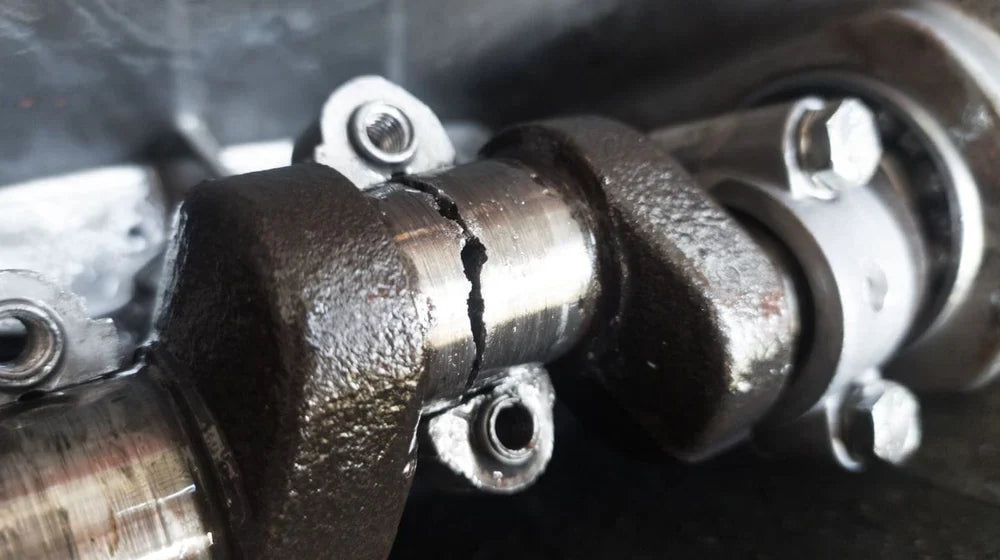
What are the risks of driving with a knocking bearing shell? Effects and risks for the engine
Can you hear a metallic knocking from under the bonnet and feel that something isn't right? This isn't a trifle – it's the moment when the engine starts saying “stop”.
Sometimes it appears suddenly. Sometimes it builds up slowly and for a while it can be ignored. But the truth is simple – if a characteristic knocking appears from the bottom of the engine, the matter may concern the bearing shells.
And that's when the problems begin. Because this is one of those faults that don't stand still – they deepen very quickly.
If you have the impression that “it'll go a bit longer” – this text is exactly for you.
Can you hear a knocking from the bottom of the engine? It may be a knocking bearing shell – check before it's too late
This knocking most often means that the oil film has stopped protecting the metal components, and the bearing shell is starting to run “dry”.
- a dull, metallic sound that intensifies with the revs,
- best heard on a cold engine or when accelerating,
- often confused with the valves – but the sound is heavier and more “from below”,
- it may appear suddenly or build up over hundreds of kilometres,
- it is often accompanied by a drop in oil pressure.
This isn't a situation that “will pass by itself”. When a bearing shell starts to knock, it means that the crankshaft has stopped being separated from it by a layer of oil. And then you already have metal-on-metal contact. With no cushioning. With no protection.
Most drivers at this point still try to fool themselves – radio turned up, window closed, “maybe it's nothing serious”. Except that every kilometre increases the clearance, the temperature and the damage. Mechanics' experience shows that with such a symptom the degradation process can accelerate several times over within a few dozen kilometres.
If something is knocking – don't wait. This is one of those moments where a quick reaction makes an enormous difference to the cost.
A damaged bearing shell – where does it come from and why is the oil most often to blame?
Most often the problem starts with the oil – or more precisely with its absence, its wear or its contamination.
- too low an oil level – the lubricating film ceases to exist,
- old oil loses its viscosity and protective properties,
- contaminants and carbon build-up block the flow of oil,
- a clogged filter restricts the lubrication of critical places,
- aggressive driving increases the load on the bearing shells by as much as several dozen per cent.
An engine doesn't forgive neglect in this area. Bearing shells work in extreme conditions – they transfer enormous forces, and the only thing protecting them is a thin layer of oil. We're talking about microns – a truly minimal layer, which separates the metal surfaces.
When the oil loses its properties or its flow is restricted, that layer disappears. And then friction, a rise in temperature and deformation begin.
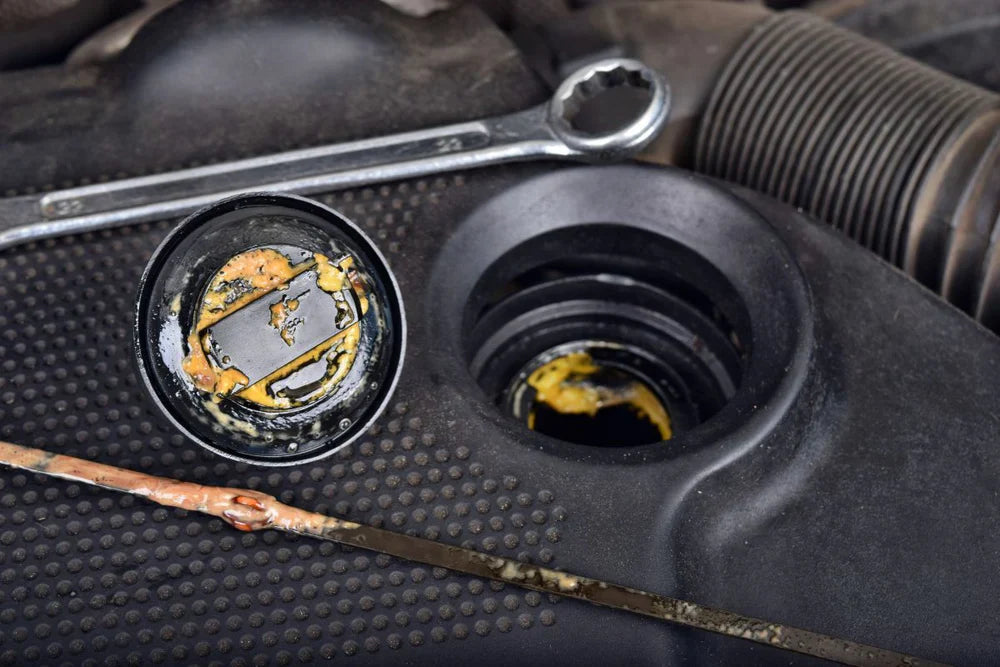
Here an important thread appears that many drivers overlook – a contaminated engine. Carbon build-up and deposits can block the oil galleries, which really does restrict lubrication. That is precisely why flushes are used, such as TEC 2000 Engine Flush, which remove carbon deposits, unblock the lubrication system and improve the flow of oil.
Symptoms of a seized bearing shell – how you'll really know the engine is in danger
If the problem deepens, the symptoms become more and more distinct and hard to ignore.
- constant, loud knocking regardless of temperature,
- a clear drop in power – the car “doesn't go the way it used to”,
- the oil warning light or drops in pressure,
- vibrations of the whole engine,
- metal filings in the oil – often visible at an oil change,
- increased oil consumption, by as much as several dozen per cent.
This is no longer the “suspicion” stage. This is the moment when the engine is genuinely at risk.
Something very specific is happening inside then – the bearing shell starts wearing away, and its material ends up in the oil. These filings circulate through the whole engine and act like sandpaper. Not only the bearing shell is destroyed, but also the crankshaft, other bearings, and even the turbocharger.
And here an important conclusion appears – this isn't a local fault. It's a domino effect.
If you see such symptoms, there's no point putting off the decision. Every further day of driving increases the scope of the repair and the cost.
A spun bearing shell – what does that actually mean and why is it the worst scenario for the engine?
A spun bearing shell means that the component stops being stable and starts rotating together with the crankshaft, destroying everything around it.
- the bearing shell loses its position and starts moving,
- it blocks the oil galleries – lubrication practically disappears,
- the temperature rises rapidly,
- the crankshaft journals are destroyed,
- it often ends with the engine seizing completely.
This is no longer “wear”. This is a failure.
In such a situation there is no room for half measures. The engine stops working properly, and the risk of it stopping while you're driving rises very quickly.
Mechanics say it outright – if a bearing shell has spun, the scope of the repair grows like an avalanche. It involves not only replacing the bearing shells, but often also grinding or replacing the crankshaft, inspecting the connecting rods and a full rebuild of the bottom end.
That is precisely why catching the problem early is so important. Because the difference in cost can be enormous.
Can you drive with a damaged bearing shell – how long will the engine last and when should you say stop?
In short: no, you shouldn't drive with a damaged bearing shell, because the risk of seizing is very high.
- every kilometre deepens the damage,
- the engine may stop suddenly,
- the destruction spreads to further components,
- the cost of repair rises with every day,
- a real risk of the car being immobilised on the road.
In theory the engine may still work for a while. But it's a bit like driving on the edge – you never know when everything will stop.
It happens that someone covers 50 km. Someone else 5 km. It isn't predictable.
That's why the only sensible option is to stop the car and diagnose it. If you have to get somewhere – do it very gently, at low revs. But it's safer to use a flatbed.
How much does repairing bearing shells cost – from “still salvageable” to a complete engine catastrophe
The cost of repair depends mainly on the moment at which you react – the sooner, the cheaper.
- replacing the bearing shells alone: around €350–950,
- crankshaft grinding + bearing shells: €700–1,650,
- a full rebuild of the bottom end: €1,400–3,500,
- engine replacement: often over €2,350,
- additional costs with secondary damage (turbo, timing system).
These are real ranges from workshops, not theory. The differences result from the type of engine, access to parts and the extent of the damage.
The biggest mistake? Dragging your feet. That is precisely what has the strongest impact on the final costs. If you react at the very first knocks, it often ends with a relatively small repair. If you ignore the problem – you may end up with a full engine rebuild.
And here it's worth saying outright: in many cases drivers bring about the most expensive scenarios, because they try to “drive on a bit longer”. That almost never pays off.
What does repairing a damaged bearing shell look like – what the mechanic does with the engine step by step
The repair doesn't consist of a “quick part swap”, but of a thorough verification of the whole bottom end.
- removing the sump and gaining access to the bearing shells,
- inspecting the condition of the crankshaft,
- measuring the clearances and assessing the wear,
- grinding the crankshaft if necessary,
- fitting new bearing shells and checking the lubrication,
- thoroughly cleaning the system of metal filings.
This is important – metal filings circulate through the whole engine, so replacing the bearing shells alone without cleaning can quickly lead to a repeat of the problem.
A good mechanic doesn't limit himself to the minimum. He checks everything that could have suffered.
Repair time? Usually from 1 to 3 days, but with greater damage it can take longer.
If someone offers to “do it quickly and cheaply without taking it apart” – that's a warning signal. In this case half measures simply don't work.
How do you avoid damaging the bearing shells – simple things that make an enormous difference
Most bearing shell failures result from neglect that is really easy to eliminate.
- regular oil changes every 8,000–12,000 km,
- checking the oil level every 1,000–2,000 km,
- avoiding high revs on a cold engine,
- reacting to every oil warning light without delay,
- looking after the cleanliness of the lubrication system,
- calmer driving under heavy load.
It sounds mundane. But it is precisely these things that decide whether an engine will cover 150,000 km or 350,000 km without a rebuild.
Mechanics' experience shows that over 60–70% of cases of bearing shell damage are connected with the oil – its absence, its wear or its contamination.
And here we come to something that is often forgotten – the cleanliness of the engine's interior. Carbon build-up, deposits and old oil residue can block the flow and impair lubrication.
That's why solutions of the TEC 2000 Engine Flush type are used, which clean the oil galleries and improve the flow of the lubricant. After an oil change you can additionally use TEC 2000 Oil Booster, which increases protection and improves the properties of the oil film.
These aren't “additives for detailing fans”, but specific prevention that has a real effect on the engine's durability.
What should you do straight away when you hear a knocking bearing shell – reacting quickly matters
The most important thing: stop the car and don't ignore the symptom.
- pull over safely and switch off the engine,
- don't try to “blip the throttle to check”,
- check the oil level,
- don't carry on driving over a longer distance,
- contact a mechanic or arrange transport.
Many drivers make one mistake – they want to “make sure”, so they carry on driving. The problem is that every such attempt means further damage.
If you react straight away, you have a chance of limiting the repair to a minimum. If you ignore it – the scenario very quickly stops being favourable.
It's a bit like the oil warning light – you don't analyse, you act.
FAQ
Does a knocking bearing shell always mean an engine rebuild?
Not always, but often. If the problem is detected early, replacing the bearing shells alone is possible. With greater damage, grinding the crankshaft or a full rebuild is added.
What does a damaged bearing shell sound like?
It's a dull, metallic knock synchronised with the engine's revs, most often heard from its lower part.
How far can you drive with a knocking bearing shell?
There's no rule – sometimes a few kilometres, sometimes a few dozen. But the risk of seizing rises very quickly, so it's better not to take the risk.
Can a low oil level destroy the bearing shells?
Yes – it's one of the most common causes. No oil = no lubrication = rapid damage.
Do oil additives really help?
They can help as prevention – e.g. they improve lubrication and reduce friction, but they won't repair a mechanically damaged bearing shell.
How do you prevent such failures?
Regular oil changes, checking the level and looking after the engine's cleanliness – that's the absolute basis, which really does extend its life.



Leave a comment
This site is protected by hCaptcha and the hCaptcha Privacy Policy and Terms of Service apply.