
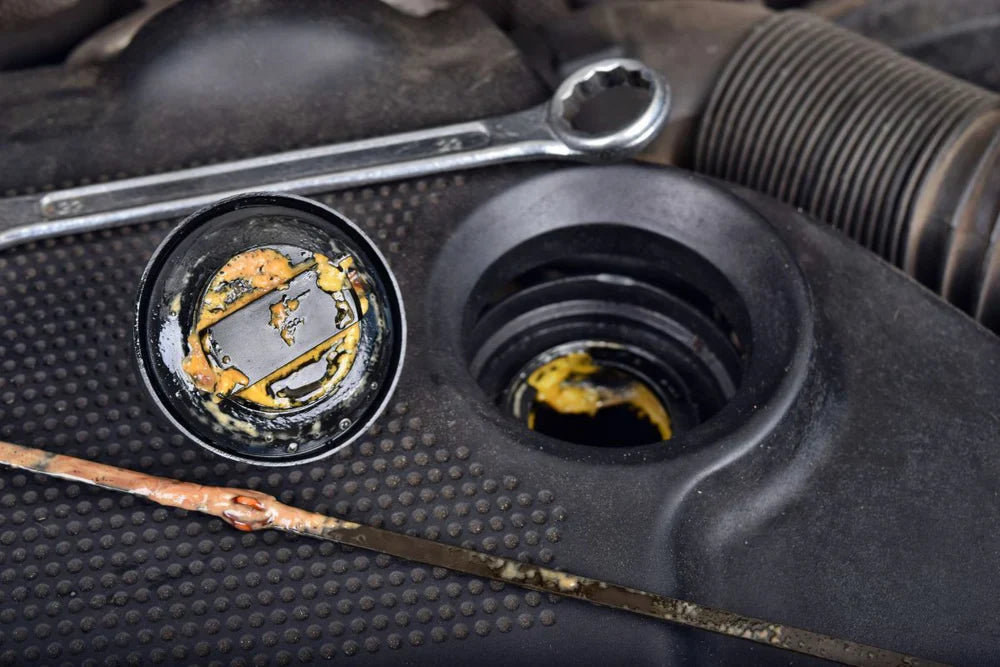
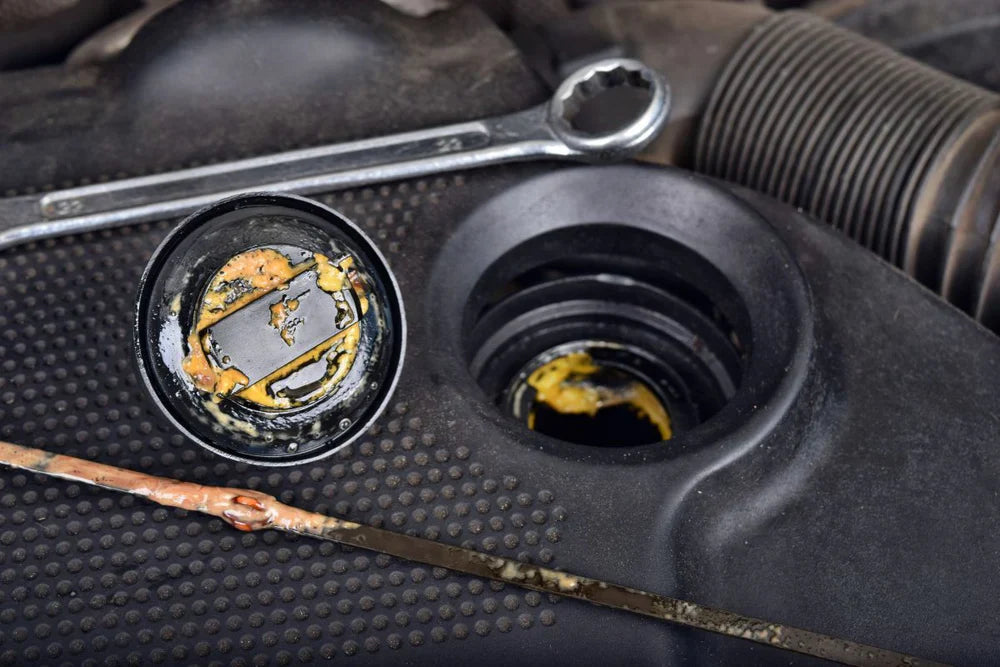
The engine starts overheating, the coolant disappears, and a strange sludge appears under the oil filler cap – and suddenly the question arises whether this is already something serious. Usually it is precisely at this moment that a subject begins which most drivers try to put off rather than solve. The problem is that a head gasket rarely gives you a second chance – either you react quickly, or you reckon with a big expense. If you are noticing the first symptoms and wondering whether you can still drive – this is exactly the moment to know what is going on under the bonnet.
Can you drive with a damaged head gasket – or is that already a straight road to a serious failure
You can drive only for a short while, but every further kilometre really does increase the risk of serious engine damage.
The most important facts:
- the gasket is responsible for separating three systems: combustion, cooling and lubrication,
- its damage causes the fluids to mix and the cylinders to lose their seal,
- the engine's operating temperature rises and so does the risk of overheating,
- compression drops, and combustion stops being stable,
- with every kilometre the risk of a costly repair rises.
This isn't a “I'll drive another week” kind of fault. If the engine starts running unevenly, the temperature rises or white smoke appears – the problem is already under way.
So if you have doubts – the answer is simple: a short drive to the workshop still makes sense, but driving on is a risk that quickly stops paying off.
Which head gasket symptoms appear first and why do drivers ignore them?
The first symptoms are subtle, and that's why most drivers dismiss them.
Most often what appears is:
- coolant disappearing with no visible leaks,
- slightly rough engine running at idle,
- the power unit overheating occasionally,
- white vapour from the exhaust once the engine has warmed up,
- a light emulsion appearing under the oil filler cap.
At the beginning everything looks harmless. You top up the coolant, you drive on, the car works. And that is precisely why the subject gets put off.
Except that something far more serious is happening in the background – coolant is starting to get into the cylinders, or the oil is mixing with the coolant, and the system stops working the way it should.
Most people only react once the symptoms intensify. And then the repair is no longer as simple as it could have been at the beginning.
In short – if something is starting to happen, it isn't “a coincidence”. It's a signal that the engine is already working in incorrect conditions.
Where does a blown head gasket come from and what exactly happens in the engine then
The most common cause of head gasket damage is the engine overheating and the material being overloaded.
The main reasons include:
- too high an operating temperature of the power unit,
- a shortage of coolant or its absence,
- a faulty thermostat or water pump,
- large temperature differences between the cylinder head and the engine block,
- installation errors after an earlier repair.
Extreme conditions prevail inside an engine – the pressure in the cylinders can reach as much as around 200 bar, and the temperatures are very high. The gasket has to withstand all of that.
When overheating occurs, the material starts to deform. First a leak appears, then blow-by, and finally the gasket is blown or burnt through.
And that is precisely when the chain reaction begins – exhaust gases get into the cooling system, coolant gets into the cylinders, and the whole system stops being sealed.
How do you recognise that it's a leaking head gasket and not another fault?
A leaking head gasket gives a set of symptoms which together create a very characteristic picture.
The most important signals are:
- “mayonnaise” under the oil filler cap or in the expansion tank,
- oil in the coolant or the other way round,
- constant losses of coolant with no leaks,
- white smoke from the exhaust, especially once the engine has warmed up,
- gurgling and a rise in pressure in the cooling system.
Each of these symptoms on its own may suggest something different. But if they appear together – the matter becomes clear.
Mechanics often start with simple tests – checking the fluids, a CO₂ test or a compression measurement. And already at this stage the problem can be confirmed with a high probability.
From the driver's perspective the most important thing is one: if you see several of these symptoms at once, there's no point guessing. This is the moment for a specific diagnosis.
How far can you drive with a damaged head gasket before the costs get out of control?
It isn't possible to specify a particular distance, because everything depends on the scale of the damage and on the engine's working conditions.
In practice what matters is:
- the degree to which the gasket is leaking,
- the engine's operating temperature,
- driving style and the load on the power unit,
- the condition of the cooling system,
- whether the fluids are already mixing and to what extent.
Sometimes a car will cover a few dozen kilometres without major problems. Another time the failure develops within a few kilometres and ends with the car stopping.
And that's the hardest part – there is no single scenario. That's why many drivers take the risk, counting on “driving a bit longer”.
Except that every kilometre means a greater load on the engine. The mixing of fluids, a drop in lubrication and a rising temperature all act at the same time.
The result? What at the beginning could have ended with replacing the gasket for a couple of thousand euros can turn into an engine rebuild costing many times more.
And that is precisely why dragging your feet in this case almost never pays off.
What are the symptoms of a burnt or blown head gasket and when does it get really serious?
A burnt gasket gives clear symptoms that are already hard to ignore, and which mean the problem is advanced.
Most often what appears is:
- intense white smoke from the exhaust, which doesn't disappear once the engine has warmed up,
- clear drops in power and no response to the throttle,
- rapid overheating of the engine, even with gentle driving,
- foaming of the coolant and “gurgling” in the tank,
- difficulty starting the engine or it stalling.
At this stage there is no longer any doubt – exhaust gases are getting where they shouldn't, and coolant is getting into the cylinders.
And then a serious problem begins, because the cooling system stops working stably, and the engine starts working in conditions that destroy it.
In practice many drivers still try to drive, topping up the coolant. That gives a momentary improvement. But only a momentary one.
Because in the background overheating and loss of sealing are still occurring. And that means one thing – driving on only deepens the damage.
Does a cracked head gasket always mean an engine rebuild – or can something still be saved?
A cracked gasket doesn't always mean an immediate rebuild of the whole engine, but it is often very close to one.
The key factors:
- whether overheating and deformation of the cylinder head occurred,
- whether the fluids had time to mix and how long that lasted,
- the condition of the injection and combustion – rough running increases the loads,
- whether damage to the pistons or rings occurred,
- the quality of the earlier use and servicing.
If the problem is detected early, it often ends with:
- skimming the cylinder head,
- replacing the gasket,
- new bolts and seals.
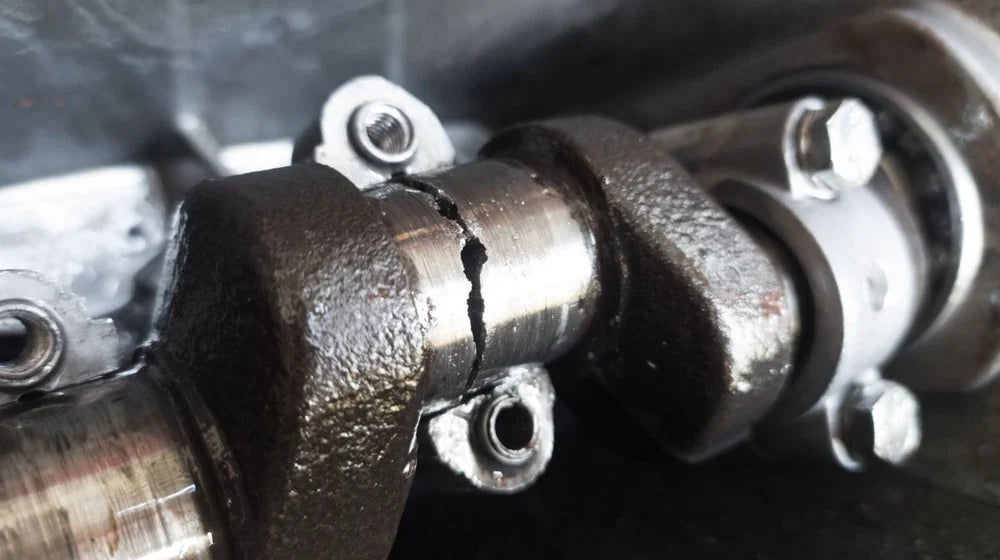
But if the subject was ignored – further things start coming out. A cracked cylinder head, damaged valves, compression problems.
And here the moment of decision appears – repair or replace the power unit. That's why reacting quickly makes an enormous difference.
How do you avoid the scenario in which a damaged gasket ends in a costly repair
The best way to avoid the costs is a quick reaction and regular checking of the cooling system.
Pay attention to:
- the level and condition of the coolant – a change of colour is an alarm signal,
- the engine's operating temperature – even small deviations matter,
- how often the fans run,
- the cleanliness of the cooling system and the absence of deposits,
- the first symptoms – even those that seem minor.
The cooling system is one of the most important elements of prevention. If it works badly, the temperature rises. And that directly shortens the gasket's service life.
That's why solutions are used which keep the system free-flowing and remove deposits. Products of the TEC 2000 Radiator Flush type help clean the cooling system, improve the flow and stabilise the engine's operating temperature.
The result? A lower risk of overheating, more stable operation and real protection against a serious failure.
This is one of those cases where a simple action makes a big difference.
FAQ
Can a head gasket fail suddenly?
Yes, especially after the engine has overheated. One serious episode of high temperature is enough for deformation and a loss of sealing to occur.
Does white smoke always mean a problem with the gasket?
Not always, but if it appears once the engine has warmed up and doesn't disappear, it very often indicates that coolant is being burned.
Can you drive for a while by topping up the coolant?
You can, but that is only putting the problem off. The coolant still goes where it shouldn't, and the damage deepens.
Does every failure end with an engine rebuild?
No, but the later you react, the greater the risk of serious damage and high costs.
How quickly should you react to the first symptoms?
Straight away. Even minor symptoms can mean the beginning of a more serious problem.
Does driving over short distances reduce the risk?
No, because the problem progresses anyway. Even gentle driving doesn't stop the process of damage.
Can you replace a head gasket yourself?
Technically yes, but it's a complicated operation requiring experience and the right tools. In most cases it's better to take the car to a workshop.
Does the cooling system affect the gasket's durability?
Yes, and very much so. A contaminated or faulty system considerably increases the risk of overheating and of damage to the gasket.


Leave a comment
This site is protected by hCaptcha and the hCaptcha Privacy Policy and Terms of Service apply.