
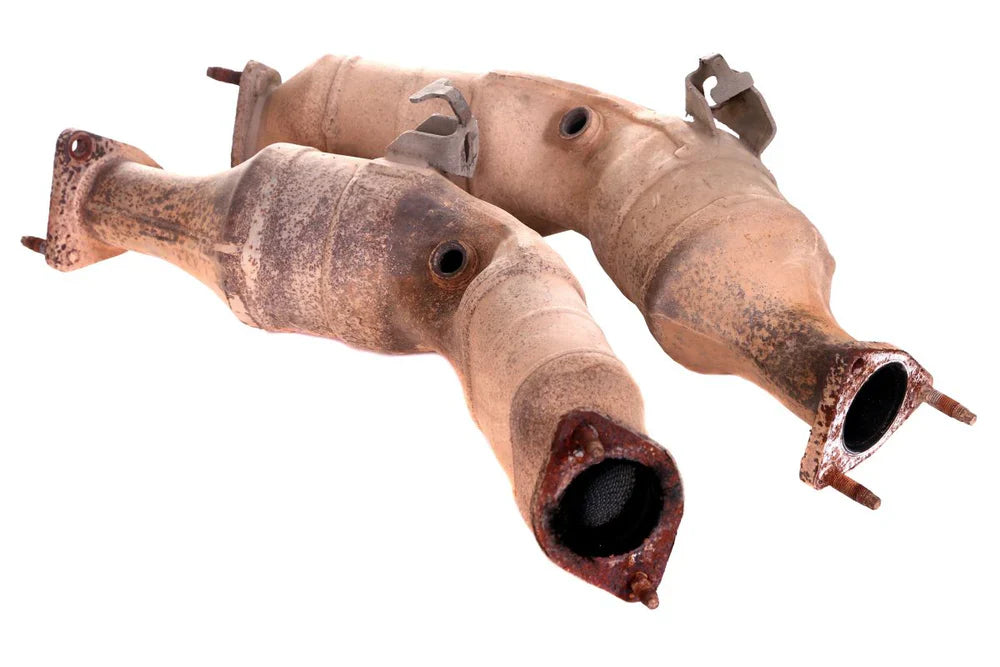
Problems with the catalytic converter rarely appear suddenly. Usually it starts innocently – the car loses a little power, the engine runs less evenly, fuel consumption slowly rises, and a strange smell of exhaust gases starts coming from the tailpipe.
Many drivers dismiss these signals. The engine warning light only comes on later, and before that the car sends out several very clear warnings that something is starting to happen to the exhaust system.
And that is exactly when the problem begins. A damaged catalytic converter can affect not only exhaust emissions, but also the way the engine runs, fuel consumption and the durability of other components. If the symptoms are ignored, the cost of the repair can rise several times over.
That's why it's worth knowing how to recognise the first symptoms of a damaged catalytic converter, where this failure comes from and when you have to react, before the problem becomes really serious.
How do you recognise the symptoms of a damaged catalytic converter before the engine warning light comes on?
The first symptoms of a damaged catalytic converter usually appear much earlier than the check engine light, which is why a driver often doesn't realise for a long time that a problem is starting to develop in the exhaust system.
It most often starts with a few signals that are easy to confuse with another fault:
- a drop in power during acceleration,
- a slower response of the engine to the throttle,
- rough running of the power unit,
- increased fuel consumption,
- a characteristic smell of exhaust gases, which becomes more intense,
- black or dark smoke from the exhaust.
The reason is simple. The catalytic converter is responsible for cleaning the exhaust gases and maintaining the correct flow of gases in the exhaust system. When it starts to clog or becomes damaged, the exhaust gases can't leave the engine freely. The pressure in the exhaust system rises, and the engine starts working in less favourable conditions.
And then the typical scenario appears, one that mechanics see very often. For a long time the driver drives with a slight drop in power, because the car still “goes”. Only when the catalytic converter starts clogging up badly does the engine warning light appear, or a clear loss of performance.
It's worth knowing that modern cars monitor the operation of the catalytic converter using two lambda sensors – one before the converter and one after it. When the computer notices that the composition of the exhaust gases isn't changing the way it should, it records a fault and triggers the warning light. That, however, often only happens once the problem is already advanced.
A drop in power and rough engine running – a faulty catalytic converter and its first symptoms while driving
The most noticeable symptom of a faulty catalytic converter is a clear drop in engine power, which appears especially during acceleration or when driving under load..
Drivers most often notice several characteristic symptoms then:
- the car accelerates clearly more slowly than before,
- the engine starts running unevenly at idle,
- vibrations of the power unit appear,
- the response to pressing the throttle pedal becomes delayed,
- the car has trouble reaching higher speeds.
This is the moment when many drivers start suspecting problems with the turbo, the mass air flow meter or the injectors. Meanwhile, in many cases the culprit turns out to be precisely the catalytic converter.
Mechanics often stress that a partially clogged catalytic converter can reduce engine power by as much as 20–30%. In turbocharged cars the effect can be even more noticeable, because the turbo also needs a free flow of exhaust gases in order to work properly.
And that is exactly why ignoring these symptoms can be costly. If the catalytic converter becomes completely blocked, it can lead to overheating of the exhaust system, damage to the lambda sensors, and in extreme cases even to problems with the turbo or the engine valves.
That's why, when a drop in power, rough engine running and rising fuel consumption appear, it's always worth checking the condition of the catalytic converter. In many cases an early reaction makes it possible to avoid a costly replacement of the whole component, whose price in many cars today exceeds €700–1,650.
Why does a catalytic converter fail? The most common causes, from a bad fuel mixture to mechanical damage
Most often a catalytic converter fails not because “it has simply worn out”, but because something started happening earlier with the engine or with fuel combustion. This component of the exhaust system works in truly difficult conditions – the temperature of the exhaust gases can exceed 600°C, and in the case of incorrect engine operation even 1,000°C. If unburnt fuel, engine oil or carbon deposits are added to that, the internal structure of the catalytic converter starts gradually breaking down or clogging.
Situations that most often lead to damage to the catalytic converter include:
- an air-fuel mixture that is too rich, which causes fuel to burn on in the exhaust system,
- faulty injectors or ignition system, as a result of which unburnt fuel reaches the catalytic converter,
- engine oil getting into the combustion chamber, e.g. through worn piston rings,
- frequently driving over very short distances, when the catalytic converter doesn't reach its operating temperature,
- mechanical impacts to the underbody, which can damage the converter's substrate,
- sudden cooling of a hot exhaust system, e.g. when driving into a deep puddle.
It's also worth knowing that the service life of a catalytic converter in modern cars is usually around 150,000–200,000 kilometres, but in practice a great deal depends on driving style and on the condition of the engine. If the power unit is working properly and combustion is stable, a catalytic converter can last considerably longer. When, however, carbon build-up, unburnt fuel or oil appears in the engine, its wear can accelerate several times over.
Can you drive with a damaged catalytic converter? When does the real problem begin?
Technically speaking, a car with a damaged catalytic converter will often still drive, but that doesn't mean such a problem can be ignored. If the catalytic converter starts to clog or its substrate has been damaged, sooner or later it will start affecting the operation of the whole engine.
Drivers most often notice then:
- an ever greater drop in power, especially during acceleration,
- clearly higher fuel consumption,
- rough engine running at low revs,
- louder operation of the exhaust system,
- the engine warning light coming on frequently.
The problem is that a clogged catalytic converter starts restricting the flow of exhaust gases. In a combustion engine the exhaust gases have to leave the cylinders very quickly – if they can't do that, the pressure in the exhaust system starts to rise, and the engine loses efficiency.
What are the risks of driving with a damaged catalytic converter for the engine, the turbo and the whole exhaust system?
Driving with a damaged catalytic converter can lead to serious technical problems, because this component has a direct influence on the operation of the engine and on the flow of exhaust gases throughout the exhaust system. When the catalytic converter starts to clog or its structure becomes damaged, it begins acting like a barrier that hinders the removal of exhaust gases.
The most common consequences of driving with a faulty catalytic converter are:
- overheating of the exhaust system,
- damage to the lambda sensors monitoring the composition of the exhaust gases,
- accelerated wear of the turbo in turbocharged engines,
- increased fuel consumption, by as much as 15–20%,
- damage to the converter's substrate and blocking of the exhaust gas flow,
- problems passing the vehicle's roadworthiness test.
In practice it very often looks like this: at first the driver notices only a slight drop in driving dynamics, but over time the car starts behaving worse and worse. The engine responds more slowly to the throttle, more noise appears from the exhaust system, and fuel consumption starts rising clearly.
If the converter's substrate starts crumbling or melts under the influence of the high temperature, its fragments can block the flow of exhaust gases, which in extreme cases causes a very large drop in engine power.
How do you avoid catalytic converter failure – prevention for the engine and the fuel system, which extends its life
The most effective way to avoid problems with the catalytic converter is simply to look after the correct operation of the engine and the combustion of fuel. This component rarely fails of its own accord – usually it is only a “victim” of other problems in the car.
In practice, actions such as these matter most:
- regular checking of the ignition system,
- keeping the injectors in good condition,
- avoiding long journeys with a faulty engine,
- using good-quality fuel,
- looking after the correct composition of the air-fuel mixture.
One of the problems that very often leads to damage to the catalytic converter is carbon build-up and deposits in the fuel system. When the injectors start working less precisely, fuel combustion becomes uneven, and larger quantities of unburnt fuel reach the exhaust system.
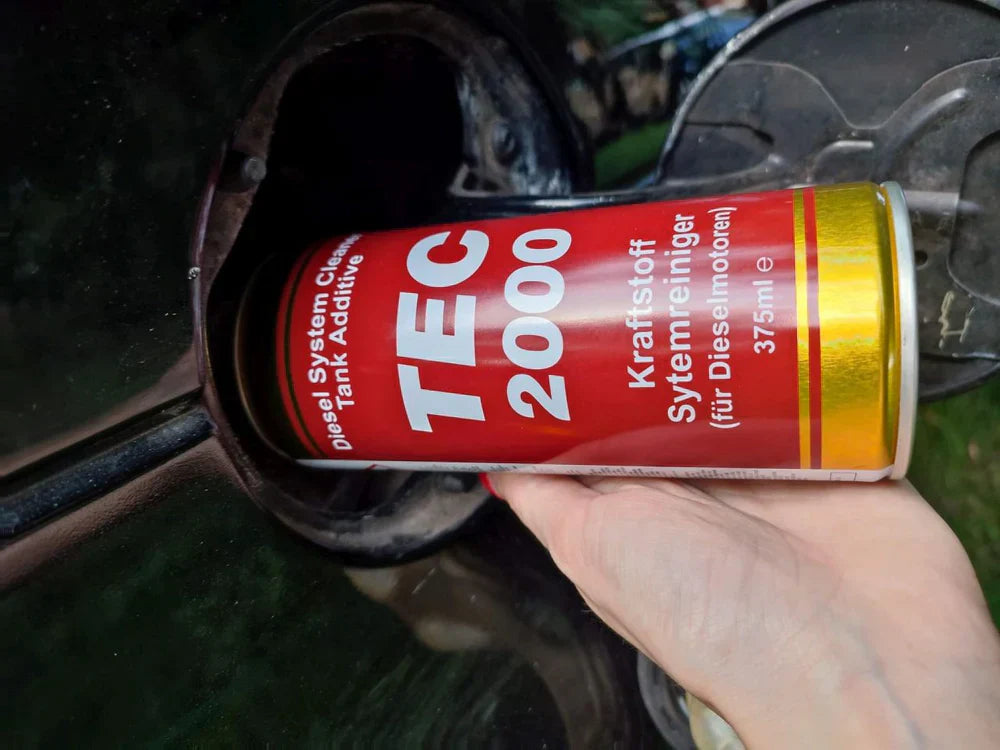
That is precisely why more and more drivers use products that improve the operation of the fuel system, such as TEC 2000 Fuel System Cleaner in petrol engines or TEC 2000 Diesel System Cleaner in diesel units. Products of this type help remove deposits from the injectors, improve the quality of fuel combustion and limit the formation of carbon build-up, which over time can also reach the catalytic converter.
In practice this means more stable engine running, lower fuel consumption and a smaller risk of the catalytic converter clogging. Regular prevention for the fuel system is one of the simplest ways to avoid a costly replacement of this component, which in many cars can cost a couple of thousand euros.
That's why, if you want the catalytic converter to work for a long time and without trouble, it's worth simply looking after what happens earlier in the combustion system. In most cases that is precisely where the whole story of exhaust system problems begins.
FAQ
What are the first symptoms of a damaged catalytic converter?
Most often a drop in engine power, a slower response to the throttle and an increase in fuel consumption appear. Drivers also notice rough engine running at idle, a more intense smell of exhaust gases or black smoke from the exhaust pipe. In many cases the check engine light also comes on after some time.
Can you drive with a damaged catalytic converter?
The car will usually still move, but driving with a damaged catalytic converter isn't a good idea. A blocked flow of exhaust gases causes a greater load on the engine, a rise in temperature in the exhaust system and can lead to further failures.
What are the risks of driving with a faulty catalytic converter?
The most common consequences are a drop in performance, higher fuel consumption, overheating of the exhaust system and damage to the lambda sensors. In turbocharged cars the problem can also accelerate wear of the turbo.
How much does replacing a catalytic converter cost?
The price depends on the car model, but in many cases a new catalytic converter costs from around €470 up to as much as €1,650. In some cars reconditioning or cleaning is possible, which are considerably cheaper.
Can catalytic converter failure be prevented?
Yes. The most important thing is to look after the correct operation of the engine and the combustion of fuel. Regular diagnostics, checking the ignition system and keeping the injectors in good condition help, e.g. by using cleaning fuel additives.



Leave a comment
This site is protected by hCaptcha and the hCaptcha Privacy Policy and Terms of Service apply.