
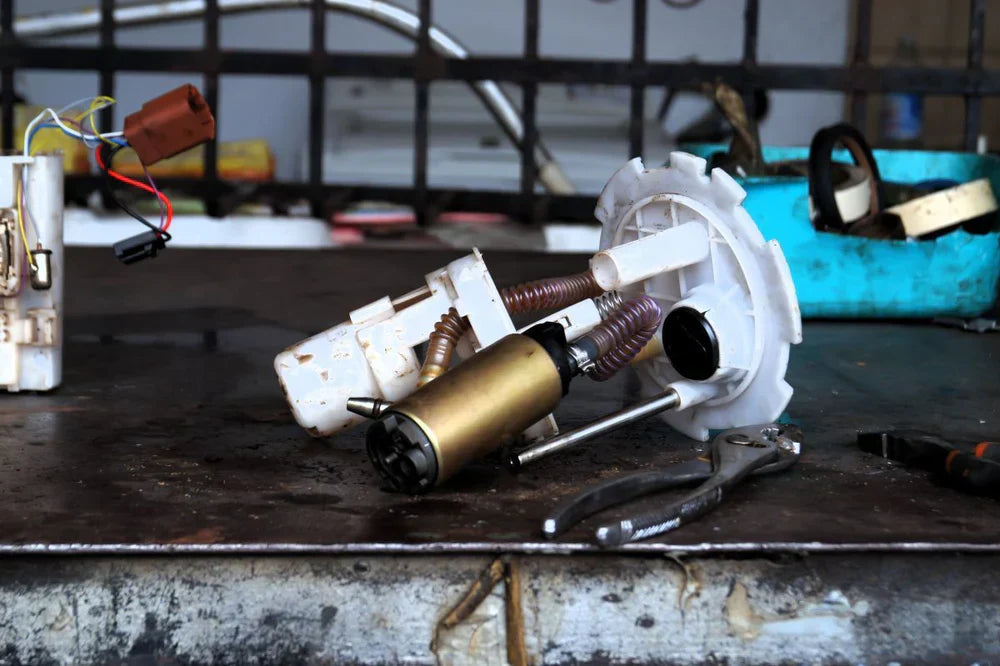
A fuel pump very rarely fails from one day to the next. Usually there are small signals beforehand: the car starts worse, sometimes it jerks under acceleration or loses power at higher revs. Many drivers ignore symptoms like these until the car suddenly cuts out while driving or refuses to cooperate altogether. And that is normally when it turns out the problem was far bigger than a “temporary lack of power”.
Is your fuel pump on its way out? These symptoms are best not ignored
Usually it all begins with things that are easy to blame on the weather, poor fuel or “the age of the car”. The engine takes a little longer to start in the morning. The car becomes sluggish. Sometimes there is a gentle jerk when you press the accelerator harder. You can still drive it, but the car starts behaving differently than before.
A damaged fuel pump very often produces exactly these symptoms:
- difficult starting,
- uneven engine running,
- loss of power,
- jerking while driving,
- the car cutting out at the lights or under acceleration,
- a louder “humming” from the fuel tank.
Similar symptoms can also be caused by a clogged fuel filter, electrical problems or a dirty fuel system. That is why good diagnostics matter enormously. Replacing the pump “blind” does not always solve the problem.
In many cars the first symptoms appear long before the pump gives up completely. That is exactly the moment when it is easiest to avoid bigger costs and the situation where the car simply will not start outside the shop or cuts out on a long journey.
Why do fuel pumps fail, and why does driving on the reserve tank really harm them?
A fuel pump dislikes two things: dirt and overheating. And that is exactly why regularly driving on the reserve tank shortens its life. In many cars the pump is cooled by the fuel sitting in the tank. When there is very little fuel, the pump works in far worse conditions and starts to overheat. Over time this leads to faster wear or even seizing.
On top of that come contaminants. Deposits, moisture, poor-quality fuel or a neglected fuel filter make the whole system work harder. And that is when you get fuel pressure problems, uneven engine running or a sudden loss of power.
The most common causes of fuel pump failure are:
- frequently driving on the reserve tank,
- contaminated fuel,
- water in the fuel,
- a clogged fuel filter,
- natural wear of the pump,
- electrical problems and overheating.
This is exactly why fuel system prevention matters so much. Regular cleaning helps limit the build-up of deposits and reduces the risk of overloading the pump. In diesels, many drivers use TEC 2000 Diesel System Cleaner, which helps remove moisture and cleans the entire fuel system. In petrol engines, TEC 2000 Fuel System Cleaner works in a similar way, supporting the cleanliness of the system and the operation of the injectors.
How much does fuel pump replacement cost, and where do such big price differences come from?
The cost of replacing a fuel pump can differ by as much as a couple of hundred euros – and it is not only about the make of the car. A lot depends on where the pump is located and how difficult it is to reach. In some cars the mechanic gets to it by lifting the rear seat, in others the fuel tank has to be dropped. And that immediately increases the working time and the labour cost.
The pump itself usually costs around €120–235, although cheaper aftermarket parts can be available for a couple of hundred euros less. On top of that comes labour, which most often falls in the range of about €47–105. In the end, most drivers finish with a bill of roughly €165–350.
A lot also depends on whether you choose:
- an original pump,
- a branded aftermarket part,
- a cheap budget component.
And this is exactly where many people try to save. The problem is that very cheap pumps often have a much shorter life or hold fuel pressure less well. As a result, the car can still have engine running problems despite the part being replaced.
That is why, before buying, it is worth confirming the diagnosis properly first. Sometimes it turns out the problem is not the pump itself but, for example, a dirty fuel system or a filter that has not been changed in a long time.
Fuel pump replacement – what does it involve and how long does the whole repair take?
Replacing a fuel pump usually does not take a whole day, but a lot depends on the design of the car. In some vehicles the mechanic gets to the pump by lifting the rear seat or unscrewing a service cover. In others the situation looks far worse, because the fuel tank has to be dropped and more components under the car removed. And that is when labour quickly becomes much more expensive.
Most often the whole job takes around 2–3 hours, although with more difficult access it can stretch to as much as 5 hours.
The whole process usually looks similar:
- the mechanic checks the fuel pressure and confirms the fault,
- disconnects the battery and the fuel lines,
- removes the pump module,
- fits the new part,
- checks the system for leaks,
- builds up fuel pressure before the first start.
And that last stage is very important. After the pump has been replaced, you do not start the car “straight away”. First the ignition has to be switched on a few times so that the fuel system builds the right pressure. Only then is the engine started and checked for leaks or problems with how the unit runs.
In many modern cars the fuel filter or the entire pump module is replaced along with the pump. And that is exactly why the final bill can be higher than the driver initially assumed.
Replace the pump or try regenerating it? It does not look the same in every car
Not every fuel pump is immediately fit for the bin. In older designs it is sometimes still possible to recondition individual components or replace just the pump insert. The problem is that in newer cars it far more often ends with a full replacement.
The reason is simple – replacement gives greater certainty, especially when the car already has a fuel pressure problem or the pump is starting to seize. If metal filings have got inside or the pump has run dry for a long time, regeneration often only helps for a while.
Regeneration is most often considered when:
- the damage is not extensive,
- the problem concerns the insert itself,
- the pump has no serious mechanical damage,
- repair parts are available.
Replacement, in turn, usually proves the more sensible option in the case of:
- heavy wear of the pump,
- fuel pressure problems,
- seized components,
- an electrical fault,
- the presence of metal filings in the system.
And that is exactly why a good diagnosis matters more than simply buying parts. It happens that a driver replaces the pump and the car still runs badly, because the problem lay, for example, in a dirty fuel system or a clogged filter.
That is why many mechanics start a bigger repair by checking the whole system and cleaning it. Products such as TEC 2000 Diesel System Cleaner or TEC 2000 Fuel System Cleaner help remove deposits, moisture and contamination from the fuel system, so that the pump does not have to work under such a heavy load.
How to extend the life of your fuel pump and avoid another failure?
Most fuel pumps end their life not because of a “factory defect”, but through everyday use. Driving on the reserve tank, a neglected fuel filter or poor-quality fuel slowly worsen the operating conditions of the whole system over months. The driver usually notices nothing until the car starts losing power or cutting out while driving.
If you want the pump to last as long as possible, simple things matter most:
- do not constantly drive on the reserve tank,
- change the fuel filter regularly,
- refuel at trusted stations,
- react to the first symptoms of engine running problems,
- keep the fuel system clean.
Moisture in the fuel tank also matters a great deal. Especially in winter or on short trips, water starts to collect in the fuel system, which worsens the operation of the pump and the entire fuel supply system. And that is exactly why many drivers use fuel cleaning additives preventively.
In diesels a popular solution is TEC 2000 Diesel System Cleaner, which helps remove moisture and cleans the whole fuel system. In petrol engines, TEC 2000 Fuel System Cleaner plays a similar role, supporting the pump, the injectors and the entire fuel system.
FAQ
Can you drive with a damaged fuel pump?
You can, but the risk of the car suddenly cutting out rises quickly. A damaged pump can also lead to problems with the entire fuel system.
How long does fuel pump replacement take?
Most often around 2–3 hours. In cars with difficult access to the pump, the repair can take as long as 5 hours.
How much does fuel pump replacement cost?
Usually from around €165 to €350 including the part and labour. The price depends mainly on the car model and the type of pump.
Does driving on the reserve tank harm the fuel pump?
Yes. In many cars the pump is cooled by the fuel in the tank, so frequently driving on the reserve tank accelerates its wear.
Can a fuel pump be regenerated?
Sometimes yes, but it depends on the type of pump and the extent of the damage. In many newer cars a full replacement is more common.
Can a fuel pump fail suddenly?
Yes, although symptoms such as jerking, starting problems or a loss of power usually appear beforehand.
Does the system have to be bled after the pump has been replaced?
In many cars the system builds pressure by itself after the ignition has been switched on a few times, but it all depends on the design of the car.
Is it worth buying a cheap aftermarket fuel pump?
The cheapest aftermarket parts often have a shorter life and hold fuel pressure less well. It is therefore better to choose proven, good-quality parts.
What damages fuel pumps most often?
Most often driving on the reserve tank, contaminated fuel, moisture in the system and a neglected fuel filter.
Do fuel additives help the fuel pump?
Yes, cleaning products help remove deposits and moisture from the fuel system, so the pump works in better conditions.


Leave a comment
This site is protected by hCaptcha and the hCaptcha Privacy Policy and Terms of Service apply.