
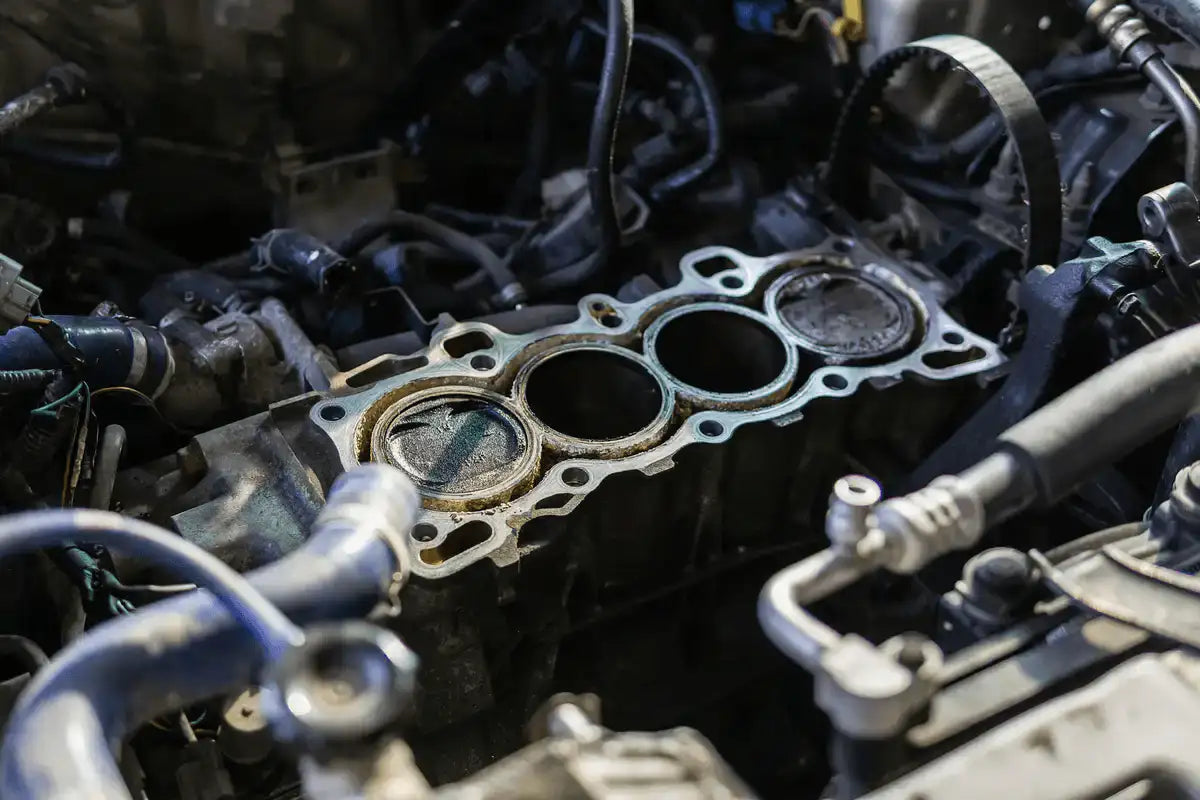
Flushing an engine is not complicated – if you can change the oil yourself, adding a flush is a formality. Below we show, step by step, how to use TEC 2000 Engine Flush, how much of it to use, how often and what mistakes not to make.
Let us be honest right away: a flush is not a miracle cure for every failure. It is an effective tool for cleaning carbon build-up, soot and oil deposits out of the inside of an engine – provided you use it well. And it is that "well" that this guide is about.
Why flush the engine before an oil change at all?
An oil service on its own changes the oil, but it does not remove what has already settled inside the unit. Over the years, carbon build-up, soot, sludge and oil lacquer accumulate in the engine – and not where it is easy, but in the piston ring grooves, the oil gallery passages and around the valve lifters. Fresh oil will not dissolve that on its own. What is worse, when you drain the old oil without a flush, some of the contamination stays inside and starts dirtying the new charge straight away.
The most dangerous scenario is carbon build-up restricting the oil passages. Reduced oil flow is a real risk not only for the engine itself, but also for the turbocharger, which is lubricated by that very oil. A flush dissolves these deposits and carries them out of the system together with the old oil – thanks to that, the fresh oil goes into an engine that is actually clean, and not merely "changed".
When does a flush make sense, and when is it better to give it a miss?
It is particularly worth considering flushing the engine when:
- you have bought a used car and do not know its service history,
- you drive mainly on short journeys around town, where the oil gets dirty faster,
- you have exceeded the recommended oil change intervals from time to time,
- you are moving from mineral oil to synthetic or changing its type,
- the engine has started running louder, less evenly or is using more oil than it used to,
- the car is smoking and you suspect carbon build-up on the rings rather than a serious failure.
In these situations the amount of deposits inside is often considerably greater than the engine’s appearance from the outside would suggest – and cleaning the system before pouring in fresh oil brings a noticeable improvement. If you are battling with smoking, take a look as well at the guide on what blue smoke from the exhaust means, and if you suspect stuck rings – at the piece on how to free up stuck piston rings.
⚠ IMPORTANT – a badly neglected engine calls for care
If the engine has covered a very high mileage and gone years without a service, there may be a really thick layer of sludge inside. A good flush dissolves the deposits rather than tearing them off in large flakes – and that is safe. The problem arises with cheap, aggressive preparations that can tear off too much dirt at once and block the oil pump pick-up with it. That is why, in engines like this, a proven product and sticking to the instructions matter all the more.
If the engine is already clearly losing oil, smoking blue under load or "knocking", a flush alone will not fix that. In that case treat the treatment as part of the diagnosis, not as a repair – and consult a mechanic.
How do you use TEC 2000 Engine Flush step by step?
Below we describe the process exactly as the manufacturer recommends. This is not the place for your own modifications – stick to these steps and do not improvise, and the flush will work the way it is supposed to.
- Warm the engine up to normal operating temperature. A flush only works once the oil is warm and circulating around the system – cold and stationary it will not do its job.
- Pour the whole can into the OLD oil – before you drain it. Unscrew the oil filler cap, pour the contents in and screw the cap back on.
- Leave the engine idling for about 10–15 minutes. The car must stand outside or in a well-ventilated space. During this time the preparation spreads through the interior and dissolves the deposits.
- Switch the engine off and drain the old oil together with the mixed-in flush. Unscrew the old oil filter.
- Fit a new filter and pour in fresh oil to the correct level.
- Start the engine for about 30 seconds, switch it off, wait a moment and check the oil level – top it up if necessary.
And that is all. No driving around with the flush in, no "I will leave it overnight" – the preparation works while stationary, at idle, for those ten to fifteen minutes, and that is it.
A badly contaminated engine? If the car has had symptoms such as sticky rings, uneven compression, increased oil consumption (above ~1 litre per 1,000 km) or blue, you can extend the idling time to around 25–30 minutes. That is the upper limit – there is no point dragging it out any longer.
How much flush should you use and how often should you flush the engine?
The dosage is simple and depends on the capacity of the oil system. Engine Flush comes in a 375 ml can and a 2,500 ml one:
|
Application |
Dosage |
Note |
|
Cars (dry clutch) |
1 can of 375 ml per 4–5 l of oil |
standard for most cars |
|
Motorcycles / wet clutch |
1 can of 375 ml per 5–6 l of oil |
do not exceed the proportion with a wet clutch |
|
A larger oil system |
proportionally another can or the 2,500 ml version (dosage about 100 ml per 1 l of oil) |
for example large engines, lorries |
How often to use an engine flush:
- ideally at every oil change – it is preventive cleaning, which keeps the engine clean on an ongoing basis,
- obligatorily when changing the type of oil (for example from mineral to synthetic) and after buying a used car with an unknown history.
Engine Flush is safe for all internal combustion engines – petrol, diesel and gas-powered, including those with a particulate filter (DPF/GPF/FAP). The only exception is two-stroke engines – we do not use the flush in them. We write about how often to change the oil at all in a separate piece on changing the oil every 2 years.
The order matters – the most common mistakes when flushing
Most disappointments with a flush come not from the product but from the way it is used. Here is what not to do:
- Do not add the flush after the oil change. The preparation is added to the OLD oil, before it is drained. Poured into fresh oil it will not do its job (in the case of Engine Flush from TEC 2000 the preparation will simply evaporate and disappear).
- Do not skip warming the engine up. Cold oil does not circulate as it should, and the flush will not reach where it is meant to clean.
- Do not cut the running time short. A few minutes is too little for the preparation to spread through the system and bind the deposits. Stick to those 10–15 minutes.
- Do not drive with the flush in the engine. It is not an additive for driving – it works while stationary, at idle, and is drained together with the old oil.
- Do not forget about a new oil filter. The old filter holds some of the dissolved contamination – changing it is an inseparable part of the treatment.
Is a flush safe for the engine and the seals?
This is drivers’ most common worry – and rightly so, because not every flush is the same. Some cheap preparations are based on acids and esters, which can absorb moisture from the seals, reduce their volume and lead to leaks. That is where the myth that "a flush makes an engine leak" came from.
Engine Flush works differently. It is acid-free and has a neutral pH, and does not acidify the oil environment, so it is safe for rubber and silicone seals – in old and new engines alike. Its composition contains no paraffin, oil, chlorinated hydrocarbons, molybdenum, PTFE or sulphur (this last point matters, among other things, for Nikasil coatings). The cleaning work is done by two solvents, while two lubricating agents protect the engine during the treatment.
We go into more detail in two separate pieces: is an engine flush safe for rubber seals and what an engine flush is made of. If you are interested in cleaning specifically of carbon deposits, take a look at the guide on cleaning carbon build-up out of an engine.
⚠ IMPORTANT – what to remember for your own safety
Ventilation is essential. The engine runs for a good ten minutes or more at idle, so the car must stand outside or in a very well ventilated space – exhaust fumes contain carbon monoxide and are dangerous in a closed garage.
You are working on a warm engine, so watch out for hot components and for the oil you are draining. It is best to use gloves, and to drain the old oil into a suitable container and hand it in for disposal.
Fresh oil in a clean engine – what next?
The whole point of the treatment is that the new oil goes into a clean interior, and not into the remains of the old dirt. Now that you have achieved that, it is worth making sure the fresh oil keeps its properties for as long as possible – especially in older engines or those working under heavier loads.
That is what TEC 2000 Oil Booster is for – an additive for fresh oil that strengthens the oil film, slows the oxidation and ageing of the oil and helps maintain lubrication pressure. It is added to the new oil with the engine warm but switched off, and then the unit is left idling for about 5 minutes. It is the natural complement to a flush: first you clean with Engine Flush, then you protect the fresh oil with Oil Booster.
When is a flush alone not enough?
A flush helps clean the lubrication system and often genuinely improves how smoothly the engine runs – quieter lifters, more even revs, a better response to the throttle. But it will not replace a mechanical repair.
Take the car to a mechanic instead of counting on a flush alone if:
- the engine is clearly losing oil despite a clean system and an oil change,
- the compression is badly down or uneven across the cylinders,
- knocking, vibration or a loss of power unrelated to contamination appears,
- thick blue smoke comes out of the exhaust under load,
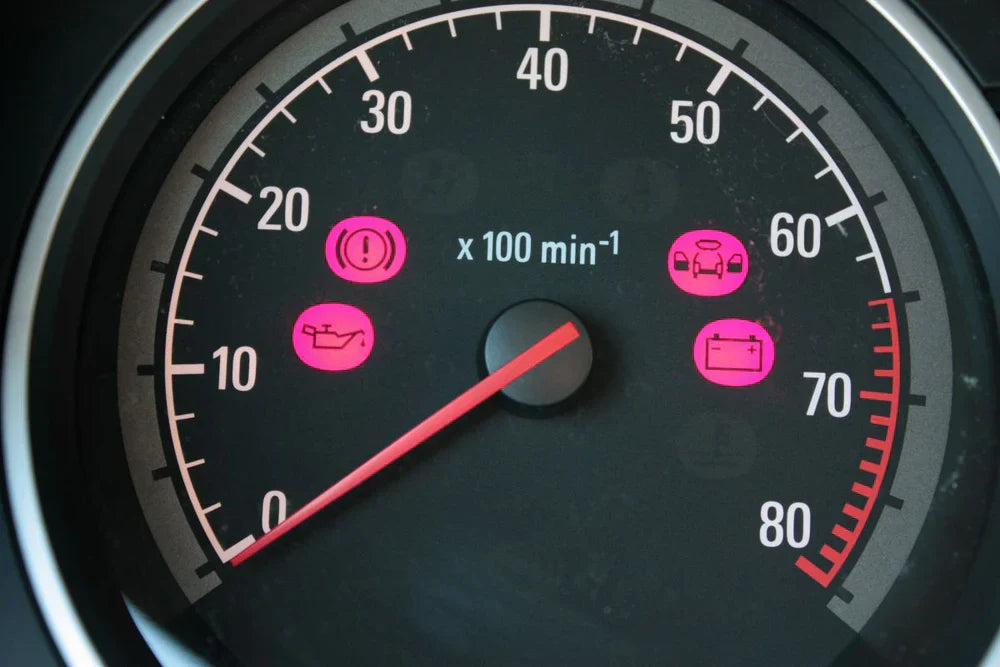
- the oil pressure light comes on or the oil level drops quickly.
In such cases flushing can be part of the diagnosis, but the cause lies deeper – in worn rings, valve guides or seals, which have to be assessed at a workshop.
FAQ
Should the flush be added to new or old oil?
Always to the old oil, before it is drained. The flush is meant to dissolve the deposits and leave the engine together with the used oil. Adding it to fresh oil makes no sense.
How long should the engine run with the flush?
About 10–15 minutes at idle with the engine warm. With a badly contaminated unit you can extend this to 25–30 minutes, but no longer.
How much flush should you pour in?
One 375 ml can is enough for 4–5 litres of oil in a car and 5–6 litres in a motorcycle. With a larger oil system, add another can proportionally or go for the larger version of the preparation (2,500 ml).
How often should you use an engine flush?
Ideally at every oil change. Obligatorily after buying a used car with an unknown history and when changing the type of oil.
Is a flush safe for the seals?
A good preparation with a neutral pH, free of acids – such as TEC 2000 Engine Flush – is safe for rubber and silicone seals, as long as you use it according to the instructions. The risk comes from aggressive, acidic flushes and from keeping them in the engine for too long.
Can I drive with the flush in the engine?
No. The flush works while stationary, at idle, and is drained together with the old oil. It is not intended to be used in place of oil.
Can the flush be used in a diesel and in a car with a DPF?
Yes. Engine Flush is suitable for petrol, diesel and LPG engines, including those with a particulate filter (DPF/GPF/FAP). The exception is two-stroke engines.
Do you have to change the oil filter after flushing?
Yes, it is an inseparable part of the treatment. The old filter retains some of the dissolved contamination, so leaving it in would undo the effect of the flush.
To sum up in one sentence: warm the engine up, add the flush to the old oil, let it work for a good ten minutes or more at idle, drain the oil, change the filter and pour in fresh oil. Stick to this order, do not improvise on your own – and the flush really will do its job.


Leave a comment
This site is protected by hCaptcha and the hCaptcha Privacy Policy and Terms of Service apply.