
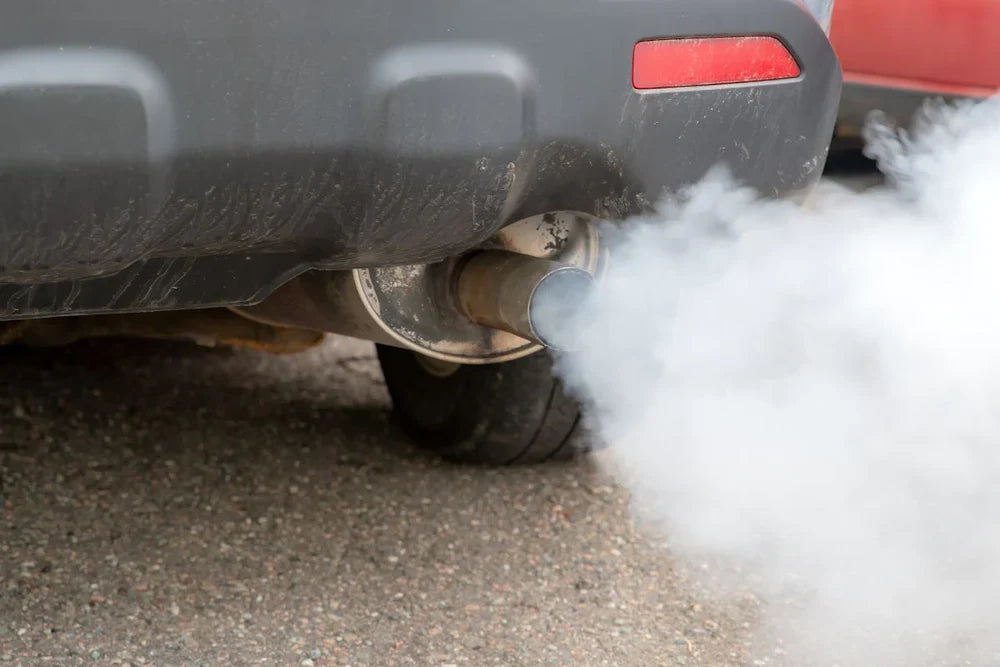
Why does a diesel blow white smoke? Is it cause for concern, or perhaps a natural phenomenon that can easily be put right? In the post below I look at the most common causes of white smoke, as well as at the methods of diagnosing and repairing it. Reading on, you'll also learn how to prevent these problems through regular maintenance and the use of specialist products.
Where does white smoke from the exhaust pipe come from?
Put simply: white smoke means the presence of water vapour or unburnt fuel in the exhaust gases.
In an engine everything should proceed very precisely – fuel reaches the cylinder, mixes with air, ignition takes place and exhaust gases are produced. When one of these elements doesn't work properly, that's exactly when smoke from the exhaust appears.
The most common causes of white smoke are:
- water vapour arising with a cold engine,
- unburnt fuel in the cylinders,
- dirty or worn injectors,
- moisture or water in the fuel,
- problems with the cooling system,
- a damaged head gasket,
- too low a combustion temperature in the cylinder.
In practice, drivers most often observe white smoke just after starting the car or when opening the throttle hard.
White smoke on a cold diesel engine – when is it normal?
If the diesel blows white smoke only for a moment after starting, in many cases there's no reason to panic.
At low temperatures in the cylinders, a situation arises in which the fuel doesn't burn completely. A mist resembling white smoke is then produced.
This most often happens in winter or on short trips.
Typical symptoms:
- white smoke for a few to a dozen or so seconds,
- the phenomenon disappears once the engine has warmed up,
- the car runs normally.
However, if the smoke persists for a long time or an acrid smell of unburnt fuel appears, the cause very often turns out to be dirty injectors or a contaminated fuel system.
White, foul-smelling smoke from the exhaust – what does it mean in practice?
If the white smoke has an intense smell of fuel, it usually means that the diesel or petrol isn't burning properly.
The most common culprits are:
- dirty injector tips,
- poor fuel atomisation,
- carbon deposits in the fuel system,
- the presence of water in the fuel,
- leaking injectors.
In such a situation the fuel reaches the cylinder, but instead of burning – it partly escapes in the form of vapour and smoke from the exhaust.
This phenomenon also causes:
- a drop in power,
- rough engine running,
- greater fuel consumption.
In many cases a thorough cleaning of the fuel system is enough for the problem to disappear.
The product TEC 2000 Diesel System Cleaner cleans the injectors, removes moisture from the fuel and improves the combustion process. Thanks to this the engine regains stable running, and the emission of smoke from the exhaust clearly drops.
Can you drive with white smoke coming from the exhaust?
That depends on the cause of the problem.
If white smoke appears only for a moment on a cold engine, it usually doesn't indicate a serious failure.
What should cause concern are situations in which:
- the smoking persists while driving,
- an intense smell of fuel appears,
- the engine loses power,
- the car runs unevenly,
- the coolant level in the expansion tank drops,
- fuel consumption rises.
Then carrying on driving can lead to more serious problems.
The most common consequences of ignoring the problem:
- damage to the injectors,
- a clogged DPF,
- damage to the turbo,
- excessive wear of the engine.
How much does it cost to repair a white smoke problem?
Repair costs depend on the cause. The most common scenarios look like this:
- cleaning the fuel system – around €10–20,
- cleaning the injectors – €47–140,
- reconditioning the injectors – €140–350 per unit,
- replacing the injectors – as much as €700–1,400,
- the head gasket – €470–1,180.
That's why in practice many mechanics begin their diagnosis with cleaning the fuel system. Cleaning products such as the Diesel System Cleaner mentioned earlier make it possible to remove carbon deposits, moisture and sediment from the fuel, which often cause combustion problems.
How do you prevent white smoke from the exhaust?
The best way to avoid problems is regular prevention for the fuel system.
In practice this means:
- filling up with good-quality fuel,
- regular fuel filter replacement,
- periodic cleaning of the injection system,
- removing moisture from the fuel tank,
- checking how the injectors are working.
Products such as TEC 2000 Diesel System Cleaner help:
- remove water from the fuel,
- clean the injectors and the fuel lines,
- improve fuel atomisation,
- reduce smoke from the exhaust and exhaust emissions.
Regular use of the additive twice a year makes it possible to keep the fuel system in good condition and to reduce the risk of serious failures.
FAQ
Does white smoke from the exhaust always mean a failure?
No. If it appears only on a cold engine and disappears quickly, it is usually water vapour arising at low temperatures.
Can white smoke mean problems with the injectors?
Yes. Dirty or worn injectors cause fuel to burn incorrectly, which often manifests itself precisely as white smoke.
Can white smoke mean water in the fuel?
Yes. Moisture in the fuel disturbs combustion and causes light-coloured smoke to come from the exhaust.
Do fuel products help with engine smoking?
Yes. Products that clean the fuel system remove deposits and moisture, which improves fuel combustion and reduces smoking.
When does white smoke mean a serious failure?
If the smoking doesn't disappear once the engine has warmed up, and is accompanied by a drop in power or the smell of coolant – the cause may be a damaged head gasket.


Leave a comment
This site is protected by hCaptcha and the hCaptcha Privacy Policy and Terms of Service apply.