
Sometimes it all starts with a trifle. The engine cranks a little longer when starting, the car loses its urge, and fuel consumption suddenly rises by a litre or two. Many drivers put it down to fuel quality or the age of the car. In practice, however, it sometimes happens that metal particles start circulating in the fuel system, slowly destroying its most expensive components.
The problem is that metal filings in the fuel give no unambiguous symptoms for a long time. The engine still runs, the car starts normally, so it's easy to ignore. Only when more serious symptoms appear does it often turn out that the high-pressure pump, the injectors or the Common Rail have been damaged.
If you have ever wondered where filings in the fuel system come from, how to recognise them and whether anything can be done about it, you've come to the right place. This problem appears in many modern cars – especially in diesels – and unfortunately it can end in a very costly repair.
Where do metal filings in the fuel actually come from – the most common causes that start to destroy the fuel system
Most often metal filings appear in the fuel as a result of wear of the high-pressure pump, especially in diesel engines with a Common Rail system. It's a component working under enormous load – pressure in modern injection systems can exceed 2,000 bar, and every small lapse in lubrication immediately affects its durability.
The most common causes of metal particles forming are fairly specific:
- natural wear of the high-pressure pump's components, especially at high mileages,
- low fuel quality, which has poorer lubricating properties,
- the presence of water in the fuel, leading to corrosion of the metal components,
- an infrequently changed fuel filter, which stops effectively retaining contaminants,
- biocomponent additives in the fuel, which in some situations accelerate the process of metal components wearing.
In practice it looks fairly simple – the pump's components start to wear gently, and the resulting metal particles get into the fuel and begin to circulate through the whole system. The problem is that modern injection systems are very precise. Injectors work to tolerances of the order of a few micrometres, so even small filings can disturb their operation.
Filings in the fuel filter – the first alarm signal that the pump or the injectors are starting to wear
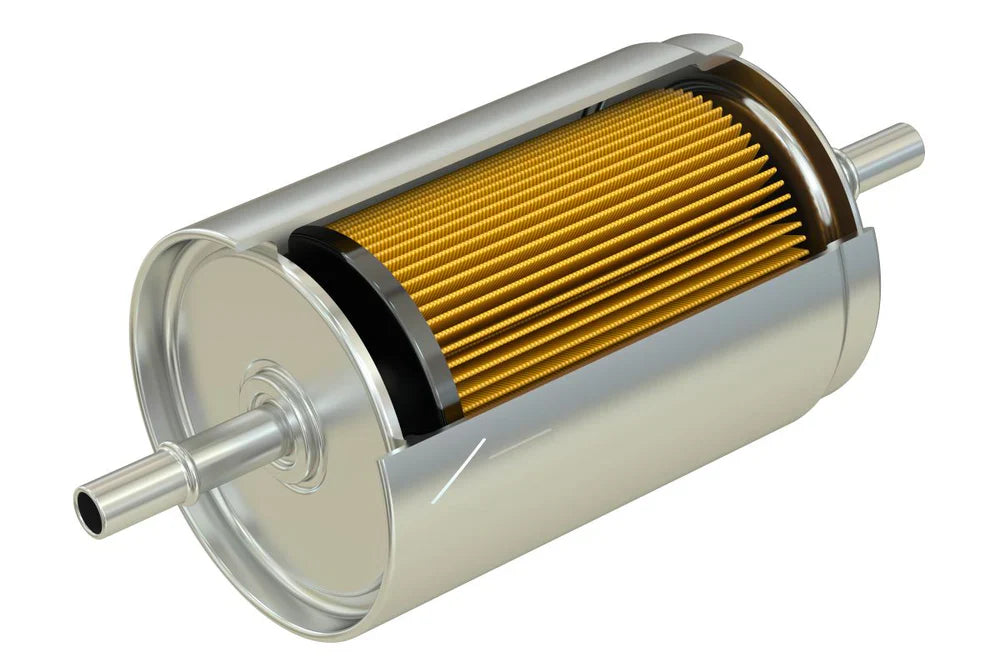
The simplest place where the problem can be noticed is precisely the fuel filter. It retains most of the contaminants before they reach the injectors, which is why filings in the fuel filter are often the first signal of a more serious problem in the system.
If a mechanic notices metal particles on the filter, it usually means one of several things:
- the beginning of wear of the high-pressure pump,
- contaminants already circulating through the whole fuel system,
- progressive wear of the metal components in the pump,
- fuel with very poor lubricating properties,
- service neglect, e.g. filters changed too rarely.
Many drivers don't realise how important this component is. A fuel filter can retain an enormous amount of contaminants, but only if it is changed regularly. If you drive for a long time on an old filter, its flow capacity drops and some of the contaminants start getting through further.
In practice it often looks like this: the car starts losing power slightly, the engine responds worse to the throttle, and at start-up there is a momentary unevenness. That's the moment when it's worth taking a look at the fuel filter.
Mechanics say it outright – if metal particles appear, it's a sign that mechanical wear is starting in the system. The sooner it is detected, the greater the chance that the problem won't spread to the whole fuel system.
Metal filings in the fuel filter – how do you recognise them before they lead to injector failure?
Metal particles in a fuel filter have a fairly characteristic appearance and usually can't be confused with other contaminants. Most often they are fine, shiny particles resembling metallic dust, which stand out clearly from sediment or rust.
If metal filings appear in the fuel filter, they are usually accompanied by other symptoms in the way the engine runs:
- difficulty starting the engine, especially from cold,
- a drop in power during acceleration,
- rough running at idle,
- increased fuel consumption,
- strange noises from the vicinity of the fuel pump or the injectors.
The problem is that many people ignore these symptoms. The car still drives, so the driver puts off diagnostics until later. Unfortunately, during that time the filings circulate through the whole fuel system, and every start of the engine spreads them further.
Injectors are particularly sensitive to such contaminants. Their tips have microscopic holes responsible for atomising the fuel, which is why even small particles can damage them. Once that happens, more serious problems begin – the engine loses power, smoking appears and fuel consumption rises.
That's why quickly recognising metal particles in the fuel filter can save the entire injection system. In many cases thorough diagnostics and cleaning of the fuel system are then enough, before a more serious failure occurs.
Why can metal particles destroy the whole injection system?
The biggest problem begins when metal filings start circulating through the whole fuel system. In such a situation the particles reach not only the pump, but also the injectors, the fuel lines and the Common Rail.
The consequences of such contamination can be truly serious:
- scoring of the high-pressure pump's components,
- damage to the injector tips,
- disruption of the correct atomisation of fuel,
- rough engine running and a drop in power,
- the risk of components of the fuel system seizing.
Modern injection systems are very precise. Every particle of metal acts like an abrasive, accelerating the wear of subsequent components. That's why mechanics often say that once filings appear in the system, a domino effect begins.
The worst-case scenario is a situation in which the high-pressure pump is completely destroyed. Then metal particles reach the whole fuel system – the lines, the injectors, and even the fuel tank.
Repair in such a situation can be very costly. In many cars it means the need to replace the pump and the injectors and to flush the entire fuel system thoroughly, which can cost a few, and sometimes even several thousand euros.
How do you remove filings from the fuel system before the problem starts destroying further components?
If metal particles appear in the system, the most important thing is to stop them circulating any further, because every further drive can deepen the damage in the pump and the injectors. Filings act like an abrasive – they travel along with the fuel and gradually damage subsequent components of the injection system.
The first steps worth taking are fairly specific:
- checking and cutting open the fuel filter, in order to confirm the presence of metal particles,
- diagnostics of the high-pressure pump, which is most often the source of the filings,
- checking the injectors for contamination,
- cleaning the fuel system with a specialist product,
- replacing the fuel filter with a new one, in order to stop further contaminants.
In practice it often looks like this: the problem comes to light during a service. The mechanic cuts open the filter and notices metallic dust or fine, shiny filings. If their quantity is small, sometimes a thorough cleaning of the fuel system is enough, together with the use of products that dissolve deposits, improve the fuel's lubricity and stabilise the operation of the injection system.
In such situations many mechanics reach for cleaning agents applied directly in the fuel system, e.g. TEC 2000 Fuel System Cleaner in the case of petrol engines or TEC 2000 Diesel System Cleaner in diesels. Products of this type remove deposits from the injectors, improve fuel atomisation and help flush contaminants out of the system.
If, however, there are a lot of filings, unfortunately that usually means more serious wear of the high-pressure pump, and then chemistry alone isn't enough and a bigger repair may be necessary.
Flushing filings out of the fuel system – when can you do it yourself, and when do you need a workshop?
If filings appear in a small quantity, flushing the fuel system can stop the problem before a serious failure develops. Such a treatment consists of passing a special cleaning product through the fuel system, which dissolves deposits and helps remove contaminants from the injectors and the fuel lines.
Two cleaning methods are most often used:
- adding a cleaning product to the fuel in the tank,
- applying the agent directly into the injection system,
- flushing the system through the fuel filter,
- cleaning the injectors on a special test bench,
- ultrasonic cleaning of the fuel system's components.
In garage conditions the first method is most often used, i.e. adding a cleaning product to the fuel, which while you drive flows through the fuel system and removes deposits from the injectors and the fuel lines. The fuel additives are above all Diesel System Cleaner (DSC) and Fuel System Cleaner (FSC) – these were developed with regular, preventive use in mind. They dissolve carbon deposits, stabilise combustion and help restore correct operation of the injection system.
If, however, a larger quantity of metallic particles appears in the fuel filter, then more thorough diagnostics at a workshop are necessary. Mechanics then often use flushing of the system on a special machine or ultrasonic cleaning of the injectors, which makes it possible to remove even very fine contaminants.
In many cases it is precisely a quick flush of the system that makes it possible to stop the problem before the metal particles lead to damage to the injectors or the high-pressure pump.
How do you prevent filings in the fuel – a few habits that can save the pump and the injectors
The best way to fight filings in the fuel system is simply prevention and regular servicing, because most such problems develop slowly and give warning signals beforehand. If the fuel system is regularly cleaned and properly lubricated, the risk of metal particles forming drops considerably.
A few habits really make a difference:
- regular fuel filter replacement, ideally every 20,000–30,000 km,
- filling up with good-quality fuel,
- checking for the presence of water in the fuel,
- periodic cleaning of the fuel system,
- using additives that improve the fuel's lubricating properties.
This is particularly important in the case of modern engines with a Common Rail system. High-pressure pumps there work in very difficult conditions and are sensitive to fuel quality and to a lack of proper lubrication. When fuel has poor lubricating properties, the pump's components start to wear faster, and that is exactly when the first metal particles appear.
That's why many mechanics recommend the preventive use of products that clean and lubricate the fuel system. Agents such as TEC 2000 Diesel System Cleaner or TEC 2000 Fuel System Cleaner help remove carbon deposits from the injectors, improve fuel atomisation and limit wear of the pump's components.
Regular cleaning of the fuel system is something most drivers only start thinking about after a failure. Meanwhile, in practice prevention is considerably cheaper than repairing the pump or reconditioning the injectors, which in modern cars can cost a great deal.
FAQ
Can you drive with filings in the fuel?
In theory the car may still drive normally, but every kilometre increases the risk of damage to the injectors and the high-pressure pump. Metal particles act like an abrasive, which is why driving with such a problem often ends with the filings spreading through the whole fuel system.
How much does repairing the fuel system after filings cost?
The cost of repair depends on the scale of the damage. If the problem is detected early, sometimes cleaning the fuel system and replacing the filter is enough. In more serious cases reconditioning of the high-pressure pump and the injectors is necessary, which can cost from a few to even several thousand euros.
Does the fuel filter retain filings?
Yes – the fuel filter is the first protective barrier for the injection system and retains most contaminants. The problem appears when the filter is worn out or changed too rarely, because then some of the particles can get through further to the injectors.
Do fuel additives help with filings?
Cleaning products can help if the problem is at an early stage. Additives such as TEC 2000 Diesel System Cleaner or TEC 2000 Fuel System Cleaner help clean deposits out of the fuel system, improve combustion and limit further wear of the injection system's components. In the case of serious damage to the pump, however, diagnostics at a workshop will be necessary.
How often should you clean the fuel system?
Most mechanics recommend preventive cleaning of the fuel system every 10,000–15,000 kilometres or twice a year. Regular removal of deposits makes it possible to maintain correct operation of the injectors and stable fuel combustion.


Leave a comment
This site is protected by hCaptcha and the hCaptcha Privacy Policy and Terms of Service apply.