
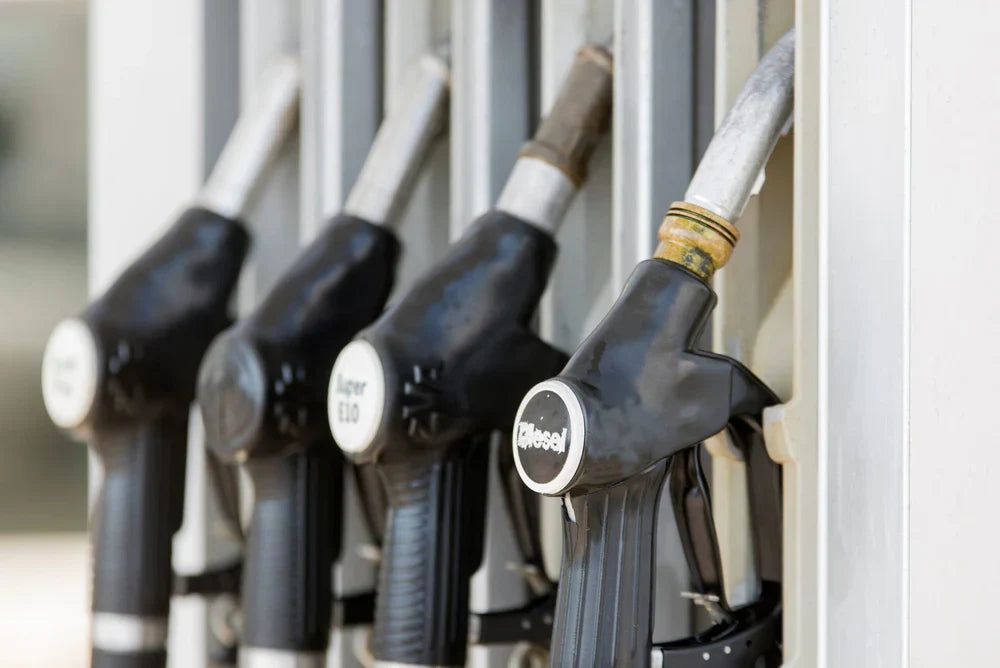
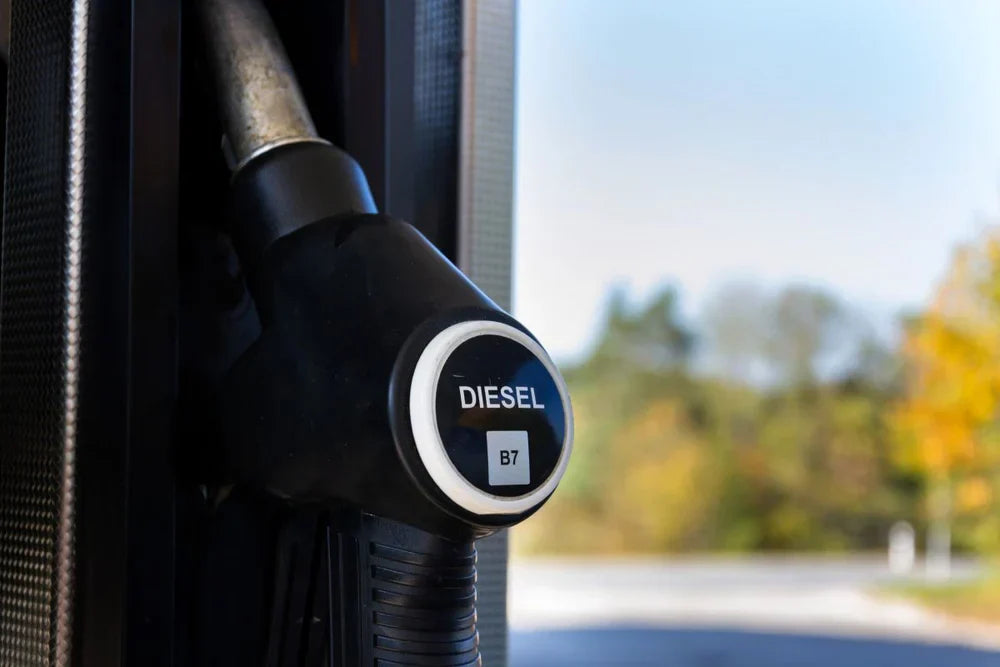
At Polish stations diesel comes in three official designations shown in a square label: B7 (up to 7% FAME biocomponents), B10 (up to 10%) and XTL (synthetic diesel with no crude oil). On top of that come the seasonal grades – summer, transitional, winter and arctic – differing in frost resistance. For 99% of drivers that means one thing in practice: you fill up with B7, and in winter you reach for a fuel with a lower filter blocking temperature. Below we explain what each designation means, which diesel suits your car and how to protect the fuel and the injection system.
For 99% of drivers there is one practical conclusion: day to day you fill up with B7, and in winter you choose the grade with a lower CFPP. B10, XTL and B0 are variants for specific situations, not the default choice.
What is diesel fuel and how do you recognise it at the station?
Diesel fuel (ON) is the fuel for compression-ignition engines – the same ones we colloquially call diesels. In Poland you will find it on the pump under the traditional abbreviation ON, and since 2018 an EU-wide standardised symbol has appeared next to it, inside a square. It is a simple code: a square always means diesel, a circle – petrol, a diamond – gaseous fuels.
The letter B in the designation (for example B7) refers to the FAME biocomponent, and the number is its maximum content in per cent. If you want to see the full map of petrol, diesel and gas designations, take a look at the post on what you are actually putting in the tank.
What do the symbols B7, B10 and XTL mean?
These are the three official diesel designations from the European standard PN-EN 16942. Each says something about the origin and the composition of the fuel.
B7 – the standard diesel in Poland
This is the most common diesel at Polish stations – it contains up to 7% FAME bio-esters. It can be used in any car with a compression-ignition engine, without checking the manufacturer’s approvals. If you are not sure what to fill up with, it is almost certainly B7. More details in a separate post on B7 fuel.
B10 – more biocomponent, not for every engine
Diesel with a FAME content of up to 10%. Not every engine accepts it – you use it only when the car manufacturer expressly allows it. A higher share of biocomponent means greater susceptibility to ageing and water absorption, which is why fuel prevention matters even more with B10. We have gathered this in the piece on B10 fuel, which does not suit every car.
XTL – synthetic diesel with no crude oil
XTL is a paraffinic diesel produced without the use of crude oil – from feedstocks such as natural gas, biomass or renewable raw materials (this group includes, among others, HVO fuel). It differs from classic diesel in density and in a higher cetane number, which promotes cleaner combustion. For now it is a niche fuel, available at selected stations. We explain it in a separate post on the XTL designation.
And what about B0?
B0 is diesel with no biocomponents. Note: this is not an official label on a Polish pump – B7 is the standard at the stations. B0 appears rather as a term describing "pure" diesel, sometimes considered for older diesels that are sensitive to FAME. We develop the subject in the piece on B0 fuel.
B7, B10, XTL and B0 – a quick comparison
|
Designation |
What it is |
Who it is for |
What to remember |
|
B7 |
Diesel with up to 7% FAME |
Every diesel – the standard in Poland |
The default choice, full compatibility |
|
B10 |
Diesel with up to 10% FAME |
Only cars with manufacturer approval |
Faster fuel ageing, prevention matters |
|
XTL |
Synthetic diesel with no crude oil (e.g. HVO) |
Modern diesels, selected stations |
Higher cetane number, niche availability |
|
B0 |
Diesel with no biocomponents |
A colloquial term, older diesels |
Not an official label – at the station you fill up with B7 |
Summer, transitional, winter, arctic – the seasonal grades of diesel
Regardless of the B7/B10 designation, the same diesel changes its formulation over the course of the year. What is at stake is frost resistance, described by the CFPP parameter – the temperature below which wax begins to drop out of the fuel and can block the filter. The lower the CFPP, the better the fuel copes with winter.
In Poland (a temperate climate) three periods apply, set out in a regulation and consistent with the PN-EN 590 standard.
|
Grade |
Period |
Max. CFPP |
Who / when for |
|
Summer |
16 April – 30 September |
down to 0 °C |
The warm part of the year |
|
Transitional |
1–15.04 and 1.10–15.11 |
down to −10 °C |
Spring and autumn, fluctuating temperatures |
|
Winter |
16 November – end of February |
down to −20 °C |
A standard Polish winter |
|
Arctic (premium) |
selected stations, winter |
approx. −32 to −44 °C |
Frosts below −20 °C, harsh conditions |
Arctic diesel is not a separate designation at the station, but a fuel prepared to the strictest frost resistance classes (classes 0–4 in the standard). Worth knowing: you can quite safely drive on winter or arctic fuel in the summer – the other way round (summer diesel in a hard frost) brings the risk of the filter waxing up.
How does the type of diesel affect the vehicle?
In practice what changes the most is the FAME biocomponent. On the one hand it lowers emissions, on the other it has real consequences in service, especially with longer fuel storage and less frequent driving. Bio-esters:
- are hygroscopic – they absorb water more readily, which encourages corrosion and the growth of microorganisms in the fuel.
- age (oxidise) faster, forming gums and deposits that put a strain on the injection system.
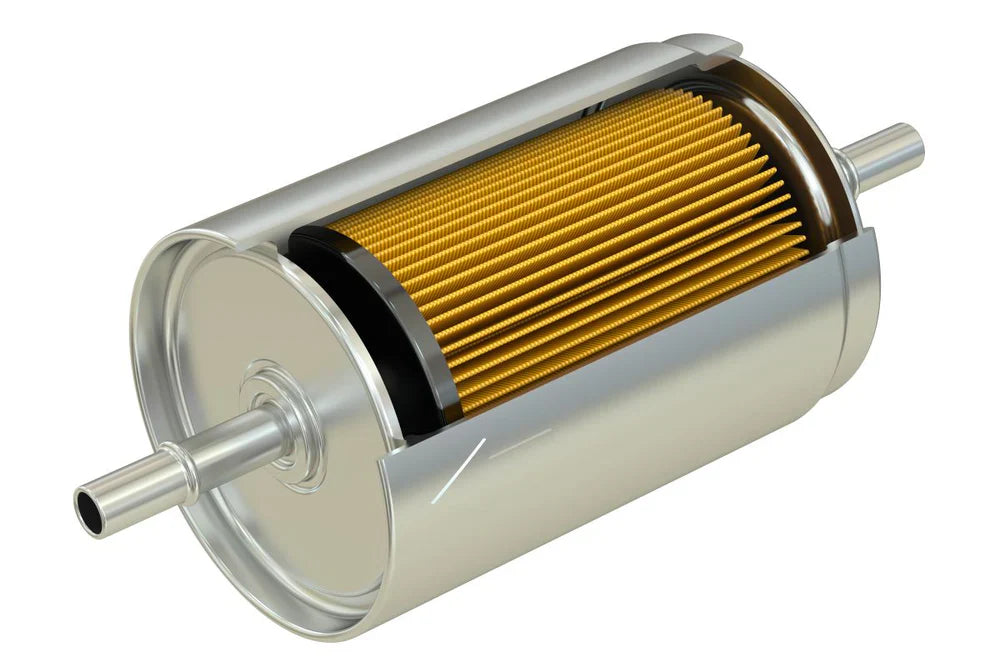
- can shorten the life of the fuel filter, because deposits and sludge block it sooner.
In modern diesels with a Common Rail system, working under extreme pressure, these deposits are particularly troublesome. We break this down in more detail in the analysis of why a modern diesel breaks down by itself.
Which diesel for which car?
Simplifying, the choice is easy, because the Polish market is built around B7. As a rough guide:
|
Vehicle type / situation |
Recommended diesel |
|
Most passenger and delivery vehicles (diesel) |
B7 – the standard, with no restrictions |
|
A car with explicit manufacturer approval for B10 |
B7 or B10 |
|
An older diesel sensitive to biocomponents |
B7; where recommended – a fuel with a lower FAME content |
|
A modern diesel with access to XTL/HVO |
B7 or XTL (if the manufacturer allows it) |
|
Winter, frosts below −20 °C |
Winter diesel, and in extremes arctic |
|
Stored fuel (a reserve, seasonal use) |
B7 + stabilisation with an additive |
The overriding rule: always check the manufacturer’s recommendations in the manual and on the fuel filler flap. Those are binding, not general rules.
How do you protect the fuel and the injection system?
Since the main problem with modern diesel is the biocomponent’s susceptibility to water and ageing, prevention comes down to two things: sensible use and supporting the fuel with an additive. In practice it is worth:
it is worth
- filling up at trusted stations and not keeping fuel in the tank for months without need,
- choosing a grade matched to the frost in winter, instead of counting on summer diesel,
- using a stabiliser and a detergent package when storing fuel, which slows oxidation and limits deposits,
- reacting to the first symptoms: louder running, vibrations, higher fuel consumption, smoking.
This is where TEC 2000 Diesel System Cleaner works well – a diesel additive that binds water in the fuel, supports lubricity and helps keep the fuel system clean. It is a preventive preparation: it will not repair a mechanically damaged injector or pump, but it helps limit the formation of deposits and protect the fuel, especially fuel that is stored for longer.
The effectiveness of this additive in slowing fuel ageing was confirmed by a study by ORLEN Laboratorium S.A. using the Rancimat method (PN-EN 15751). The oxidation stability of the same diesel sample rose from 65.09 h without the additive to 111.94 h with TEC 2000 – an increase of about 72%, against the PN-EN 590 standard requirement of a minimum of 20 h. This is a laboratory result from an accelerated test, but it shows the direction of the preparation’s action well. How TEC 2000 compares with other products is described in our comparison of TEC 2000 preparations and typical fuel stabilisers.
FAQ
What is the difference between B7 and B10?
The number indicates the maximum content of the FAME biocomponent: 7% in B7 and 10% in B10. You can fill any diesel with B7, but B10 only when the car manufacturer allows it. A higher share of FAME also means the fuel is more susceptible to water and ageing.
What is XTL and can I fill up with it?
XTL is a synthetic diesel produced without crude oil (for example from natural gas or from renewable raw materials, including HVO). It has a higher cetane number and cleaner combustion. It can be used in diesels that allow it – it is worth checking the manufacturer’s recommendations. For now it is available at selected stations.
Can I buy B0 at a station?
B7 is the standard at Polish stations and that is what you will most often fill up with. B0 (diesel with no biocomponents) is a descriptive term rather than an official label on the pump. It is sometimes considered for older diesels that are sensitive to FAME.
Which diesel for my car?
In practice, for most cars it is B7. What decides is the manufacturer’s recommendations – you will find them in the manual and on the fuel filler flap. Field P3 in the registration document shows that the car runs on diesel.
What is the difference between summer and winter diesel?
Above all frost resistance (the CFPP parameter). Summer has a max. CFPP down to 0 °C, transitional down to −10 °C, winter down to −20 °C, and arctic as low as −32 to −44 °C. In winter, fill up with the grade matched to the temperature, so that wax does not block the filter.
Can you drive on winter fuel in the summer?
Yes, it is safe. The problem appears the other way round – summer diesel in a hard frost can wax up and block the fuel filter.
Will a diesel additive repair the injection system?
No. An additive such as Diesel System Cleaner works preventively – it binds water, supports lubricity and helps limit deposits. It will not replace the repair of a mechanically damaged injector or pump.


Leave a comment
This site is protected by hCaptcha and the hCaptcha Privacy Policy and Terms of Service apply.