

First a dark stain appears at the exhaust tip, then you notice the characteristic smell of burnt oil. After a moment you start wondering whether that's normal, or whether something is beginning to happen to the engine.
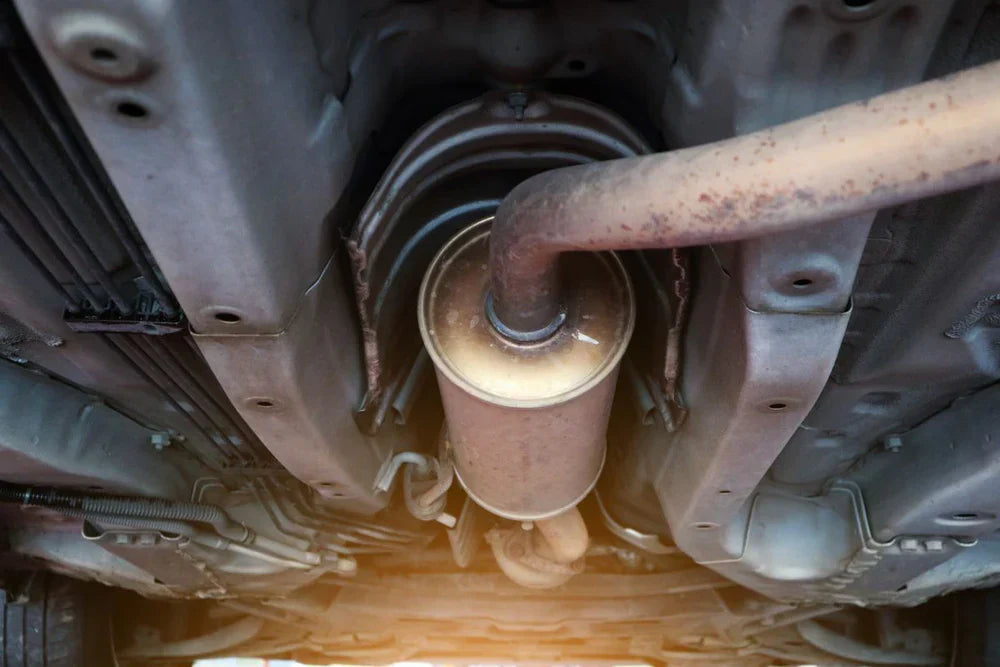
In practice many drivers only notice this symptom once oil starts appearing in the silencer or on the exhaust tip. Sometimes it's only a light film, but it also happens that the engine literally throws oil out through the exhaust.
If you see such a symptom in your car, don't ignore it. Oil in the exhaust system almost always means a problem in the engine, and the sooner you find the cause, the greater the chance that you'll avoid an expensive repair.
Oil in the exhaust – what does it actually mean and why does the engine start throwing oil out of the exhaust pipe
If oil appears in the exhaust, it means one thing – engine oil is getting into the combustion chamber and, together with the exhaust gases, ending up in the exhaust system. In a properly working engine such a situation simply shouldn't occur.
Drivers describe this symptom in various ways. Some talk about oil in the silencer, others notice oil in the exhaust pipe, and yet others only realise after a while that the engine is throwing oil out through the exhaust while driving.
Most often this means problems with the components responsible for the engine's sealing:
- worn piston rings, which no longer separate the combustion chamber from the crankcase,
- leaking valve stem seals, through which oil gets into the cylinders,
- a damaged turbocharger, which lets oil through into the exhaust,
- problems with the crankcase ventilation system,
- too high a pressure in the engine.
When one of these components starts to fail, oil gets into the cylinder and is burned together with the air-fuel mixture. Part of it travels further – straight into the exhaust system.
At the beginning the symptoms can be subtle. A light film at the exhaust or a slight smell of oil. Over time, however, more and more burnt oil appears, and its traces start to become clearly visible. And that's when you know something is happening to the engine that isn't worth putting off until later.
When the engine spits oil out of the exhaust – the first symptoms that are easy to ignore
An engine rarely starts throwing oil out through the exhaust suddenly. Most often, small warning signals appear beforehand, which are easy to overlook or to consider normal.
One of the first symptoms is a light deposit at the exhaust tip. Over time you may also notice a faint, bluish smoke, especially under harder acceleration. In some cars drivers describe it simply as a situation in which the petrol engine spits oil out of the exhaust.
The most common symptoms include:
- a greasy film at the exhaust tip,
- bluish smoke in the exhaust gases,
- clearly higher engine oil consumption,
- a drop in the engine's power,
- rough engine running,
- the characteristic smell of burnt oil.
Often there also comes a moment when you start checking the oil dipstick more often. And that's when something worrying comes to light – the oil is disappearing faster than before.
Many people explain this away by the car's age. It's a fact that older units may use a little more oil. The problem appears when consumption starts rising from month to month.
That is usually a sign that the components responsible for the engine's sealing are starting to wear. And when oil starts getting into the combustion chamber, the next stage is precisely its presence in the exhaust.
Where does oil in the silencer come from – the most common causes, from worn rings to turbo failure
Oil appears in the silencer when engine oil ends up in the combustion chamber or directly in the exhaust system. Most often this means wear of one of the engine's components.
The most common causes of this problem are:
- worn piston rings, which lose their sealing,
- valve stem seals letting oil through into the cylinders,
- a damaged turbocharger, through which oil gets into the exhaust,
- a faulty PCV valve, causing overpressure in the engine,
- problems with the lubrication system,
- a damaged head gasket.
If the turbo is to blame, the situation usually develops fairly quickly. Worn seals in the turbocharger cause oil to get into the hot part of the turbo, and from there the oil goes straight into the exhaust.
In diesel engines many drivers then notice a symptom described as oil from the exhaust in a diesel. The exhaust gases have a different smell, and a greasy deposit appears at the exhaust tip.
Sometimes the cause is less obvious. In older engines the problem may result from accumulated carbon build-up and deposits, which restrict the operation of the piston rings. When the rings stop moving freely, they start letting oil through.
That's why, with such symptoms, many mechanics begin with a thorough cleaning of the engine's carbon deposits. Engine flushing products, such as TEC 2000 Engine Flush, help dissolve deposits and clean the piston rings, which often restores correct engine running.
In some cases that is enough to stop the problem at an early stage – before an expensive engine repair becomes necessary.
Oil from the exhaust in a diesel versus a petrol engine – are the causes the same?
Oil appearing in the exhaust of a diesel and of a petrol engine usually has the same mechanism of formation, but very often results from different faults. In both cases the oil gets into the combustion chamber and later, together with the exhaust gases, into the exhaust system – but why it ended up there can be something completely different.
In petrol engines, the components connected with the wear of the unit itself are more often to blame. In diesels, on the other hand, the problem quite often starts with the turbo.
The most common differences look like this:
- in petrol engines the culprits are sometimes worn piston rings, which let oil through into the combustion chamber,
- a frequent cause is also the valve stem seals, through which oil runs down into the cylinders,
- in diesels the problem very often starts with a leaking turbocharger,
- in both types of engine the cause is sometimes a faulty crankcase ventilation system (PCV).
When the turbo starts letting oil through, a symptom appears that many drivers describe as oil from the exhaust in a diesel. A greasy film appears at the exhaust tip, and the exhaust gases have a distinctly heavier smell.
In petrol units the situation looks a little different. First higher oil consumption appears, then light smoke when accelerating, and only later can you see traces of oil at the exhaust.
That's why the diagnosis should always start by checking exactly where the oil is getting into the combustion system. Only then do you know whether the problem is a minor one, or whether it may mean more serious engine wear.
Can you drive when oil appears in the exhaust pipe – the consequences for the engine
If oil appears in the exhaust pipe, the car will still drive, but the engine is then working in conditions that lead to rapid wear of many components. This symptom doesn't disappear on its own – it usually starts to intensify over time.
The biggest problem is that burning oil changes the engine's working conditions. More deposits and carbon build-up appear in the cylinders, and the combustion temperature rises.
The most common effects of driving with such a problem are:
- contamination of the catalytic converter or the DPF,
- faster accumulation of carbon deposits in the combustion chamber,
- a drop in engine power,
- higher fuel consumption,
- accelerated wear of the turbo,
- a risk of damaging the lambda sensors.
The most expensive scenario appears when oil starts collecting in the exhaust system. The high temperature causes it to burn, and that leads to the formation of a large quantity of deposits.
Over time the catalytic converter or the particulate filter starts to clog. And then further problems appear – a drop in power, engine limp mode and a costly repair.
There are also situations in which a driver ignores the symptoms for a long time. Oil in the exhaust becomes more and more visible, oil consumption rises, and eventually serious wear of the cylinders or the turbo occurs.
That's why, if you notice such a symptom, it is no longer just a matter of how the exhaust gases look. It's a warning signal that the engine is starting to work in incorrect conditions.
How do you get rid of oil in the exhaust and stop the problem before it ends in an engine rebuild
If oil appears in the exhaust, the only effective way to solve the problem is to remove the cause of the oil getting into the combustion chamber. Cleaning the exhaust alone, or driving “until it passes”, will change nothing.
First you have to check which engine component is responsible for the problem. In many cases diagnosis starts with a few basic checks.
The mechanic usually checks:
- the compression in the cylinders,
- the condition of the turbocharger,
- the operation of the PCV valve,
- the sealing of the valve stem seals,
- the wear of the piston rings.
If the cause is deposits in the engine, or the piston rings are starting to seize, sometimes a thorough cleaning of the unit's carbon deposits helps.
Accumulated carbon build-up can restrict the movement of the piston rings, and then they start letting oil through into the combustion chamber. In such situations engine cleaning products are used, which dissolve deposits in the lubrication system.
The product TEC 2000 Engine Flush works in exactly this way – it dissolves carbon build-up and deposits in the engine, cleans the piston rings and the oil galleries. Thanks to this the engine's components can return to working properly.
If the problem was detected early, such cleaning often makes it possible to stop the oil burning and improve the engine's compression. And that means one thing – a good chance of avoiding a costly repair.
How do you prevent oil from getting into the exhaust system – engine prevention
Oil appearing in the exhaust is very rarely a sudden failure. Most often it's the effect of long-term engine wear or of accumulated deposits, which over time start to disturb its operation.
That's why prevention matters enormously. An engine that regularly undergoes inspections and servicing starts burning oil far less often.
The most important preventive measures are:
- regular engine oil changes,
- checking the oil level between changes,
- checking the condition of the turbo and the intake system,
- making sure the crankcase is properly ventilated,
- periodic cleaning of the engine's carbon deposits.
Deposits in the engine are one of the reasons why the piston rings stop working properly. When the rings start to seize, oil gets into the combustion chamber, and then into the exhaust.
That's why mechanics increasingly recommend preventive engine flushing with every oil change. Products such as TEC 2000 Engine Flush help dissolve carbon build-up, clean the oil galleries and restore correct operation of the piston rings.
Regular cleaning of the engine means that the lubrication system works properly, and the risk of oil burning drops considerably. And that is precisely when the engine can run stably for a long time.
FAQ
Does oil in the exhaust always mean a serious failure
Not always. Sometimes the cause is a dirty engine or seized piston rings, which start letting oil through. If the problem is detected early, it can often be stopped without a serious repair.
Can you drive when oil appears in the exhaust
The car will drive, but the problem usually starts getting worse. Burning oil leads to carbon build-up in the engine and can damage the catalytic converter or the DPF.
Why does blue smoke appear from the exhaust
Bluish smoke in the exhaust gases is a typical symptom of engine oil being burned. It means that oil is getting into the combustion chamber and is being burned together with the fuel.
Can the turbo cause oil in the exhaust
Yes. Worn turbocharger seals often cause oil to get into the hot part of the turbo, and from there directly into the exhaust system.
Can flushing the engine help with oil burning
If the problem results from carbon build-up or seized piston rings, a thorough cleaning of the engine can improve its operation and limit oil burning. Products used for flushing the engine help dissolve deposits and clean the components of the lubrication system.



Leave a comment
This site is protected by hCaptcha and the hCaptcha Privacy Policy and Terms of Service apply.